

My grandmother’s babi chin recipe
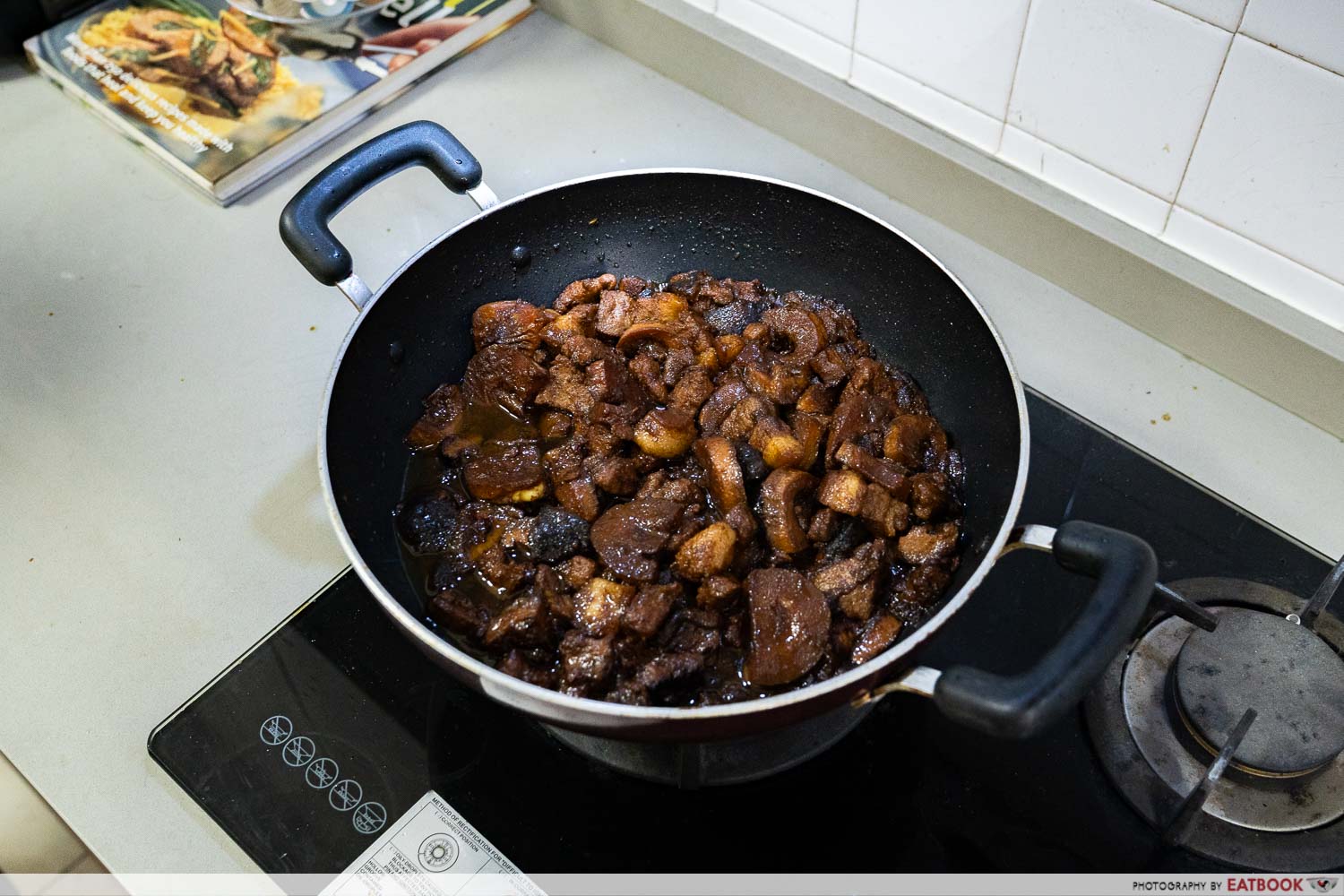
Babi Chin, a classic Peranakan dish, features pork belly slowly braised in dark soy sauce, ground coriander, soybean paste, shallots and more. Simple to make yet bursting with complex flavours, it delivers a one-two punch of savoury richness and fragrant aromatics. It’s also my favourite dish made by my Po Po, and in many ways, the dish that taught me everything I know about food.
I was just a child when I first came across the dish. It was Chinese New Year, and while everyone—adults and kids alike—waited eagerly to see what my grandmother had prepared, I was a little disappointed, and possibly a little horrified, to see that one of the dishes was this amorphous mass of black. “Boy ah, try this,” my Po Po said as she took a piece of babi chin and placed it on my plate. That was when I took a sniff of it and decided that I would never again come near this dish. Many aspects about it repulsed me: the colour, the foul-smelling bamboo shoots, the pungent soybean paste and so on.
Later, towards the end of my time in primary school, I began to fall in love with all things pork belly—its layers of fat and lean meat clicked with that carnivorous part of my brain. So when the New Year rolled around, and my Po Po served yet another helping of babi chin, I found myself eating just the pork belly, and nothing else from the dish (I may have scraped away some of the sauce that clung to the meat as well).
In secondary school, I began to notice how the braised pork belly seemed to magically complement white rice, absorbing its flavours and even neutralising some of the funky bamboo shoot scent. Then I began noticing the layers of the dish. The savoury soy sauce, the earthy shiitake mushrooms, and then, finally, the crunchy bamboo shoots. And if that wasn’t enough, there was always a bit of sambal belacan within reach, adding just the right amount of heat and umami to pull everything together.
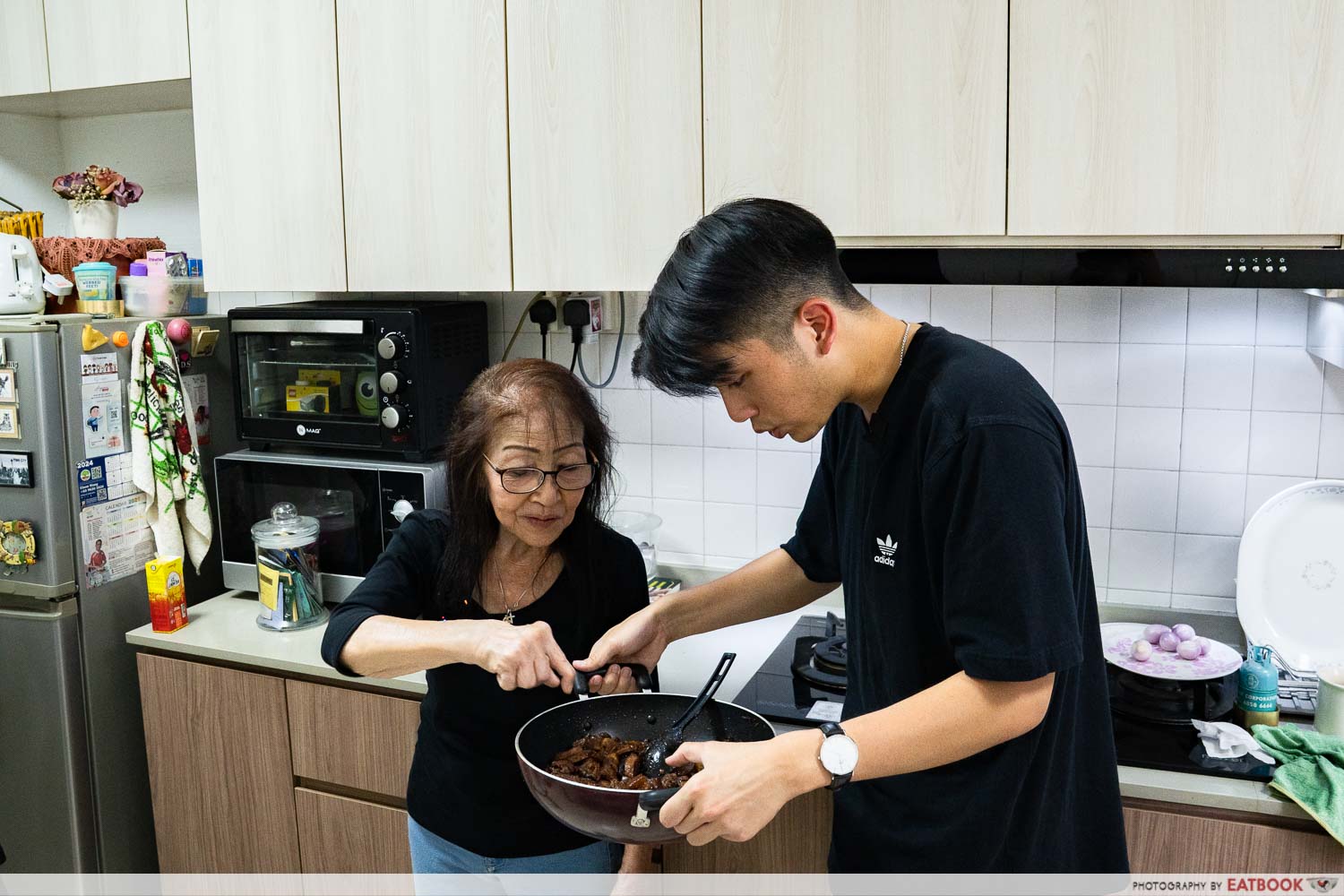
These epiphanies, if you will, fundamentally changed how I saw food. No longer was it a random assemblage of ingredients that I had to pick and choose from, but rather a cohesive whole where every element played off one another. And this opened up so many possibilities for me as a foodie: I became less picky, more willing to try strange dishes and weird ingredients, and simply better at evaluating food.
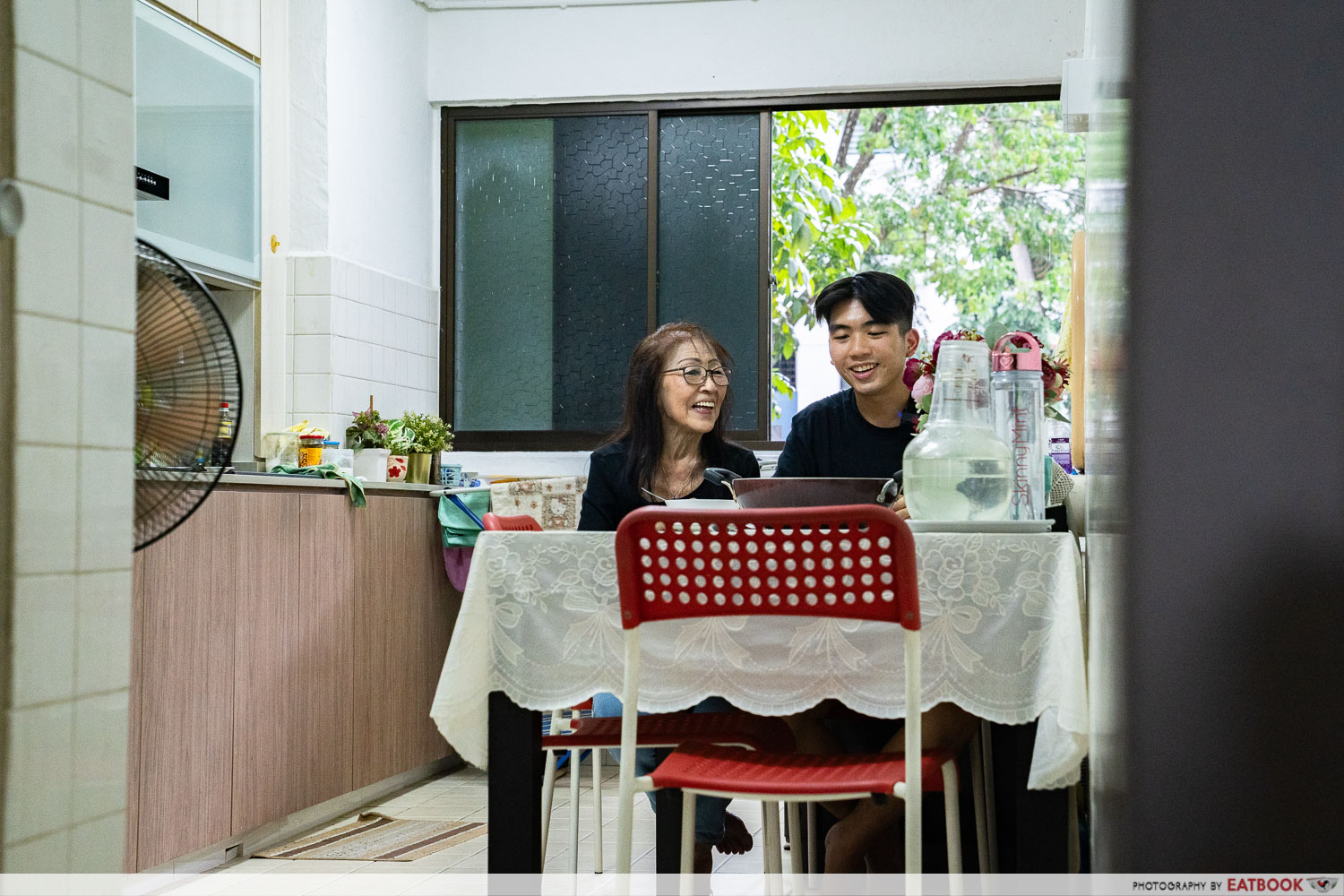
So when I was thinking of a dish I wanted to learn from my Po Po, babi chin was the obvious choice. It represents family, tradition, and the ever-present love that my grandmother showed me throughout my life, and it was a transformative dish. I became a better eater and, dare I say, a more well-rounded person thanks to my Po Po’s wonderful babi chin. If you’d like to make it the way she taught me, here’s the recipe:
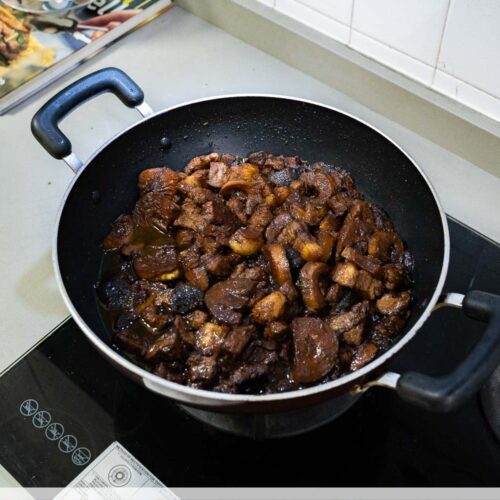
Po Po’s Babi Chin
Ingredients
- 250 g pork belly
- 250 g lean pork
- 1 tin bamboo shoots
- 15 shiitake mushroom
- 10 small shallots
- 5 tbsp coriander powder
- 5 tbsp soybean paste
- 8 tbsp dark soy sauce
- 3 tbsp sugar
- 1 tsp salt
Instructions
-
Cut the pork belly and lean pork into large chunks.
-
Place the pork in a bowl and mix with the coriander powder, bean paste, dark soy sauce, sugar, and salt.
-
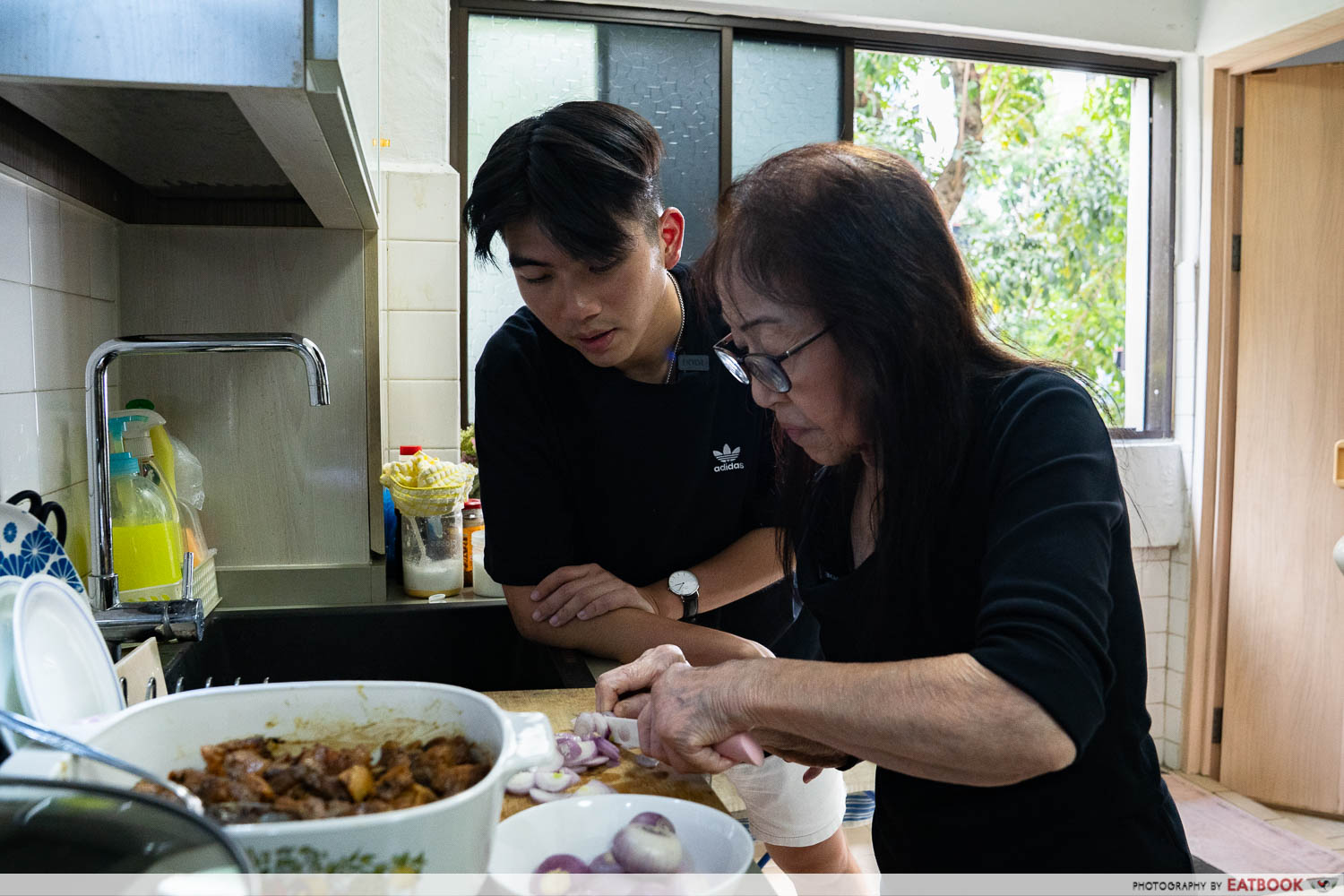
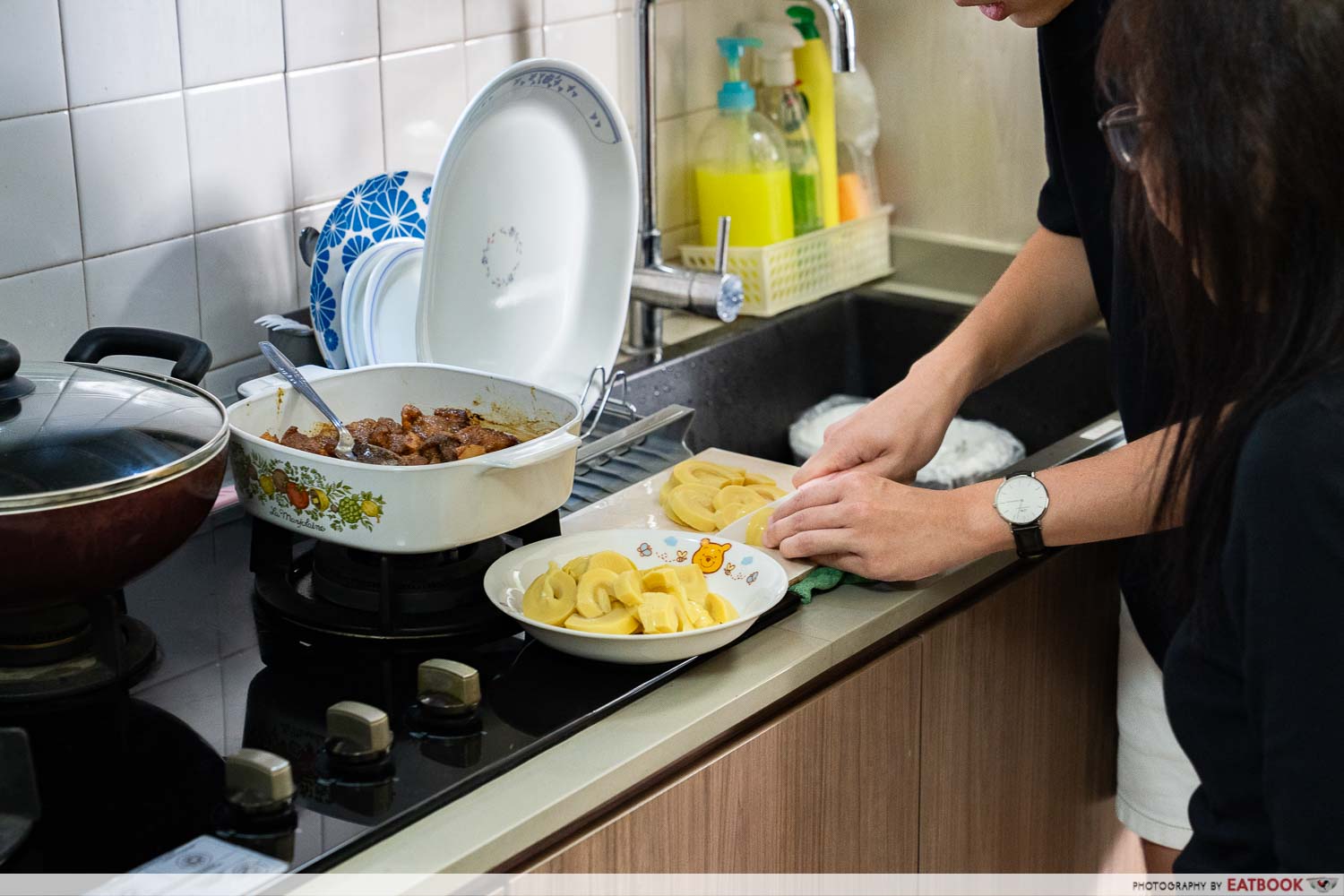
Chop the shallots, bamboo shoots, and shiitake mushrooms.
-
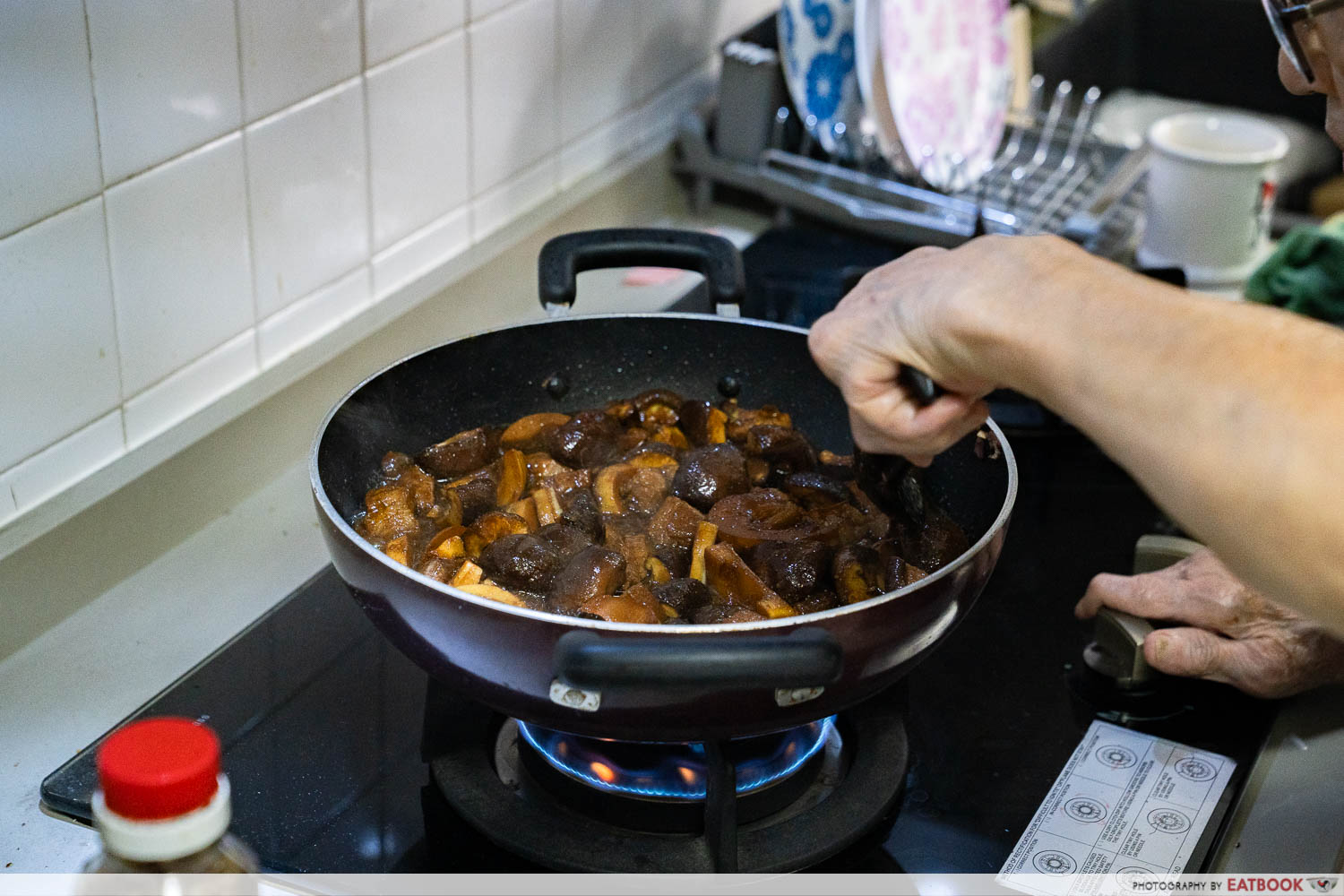
Heat the vegetable oil in a large pot over medium heat. Add the chopped shallots, bamboo shoots, and mushrooms. Stir-fry until fragrant.
-
Add the pork to the pot. Stir-fry for 2–3 minutes until the outer surface of the pork loses its raw pink colour and absorbs some of the aromatics.
-
Pour in enough water to just cover the ingredients. Stir to combine.
-
Taste and adjust seasoning with more dark soy sauce, sugar, or salt if needed.
-
Once the pork is tender and the sauce has thickened, turn off the heat.
-
Serve hot with rice, and sambal belacan on the side if you like.
For a similar story about ngoh hiang, read our Ah Ma’s ngoh hiang recipe feature. If you prefer something spicier, read our mum’s chicken curry recipe feature.
I’ve Always Loved My Ah Ma’s Ngoh Hiang—It’s Time I Learned It From Her
Photos taken by Nabila Malek.
By: based on an interview with Marcus Neo.
Top In Asia


