

SINGAPORE – “Technology never should have advanced past this.” On TikTok, this caption accompanies many a flickering slideshow of 2000s gadgets: a jumble of flip phones, camcorders, iPods and blocky computers.
Usually set to the tune of 2009 hit Fireflies by American electronic music project Owl City, new iterations of the post seem to be spun out every week. A Gameboy here, a Blackberry there, a stack of DVDs.
Over the strains of nostalgic pop, young people are pining for a recent low-tech past.
“When you see someone in headphones with wires, it just looks cool,” says 24-year-old local student Cody Tong. “You wonder: ‘What are they listening to?’
“It’s different from the usual AirPods. It brings back that retro look and elevates the outfit.”
Walkmans, wired earphones and even the seemingly modern iPhone 5 have become trendy items, tugged out of obsolescence by a generation fed up with all-use smartphones.
The sentiment has been bouncing around for a while now, ready to attach itself to vastly different poles. Most recently, that was the frenzy for the year 2016, now distant enough to be reappraised as innocent in the glut of grainy throwback pictures posted to social media in February.
Most consistently, its target has been the gritty 1990s. Infatuation with the vaunted no-cellphone era of low-slung jeans and crop tops dominating Gen Z fashion has finally spilt over into tech, inducing a vogue for kitschy single-use gadgets.
E-commerce giant Amazon Singapore told The Straits Times that customer interest in old-school electronics has been on the rise in the last two years, with the surge most pronounced in Kodak products, Sony Walkmans, MP3 players and vinyls from English rock band Radiohead.
But if these devices double as accessories, telegraphing the footloose air of a pre-smartphone time, is their pull merely visual? Or could a deeper disenchantment be at work?
ST meets three young “old tech” proponents to find out more.
Student has a collection of 180 CDs and 170 records
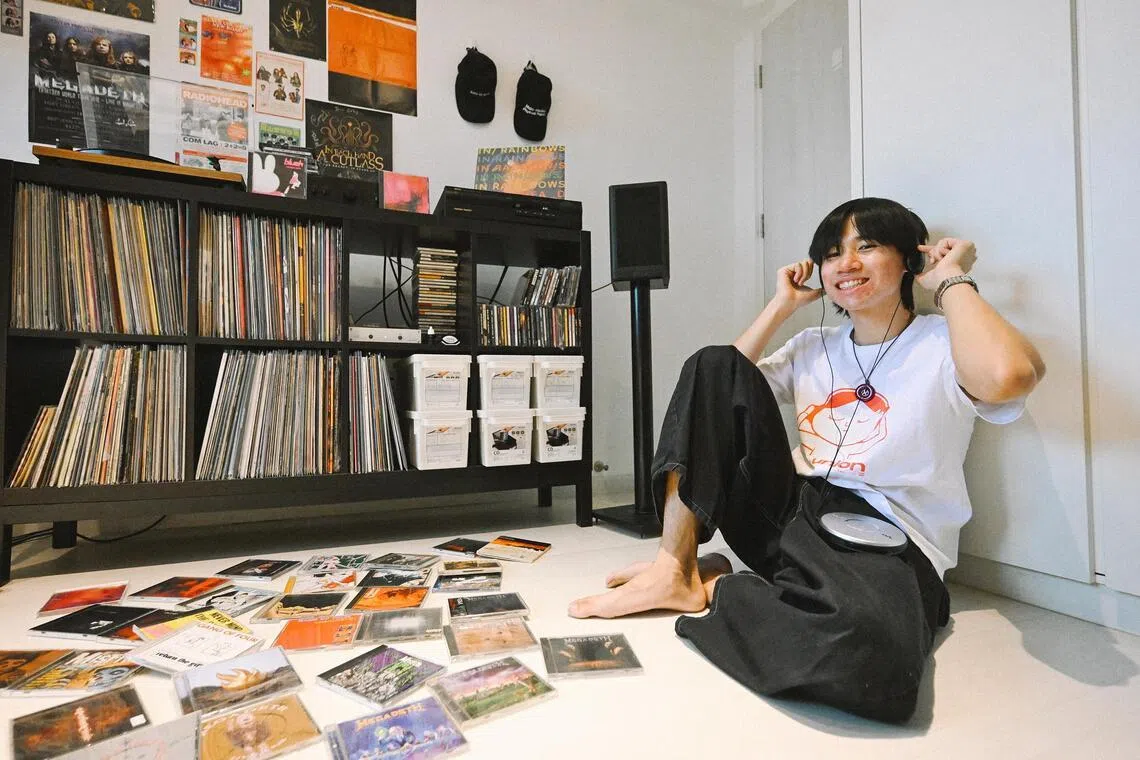
Sitting by his massive home sound set-up, floppy-haired student Cody Tong is eager to talk audio.
The 24-year-old’s music shrine comprises a girthy shelf for his 180 CDs and 170 records, turntable, CD player with in-built digital-to-analogue conversion, amplifier, two standing speakers and a collage of album ephemera taped to the wall.
Dropping the needle on English rock band Pink Floyd’s 1979 album The Wall, he singles out the gnawing bass: “On a record, you can hear things more clearly. You can hear the instruments and vocals better, it’s less compressed than listening to music on streaming.
“It just sounds more warm.”
CDs, on the other hand, ring bright. Tong, who sells CDs on Instagramunder the name Radiocore, is aware the hobby is a fussy one. He must be careful not to drop or scratch the records, and to wipe them down for dust. CDs can grow mould.
But he likes the trouble, finding in the friction a welcome break from the too-smooth workings of app-based streaming. “It really makes me sit down in front of my system and just enjoy the music. I don’t use my phone and I can see the record spinning. It’s quite hypnotic.”
How phones have whittled away at the pleasure of a thing is a recurrent theme in Tong’s asides.
“You can’t get the same experience with streaming, because Spotify is like background noise. You don’t fully enjoy the music.” Of the one- to two-hour stretches he devotes every few days to serious listening, he adds: “My screen time has been going down.”
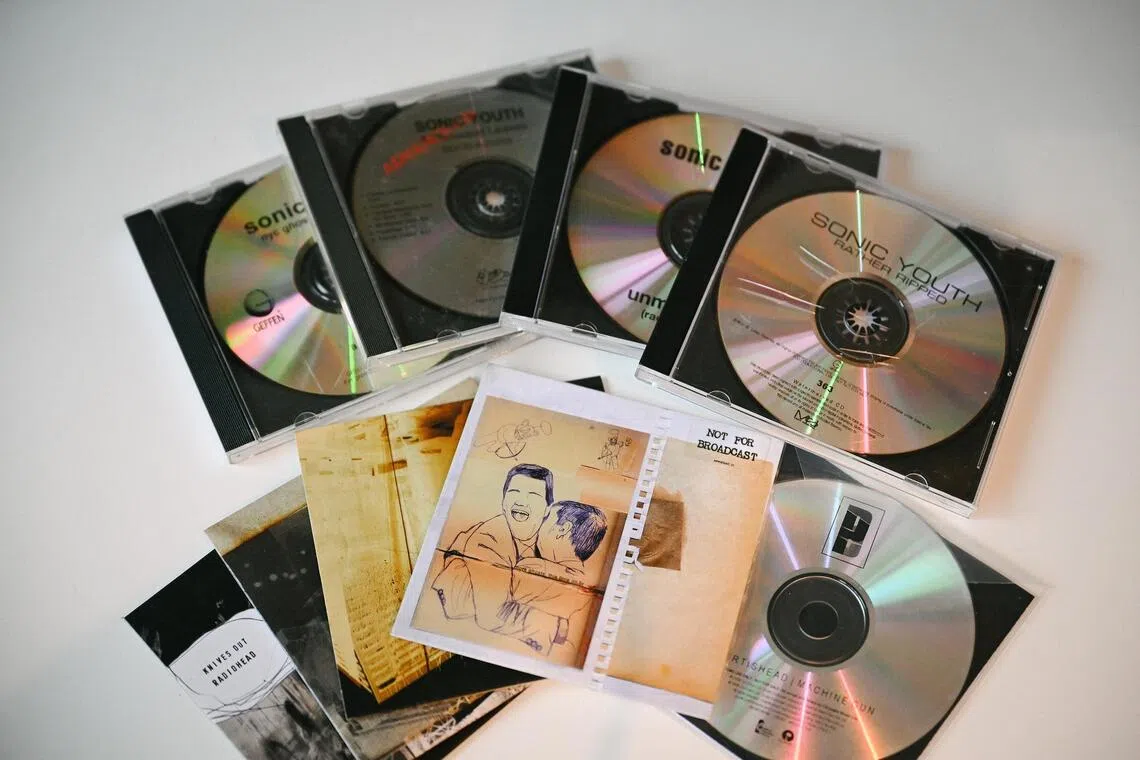
Which is not to say phone fatigue is the sole reason. Tong is a music lover who speaks like a buff. A CD’s plastic case he calls the “jewel case”, the stickers on its front are “hype stickers”, the inner booklet is the “sleeve notes”.
It is jargon even one old enough to have grown up with the shiny discs cannot reasonably be expected to know. But then the music lover is also in the business.
Most of his Radiocore clientele are of his cohort, with about 60 per cent aged between 16 and 25, he says, citing the figure as proof of a CD trend.
“They do see the point of getting a CD, beyond just the aesthetic. From what I see, they enjoy the art and printed lyrics that come with it, and it’s a way to support bands.”
In an era where artistes are liable to pull their discography from “controversial” streaming platforms such as Spotify, ownership of the music is a big reason physical media is regaining its shine, he adds.
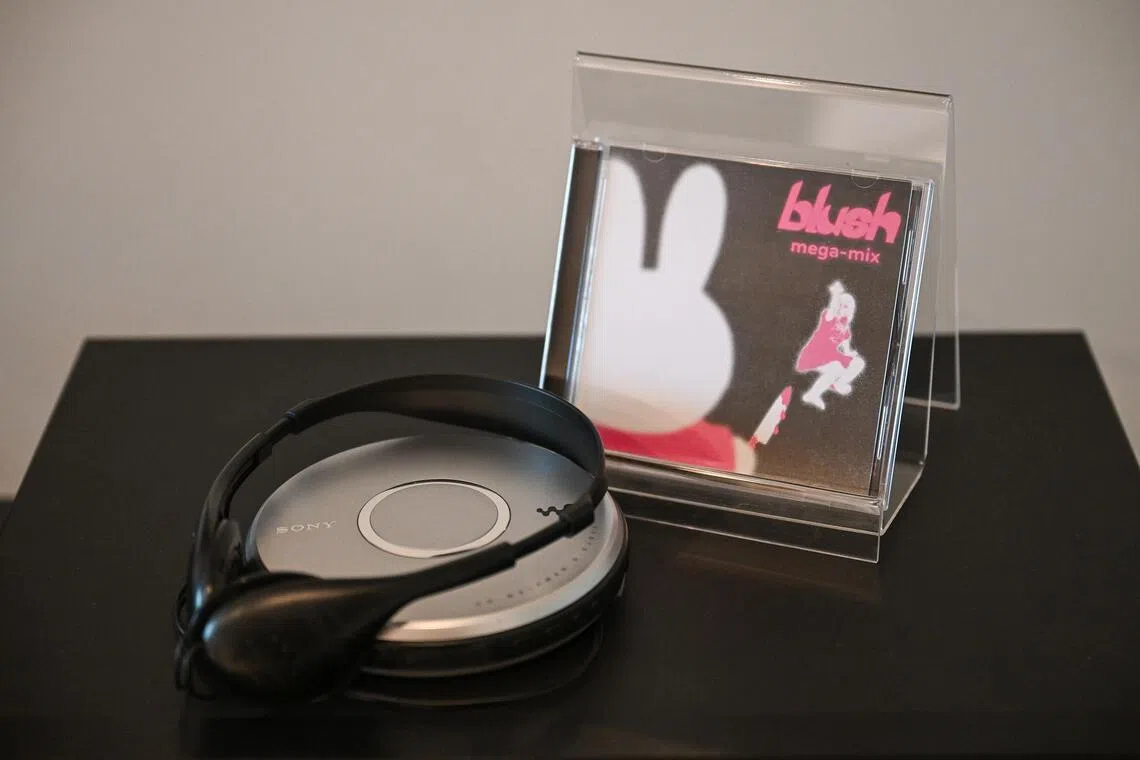
Then, there is the appealing “retro look” of its accoutrements. Quaint, round CD Walkmans with dangling wires that end in the ear are certified fashion accessories now, coveted for their novelty in a sea of discreet devices.
Just having a retro item is a signal of non-conformity and a refusal of Bluetooth-enabled sameness, Tong adds.
More than that, it is something from the past, and the past is self-evidently “interesting”.
He speaks for his generation when, pausing to put on Alison (1993) by English shoegaze band Slowdive – the gloomy millennial favourite resurrected as a viral TikTok sound – he says: “All the things from the past, we’re making viral.”
Reddit habit pushed her to switch to a tiny phone
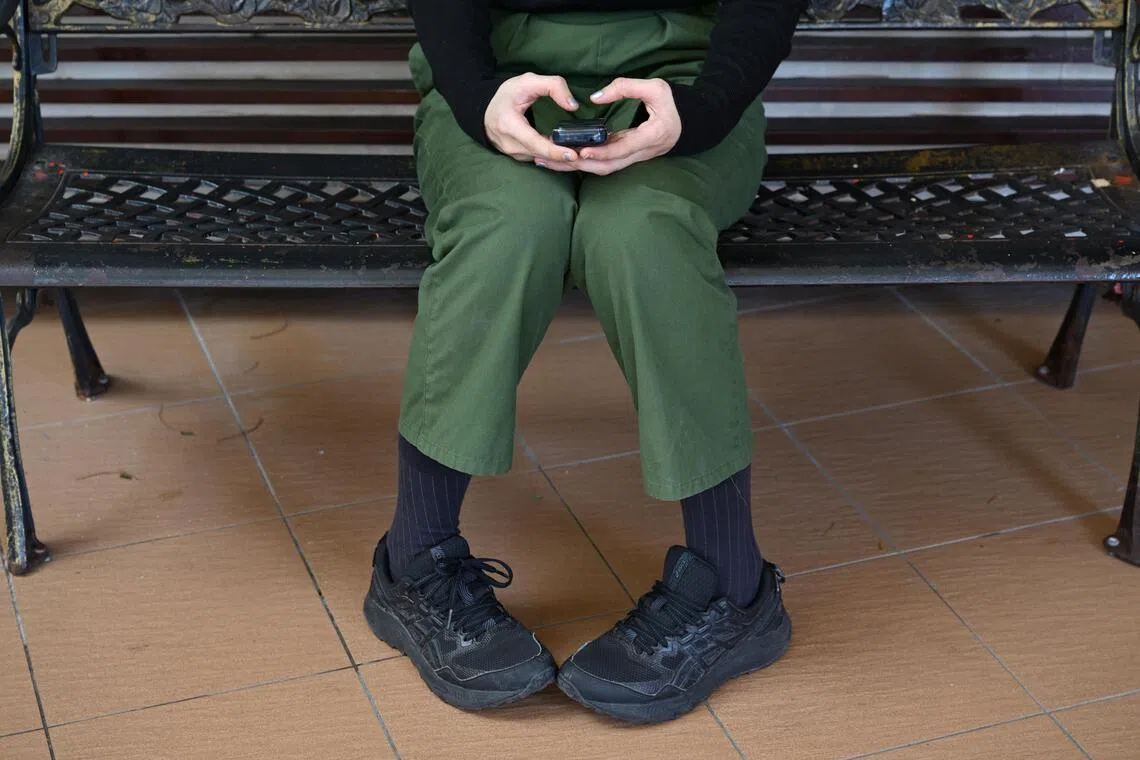
It was a visit to her grandmother’s home in Penang, Malaysia, three years ago that made 28-year-old Jamie Lee feel the need to reassess her relationship with her phone.
Her hope of “living in the moment” with her family had been derailed by a smothering Reddit habit, the online forum she would lurk on for up to seven hours a day.
“I was looking at Reddit in her house. Even in the office, I’d go to the toilet every hour and sit in the cubicle to read,” she says.
“It felt like a drug in the sense that when I use it, I don’t think about anything else. It numbs me to existential dread, but once I get off it, I have to confront that.”
Since then, the audio-visual archivist at the National Archives of Singapore has switched to a Jelly Star from Chinese smartphone manufacturer Unihertz, a smidge of a device easily mistaken for a toy. The three-inch phone runs on the outmoded Android 13 system, three generations behind the current Android 16 – part of the “dumb phone” market feeding a growing minority of smartphone deserters.
On the subreddit r/dumbphones, users post tips and testimonies of brick-like gadgets capable of sending texts, making calls and little else. These include dumbed-down phones from the likes of Unihertz and Nokia, whose 2720 Flip is styled as a “modern twist on the classic flip phone”.
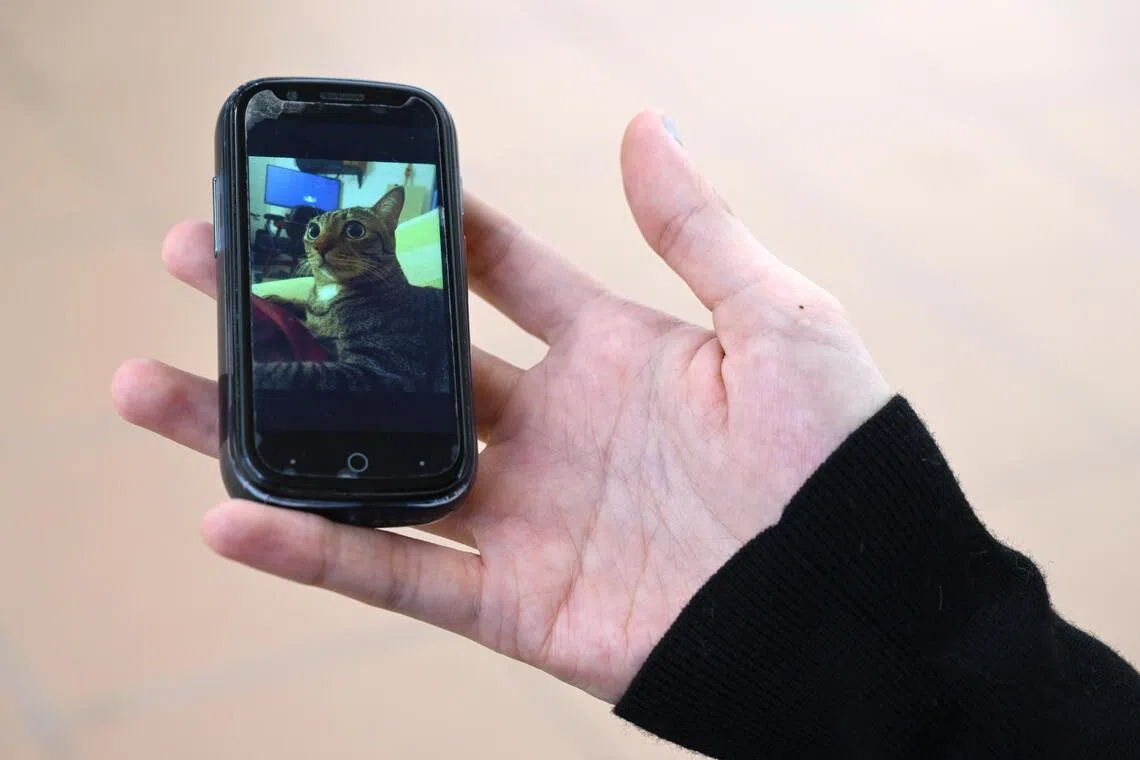
Ideally, Lee would prefer a phone with no internet at all. But living without Singpass, banking apps and QR code scanners would be far too impractical, she says.
For the last year, her screen time has hovered at an hour a day, helped also by an app that locks other more time-sucking ones. She now goes hours without thinking about her device, once missing the window to respond on WhatsApp to a team readiness exercise at work because she had not checked her phone, she says.
Better than liberation – “because being liberated means you are still talking about that thing” – hers is the realm of enviable indifference.
The irony is, like plenty of low-tech renegades, Lee is not a Luddite. She is enthusiastic about the computer, on which she makes pixel art and games, codes and reads up on software development.
“I don’t have the same animosity towards using the computer because that feels like I’m doing work. I have an intention and am using it as a tool,” she says. The phone, on the other hand, is a mindless hamster wheel of content.
“I don’t like how the online experience is directed by tech companies who most often don’t have any kind of humanist goal. They just want to make you addicted to their products so that you can make them as much money as possible.”
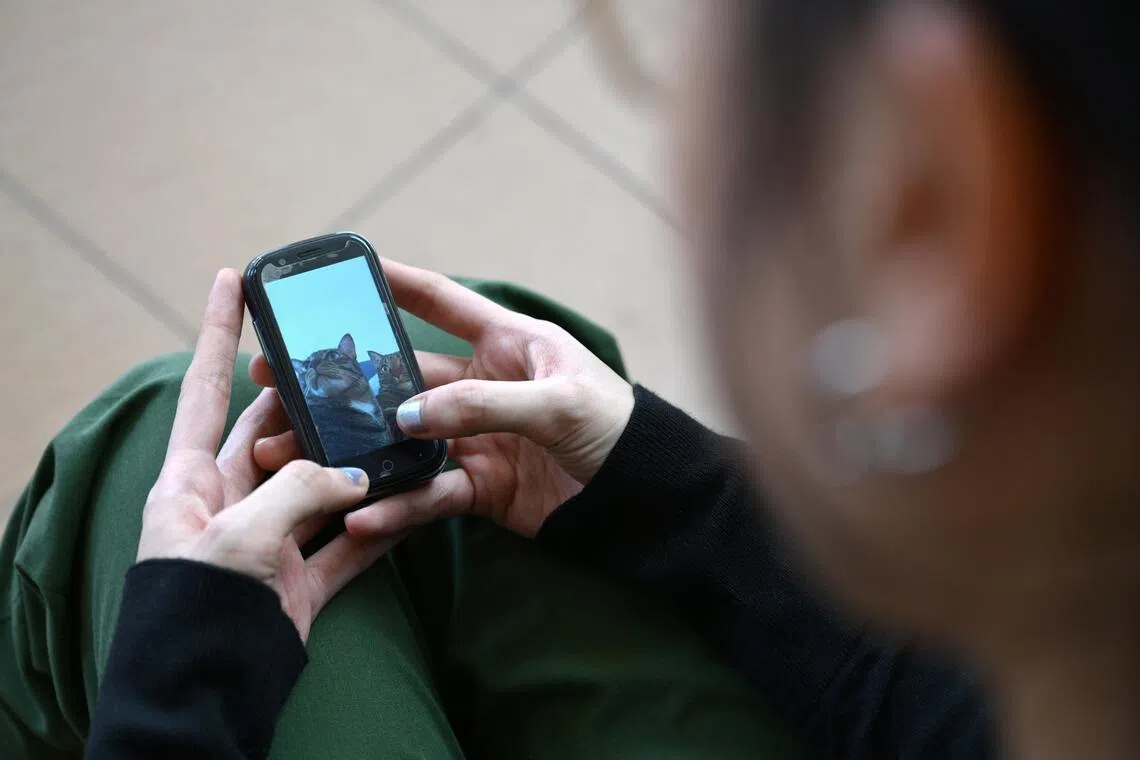
Lee’s work in archiving means she is unusually sensitive to the ways in which an “unlimited and unfiltered” volume of information online can stunt critical thinking.
Her Reddit addiction started as a truth-seeking project, but the torrent of views aired had the opposite effect of “drowning out reality” and weakening her attention span.
It is much better to struggle through reading and thinking on her own, she says.
Drawing parallels to her work, she adds: “The archives are information, right? But to interpret it, to construct something out of it, you need to really sit there and do something very difficult by processing information that’s not presented to you in a black-and-white way.
“You come up with your own conclusions. That is the value of the archives. But because of the current state of information, no one wants to do this any more.”
Photographer drawn to soft look of Polaroids
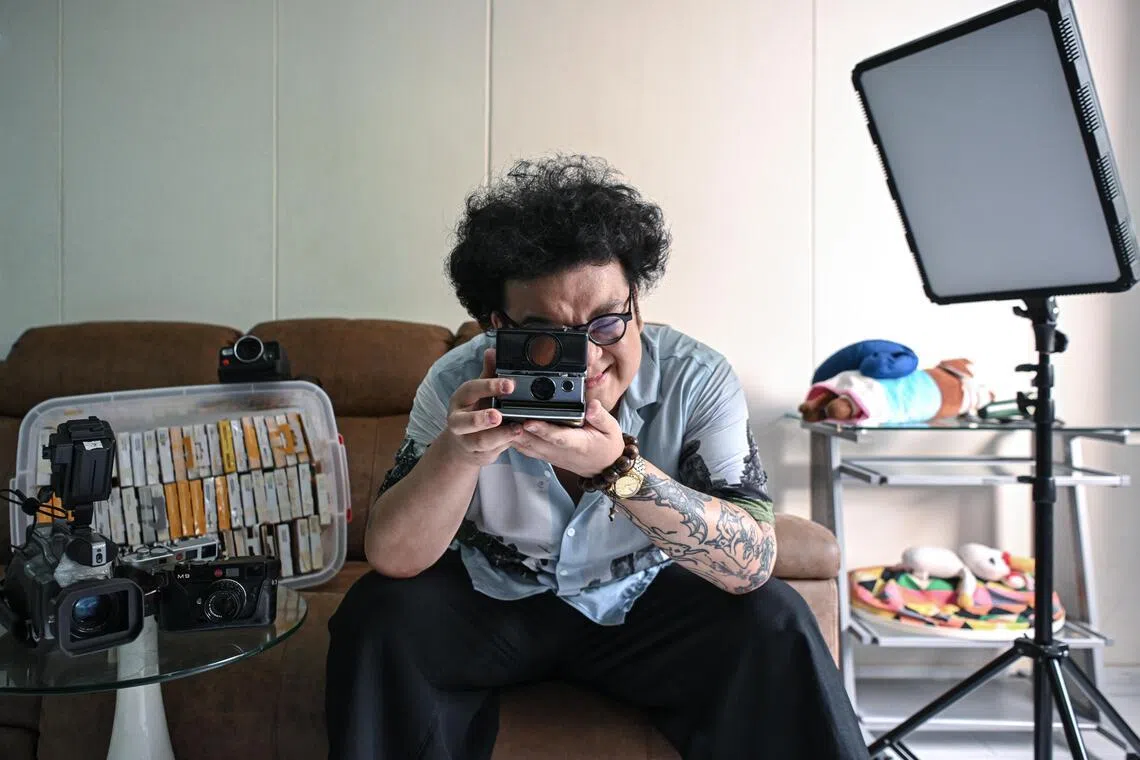
Question: How do you tell if a photographer shoots Polaroids? Answer: Check the fridge.
In lieu of ham and cheese, packs of film occupy the pull-out shelf of Chris Sim’s refrigerator. It is the safest way of storing the heat- and light-sensitive materials, preserving their chemistry and colour, he says.
The 31-year-old freelancer best known as @zalindrome on Instagram for his dreamy portraits of friends hanging out and local bands has been shooting with the analogue camera for eight years, drawn to the soft look and glossy finish of the instant film.
He says: “Nobody wants to be photographed hanging out in clinical, sterile conditions. When you think about the good times you’ve had with your friends, you think about it with sweetness and fondness.”
This tendresse he recreates within the four corners of the flour-white frame, where sharpness is diffused and a gauzy patina added.
Of late, the retro camera has made a comeback, instigated by the release of the vintage-looking Polaroid Flip Instant Camera in 2025 and the physical media movement.
Sim says of the modest resurgence: “It’s that whole idea of wanting to show the human element in producing the work. Phone images can be made with very little thought and you have programmes that are able to generate images that look realistic.
“But if you have physical proof of the images you’ve created then it feels different, it’s not disposable.”
With Polaroids, time is another agent. A picture Sim took of Singaporean singer Celine Autumn, for a 2023 Polaroid campaign with late musician David Bowie’s official archive, has turned from warm orange to a misty green.
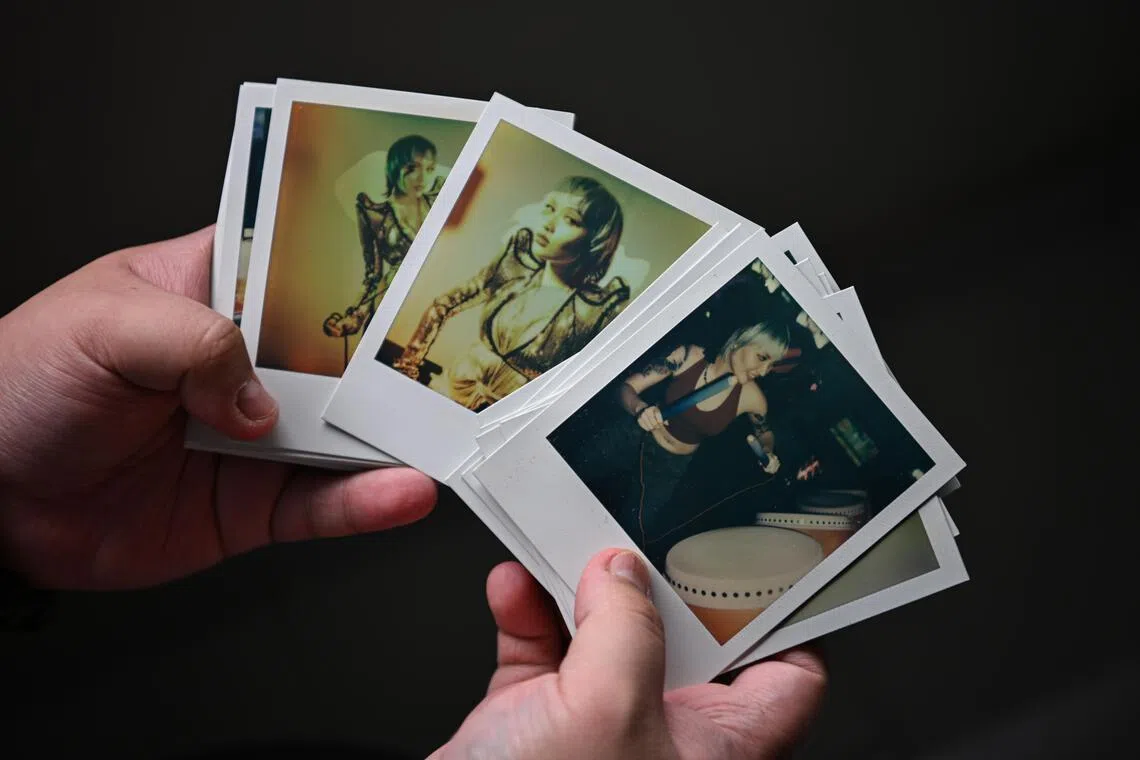
Says Sim: “It’s interesting to see how the picture looks like years after. It does make me kind of sad when it changes, but that’s a feature of the medium. It shows time passing. Digital is always frozen.
But Sim resists romantic explanations of his work with Polaroids, which fill a large crate with at least 3,200 pictures. The decision is purely an artistic one, all about getting the dreamy Polaroid finish.
He sees his other vintage cameras the same way, chafing against the too-easy assumption of reflexive millennial nostalgia. “It’s about using specific cameras for a specific purpose,” he says.
Aside from his Polaroid I-2 instant camera, his rotation includes the 1995 Sony DCR-VX1000 camcorder and the 2009 Leica M9 camera, both cult cameras.
The Sony he favours for its ability to replicate the look of TV shows from the early 2000s, and the Leica for its richly coloured digital photos that come out looking like film.
It is not that old is better than new, only that new models lack some of the functions of old ones, he says.
A workaround is to simulate the effects of retro cameras in editing – out of the question for Sim. “You can’t actually tell the difference between post-production and something original. But even if nobody else can tell, I can. It feels dishonest.”

The necessary cost is long waits for service repairs or having to do it himself. A sensor replacement for his Leica M9 had to be sent to the Leica factory in Germany, which took six to nine months. To fix another camera from the 1990s, he bought third-party parts and followed YouTube tutorials.
“I hesitate to use the word nostalgia to describe my work. I think it’s the intention of creating work that looks a certain way.” His tastes skew towards the formative mid-budget Hollywood movies of his childhood, shot on motion picture film.
The frame rate, grain and colour of American film-maker Richard Linklater’s comedy School Of Rock (2003) was particularly influential, he adds.
The subtext is, things just looked better before.
ALSO READ: MyFirst Camera Insta Lux brings dye-sub photo printing to kids’ cameras
This article was first published in The Straits Times. Permission required for reproduction.
Top In Asia


