

The rise of Chinese F&B brands in Singapore
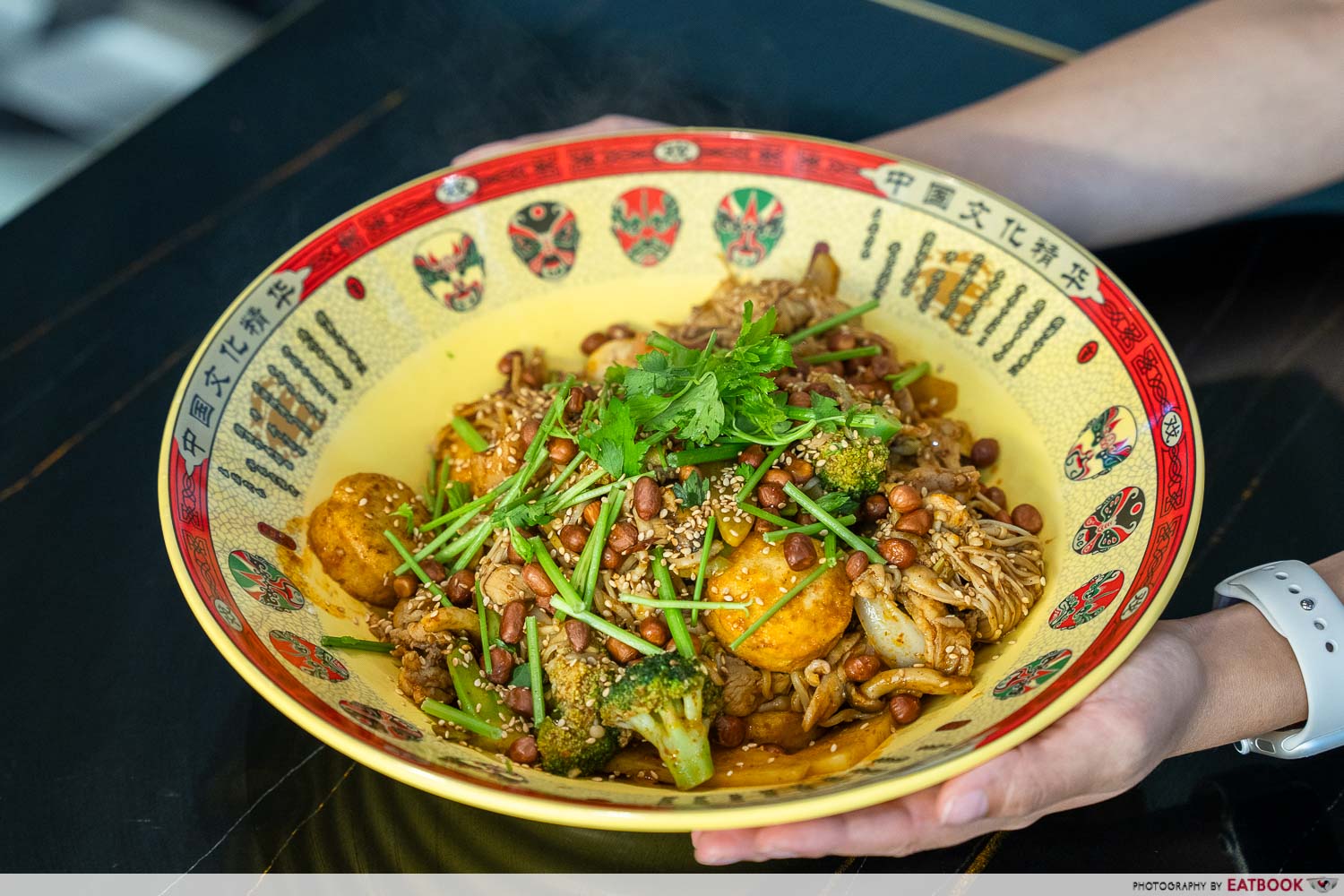
The proliferation of Chinese F&B chains in recent years has become a point of controversy. While many Singaporeans are unabashedly filling themselves with mala, Mixue, and Molly Tea, others have taken to the internet to decry the loss of Singaporean food culture. These days, it seems like everyone has an opinion on this debate.
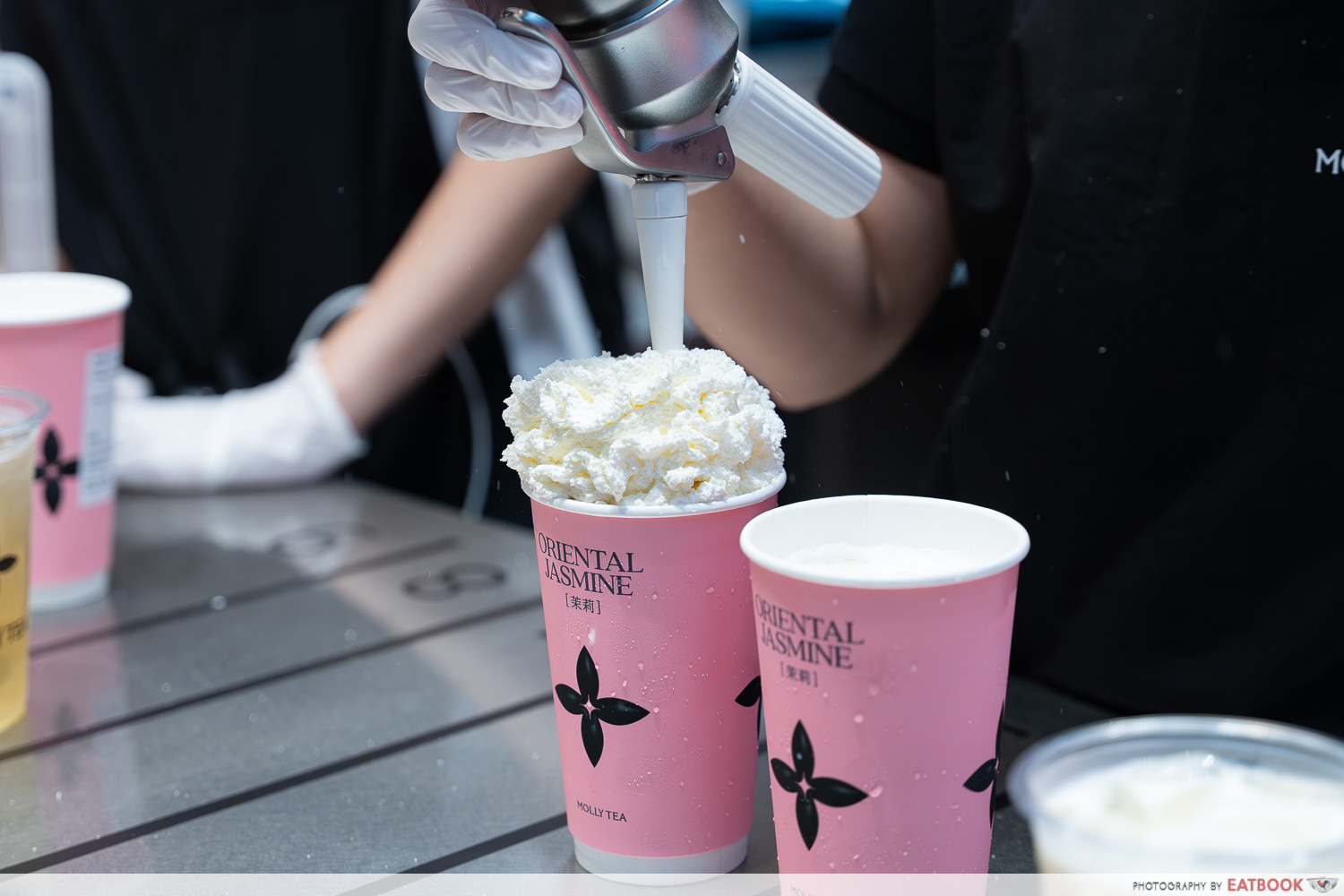
Eatbook has been at the forefront of this trend, covering the frenzy of new Chinese brands coming to our shores and—more often than not—impressing us with their delicious food and affordable prices. But whenever we post those articles, we see that debate play out in our comments. It’s an interesting tension we’d like to dig deeper into: is this wave just a fad, or some sort of sinister takeover we should be worried about?
17 Famous China F&B Openings In SG For 2026—Yoghurt Shakes, Pan-Fried Dumplings And More
Are Chinese F&B chains actually taking over?
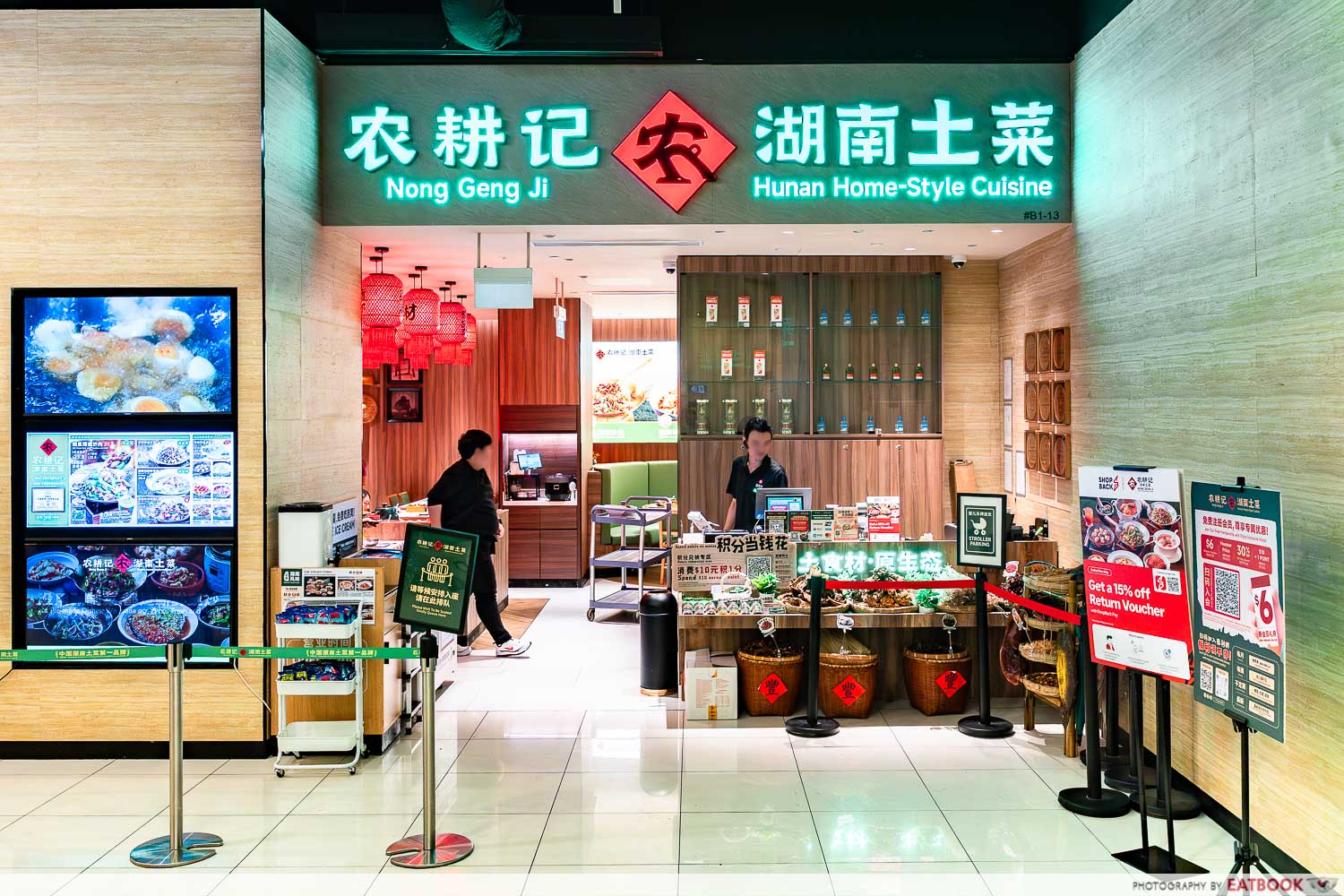
Visit virtually any shopping mall today, and you’re likely to see at least a few Chinese F&B names: Chagee, Mixue, Tai Er, Nong Geng Ji, you name it. Some malls, such as Grantral Mall @ Clementi, really do have a large percentage of Chinese brands—out of its 12 F&B spots listed on Google Maps, we counted seven that ostensibly serve “mainland Chinese food”, though some of those appear to be locally founded.
It is crucial to note here that many eateries serving Sichuan food and other regional Chinese cuisines are actually companies from Singapore. Some of these local brands are run by mainland Chinese, while others have Singaporeans at the helm. Nevertheless, they are all still local companies, just as Ya Kun Kaya Toast, founded by a Hainan immigrant, has always been. To keep our analysis specific, let’s focus on F&B businesses that originated from the mainland itself.
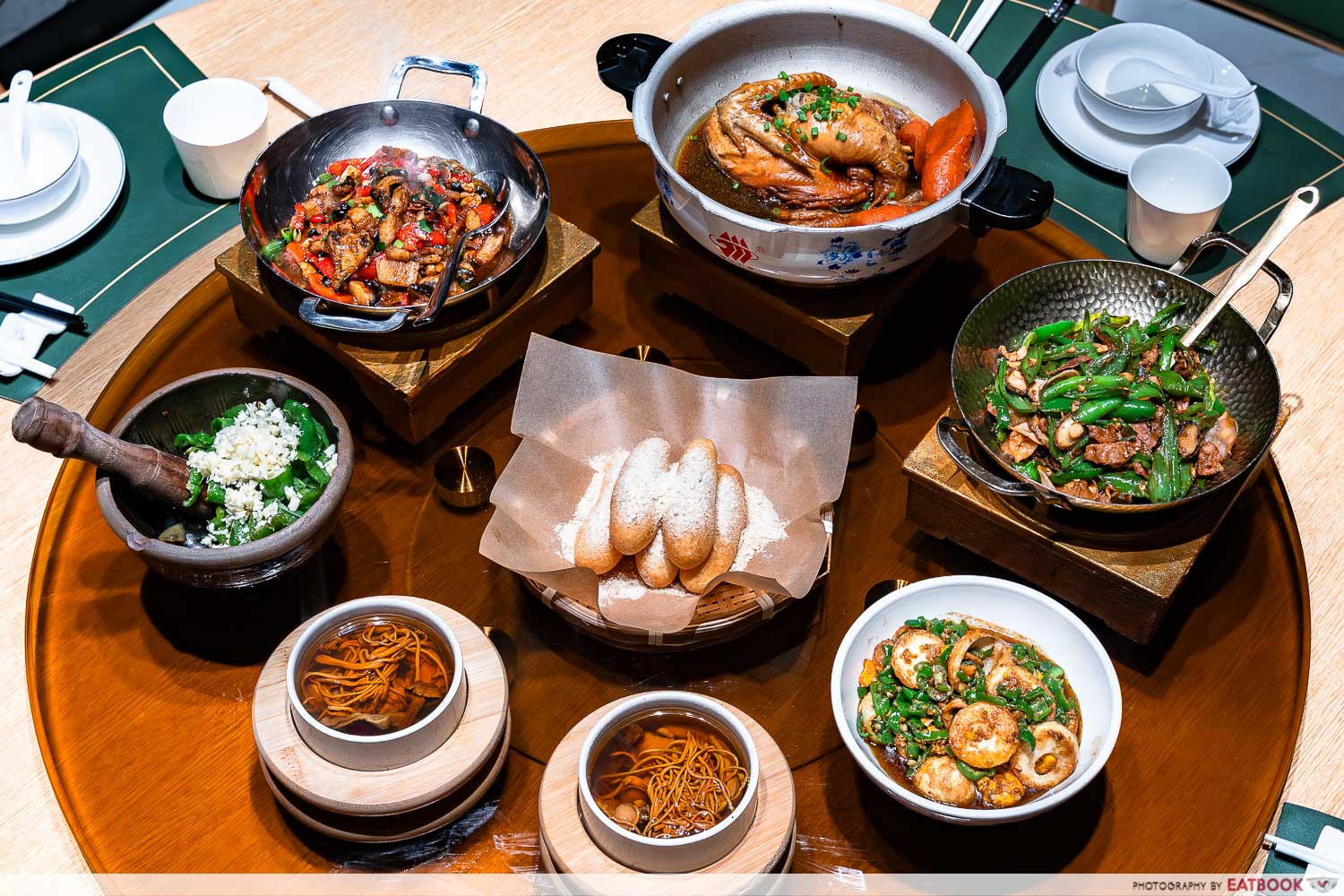
From a macro perspective, it is disputed whether Chinese F&B is truly “taking over”. In a written parliamentary reply on 12 January 2026, Deputy Prime Minister and Minister for Trade and Industry Gan Kim Yong stated that of Singapore’s 45,361 registered retail business entities, 89.7% are Singaporean-owned, while just 3%, or 1,390 entities, belong to owners from China.
However, as Professor Sing Tien Foo, Provost’s Chair Professor at the Department of Real Estate at NUS Business School, told Lianhe Zaobao, “some overseas brands leverage their scale to open a large number of chain stores, so their actual presence and influence in shopping centres are far greater than their share of business entities would suggest.”
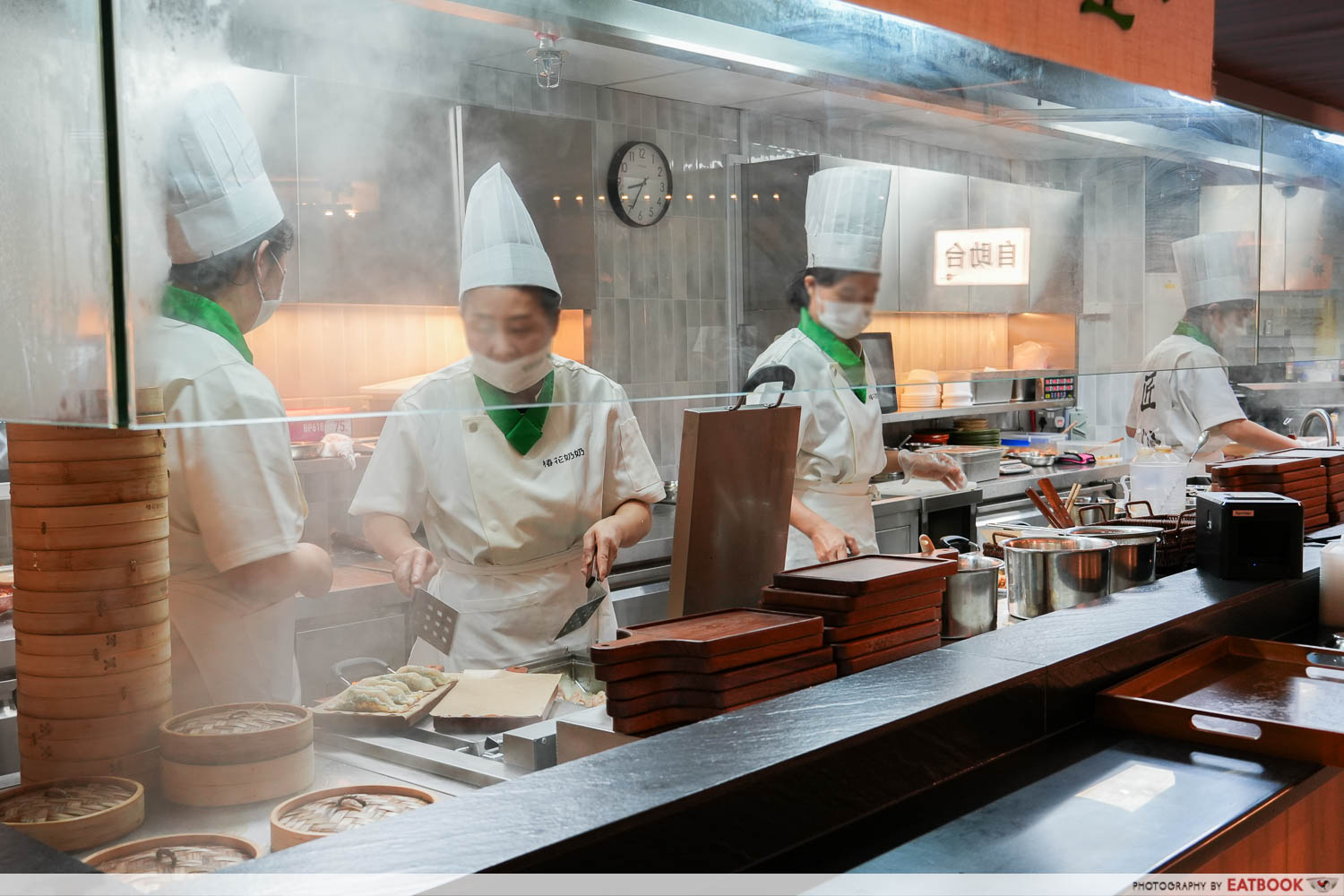
Professor Sing has a point. For us to truly understand the prevalence of Chinese brands, we would need to know the total number of F&B outlets owned by Chinese nationals, as opposed to merely the number of registered entities. Such statistics are simply not available to us. So we decided to look at things from a simpler angle: how many F&B outlets from mainland China are present in our malls?
Because it would be too labour-intensive to look at every mall in Singapore, we started with a sample size. Given that there are five regions in Singapore—Central, North, North-East, East, and West—we’ve decided to sample three prominent, high-footfall malls from each region, and count the total number of mainland Chinese F&B chains in these malls. That means we will exclude eateries from Hong Kong and Taiwan, as well as locally founded brands such as Xiang Xiang Hunan Cuisine.
Here are our findings. We may have missed one or two spots, but they should be largely representative of the malls included.
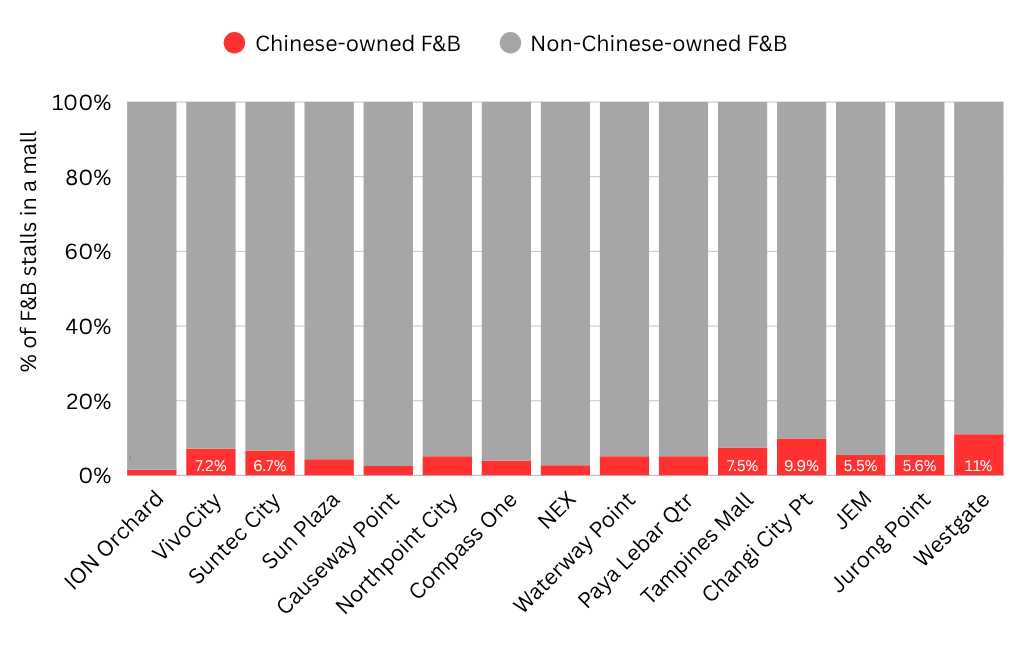
Top three malls from Central, North, North-East, East, and West Singapore. Data collected on 11 May 2026 via online mall directories.
The reality is that the “takeover” narrative is massively overblown. Chinese brands are expanding rapidly, yes, but on average, they account for only 5.6% of outlets across the malls we looked at. These numbers are not representative of all malls in Singapore, and we acknowledge that specific coffeeshops and enclaves are overrepresented by Chinese-owned F&B outlets. Nevertheless, we are still very far away from a market dominated by Chinese F&B brands.
In fact, Chinese F&B brands are just one segment among the many multinational businesses competing for market share in Singapore.
Singapore has always been a hub for foreign capital, including F&B
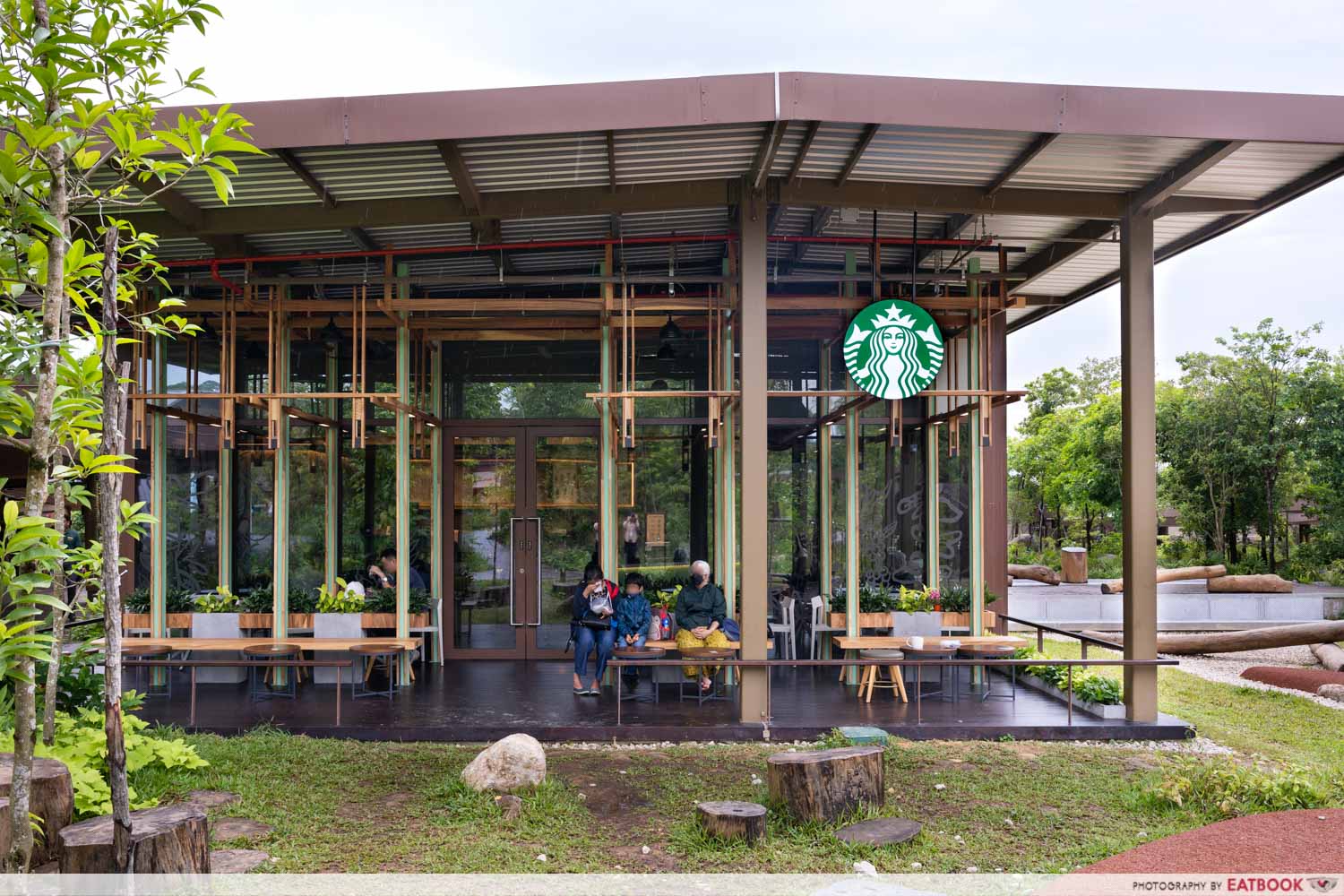
For every mala or bubble tea spot you see, there are just as many, if not more, McDonald’s and Starbucks outlets. Japanese and Korean restaurants enter our market all the time. And they love it here. Why? Because Singapore is the transnational business hub in the region. Our policies greatly encourage foreign investment, offering somewhat low taxes (often with rebates) and a safe, predictable, and hyper-efficient environment to do business.
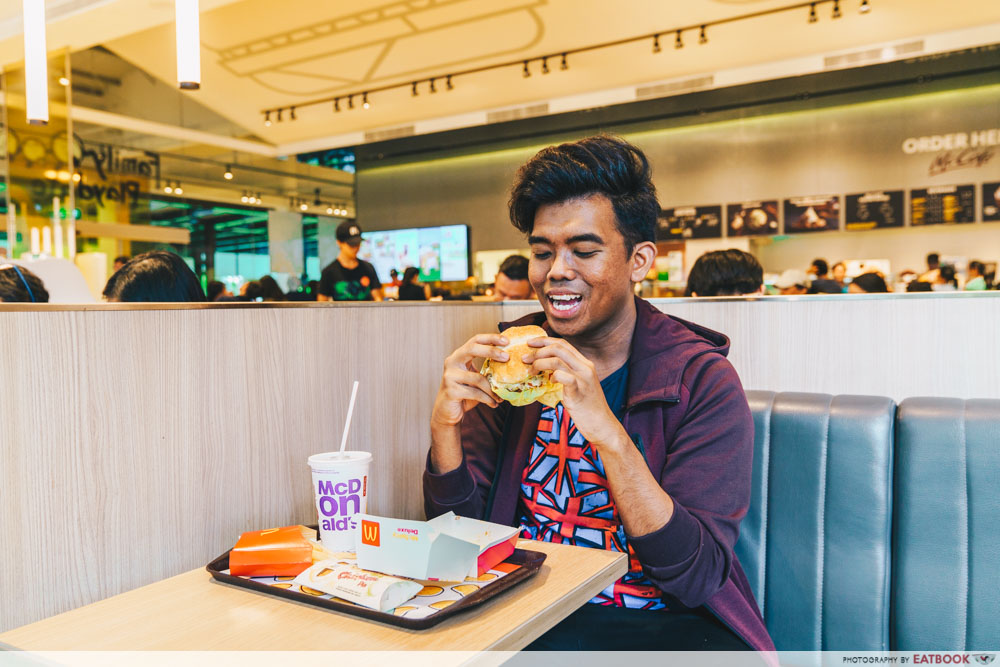
For decades, US-backed capital flooded into Singapore as the obvious gateway to Southeast Asia. Western brands became a normalised part of everyday life, such that generations grew up not just with Hollywood movies and Apple technology, but also Happy Meals and Coca-Cola.
China’s rise shifts that picture. Decades of state-led growth lifted hundreds of millions out of poverty—the World Bank even goes so far as to say that “China has contributed close to three-quarters of the global reduction in the number of people living in extreme poverty”. But that also created a new class of wealthy entrepreneurs, many of whom, chafing under Beijing’s strict leash on capital, enjoy Singapore’s business-friendly environment. Haidilao founder Zhang Yong is a prominent example of those who’ve made the move permanent.
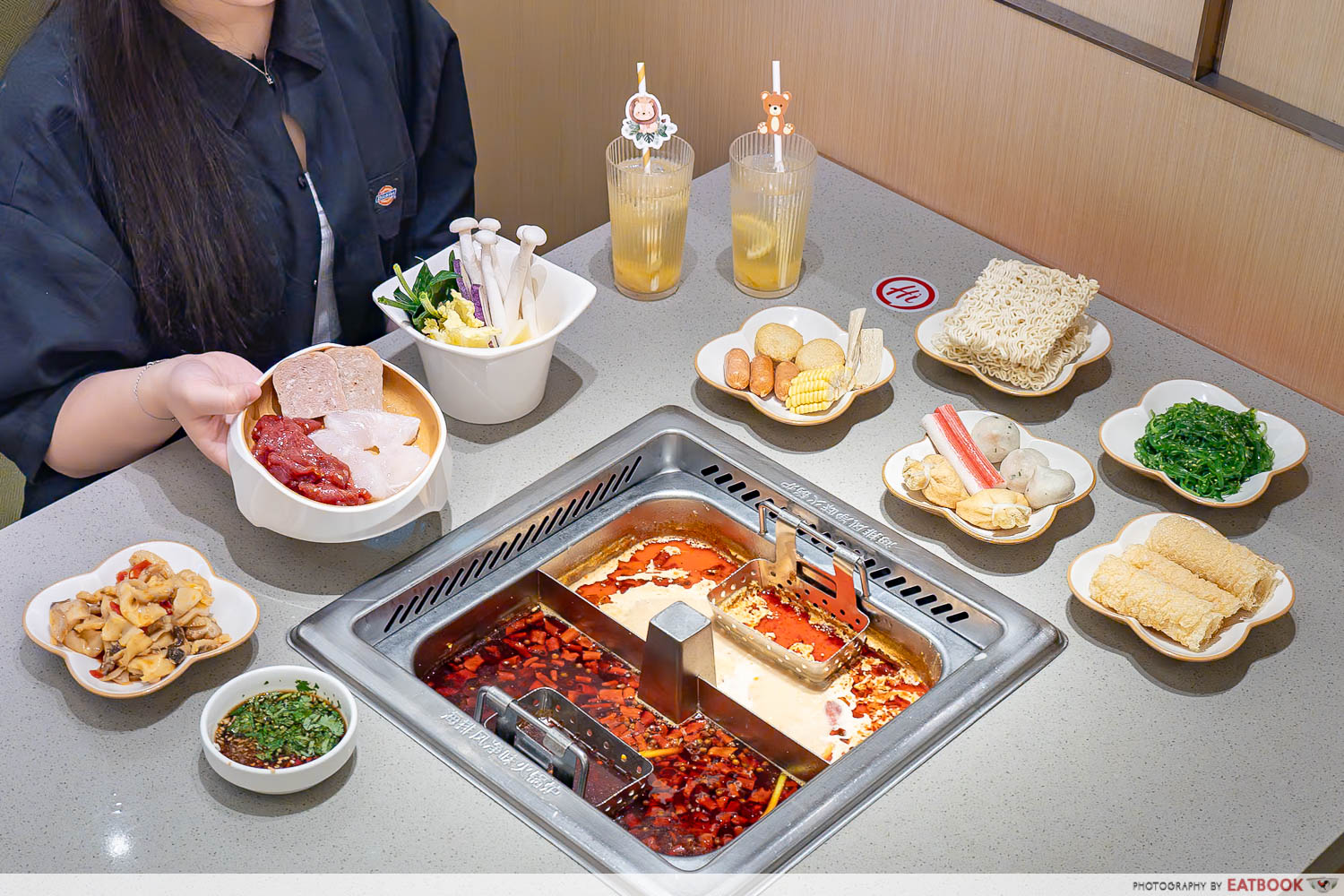
Complaints about Chinese F&B integration are sometimes legitimate, with Mandarin-only menus, for instance, alienating non-speakers. But the point is simply this: there is no grand conspiracy to “take over” Singapore, nor is the current situation due to the moral failings of Chinese individuals. Rather, structural developments in the global economy, coupled with the pro-business, entrepôt nature of Singapore, have led to the influx of mainland Chinese F&B. Previously, Singaporeans got used to seeing American or Japanese chains everywhere. Now, it’s China’s turn.
It just so happens that this rise of Chinese F&B coincides with the decline of local F&B, which gives one the impression that Chinese brands are an existential threat. It’s not. The real issue is that the industry itself is facing a systemic crisis.
10 Famous F&B Brands That Closed Down In 2025 And 2026
F&B is an industry riddled with high costs
Talk to almost anyone from the F&B industry, and they’ll likely complain to you about the high prices, including rental and manpower costs. This has led to something of a bloodbath in recent years, with eateries closing left and right. Workers bear the brunt of these closures, especially since many live paycheck to paycheck.
“We Worked 12 Hours A Day For Zero Pay”: The Harsh Realities Of F&B Work In Singapore
To bring up numbers cited in that article, between January and October 2025, 2,431 establishments shut down, while 82% of those registered for up to five years had never made a profit. Those are grim numbers indeed.
A closer look at the industry’s earnings reveals why this may be the case. In this written answer by DPM Gan Kim Yong, the statistics, as we interpret them, tell a revealing story: the industry is earning more than ever, but keeping less and less of it. More worryingly, rental costs alone are swallowing up far more than what the entire sector walks away with, despite a dip in total rental costs in 2024.
And there’s plenty of anecdotal evidence of this, too. In an article by The Drinks Business, Alvin Gho, co-founder of the now-closed Wine RVLT, said costs were up 30% while revenues had fallen. And in this Facebook post, it was revealed that Flor Patisserie saw its rent jump 57% upon lease renewal, forcing it to shut its last physical outlet.
So there we have it. High rental prices, along with a surge in other prices such as manpower and food costs, have likely contributed to F&B businesses struggling.
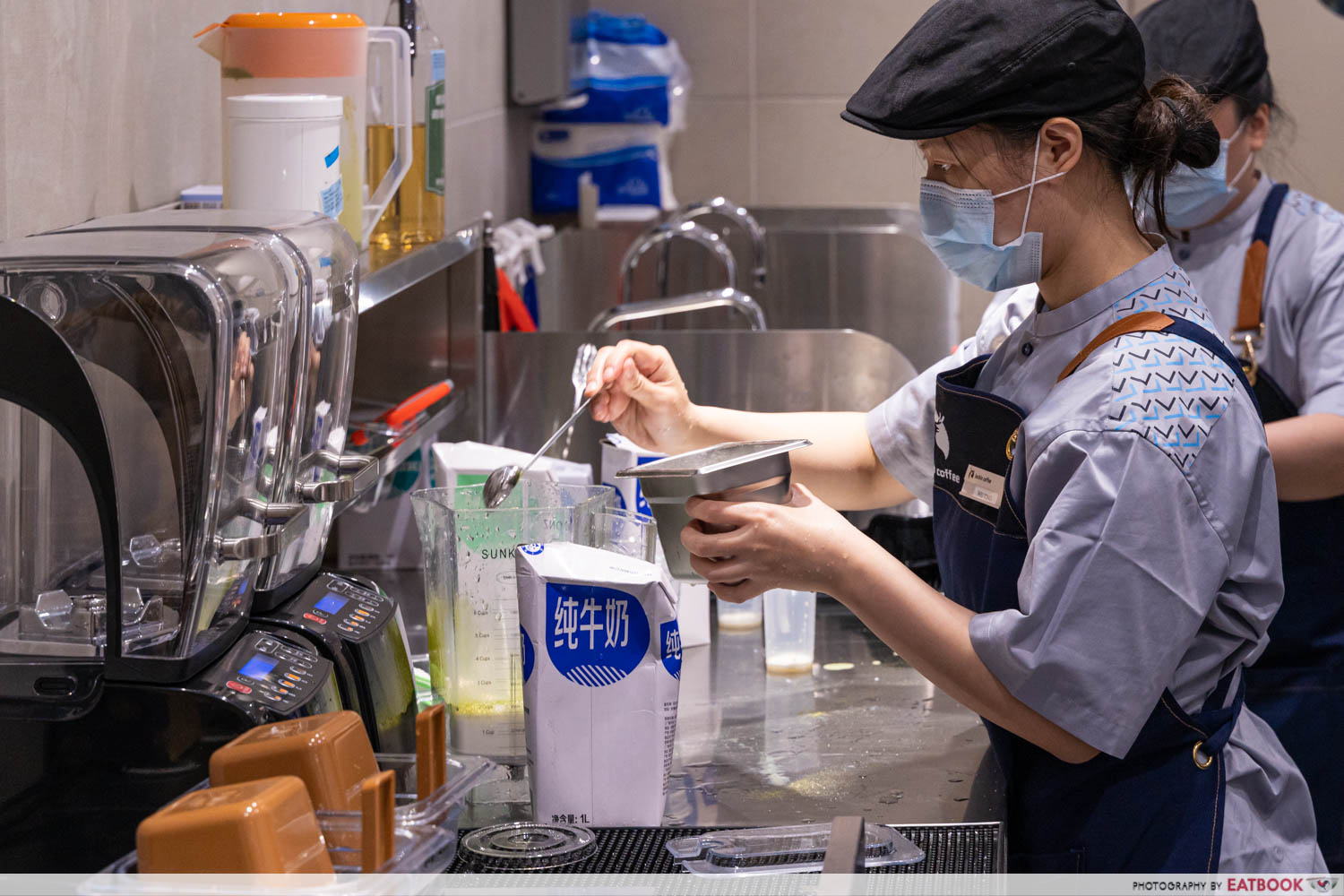
But when costs are high, and F&B businesses are always closing, that creates a gap in the market that can be filled by entities with strong capital and economies of scale. And that’s an advantage that many Chinese F&B brands, such as Mixue and Luckin Coffee, have in spades.
Mixue, for instance, controls its entire supply chain, including growing, harvesting, transporting, and manufacturing much of what it sells, enabling massive economies of scale and ultra-efficient production. Some of these brands are so much larger than your mom-and-pop local F&B that they can handle the usual cost pressures. They simply compete at a different level.
The growth of Chinese F&B in Singapore is a manifestation of a deeper underlying issue: the extremely high costs necessary to run these businesses. Policies are needed to rectify this issue, whether that be rental caps or more targeted grants and subsidies for local F&B businesses. We can’t override the competitive advantage that Chinese F&B businesses have, but what we can do is to create a better environment for local F&B to thrive.
We’ve explained some of the structural and economic reasons that led to the rise of Chinese F&B in Singapore, but that still leaves the more uncomfortable question: why does this provoke such a strong reaction?
Is there an element of xenophobia in all this?
According to the Oxford Dictionary definition, xenophobia is “a strong feeling of dislike or fear of people from other countries”. Xenophobia is a form of prejudice, often based on overgeneralisations or misunderstandings of a particular group.
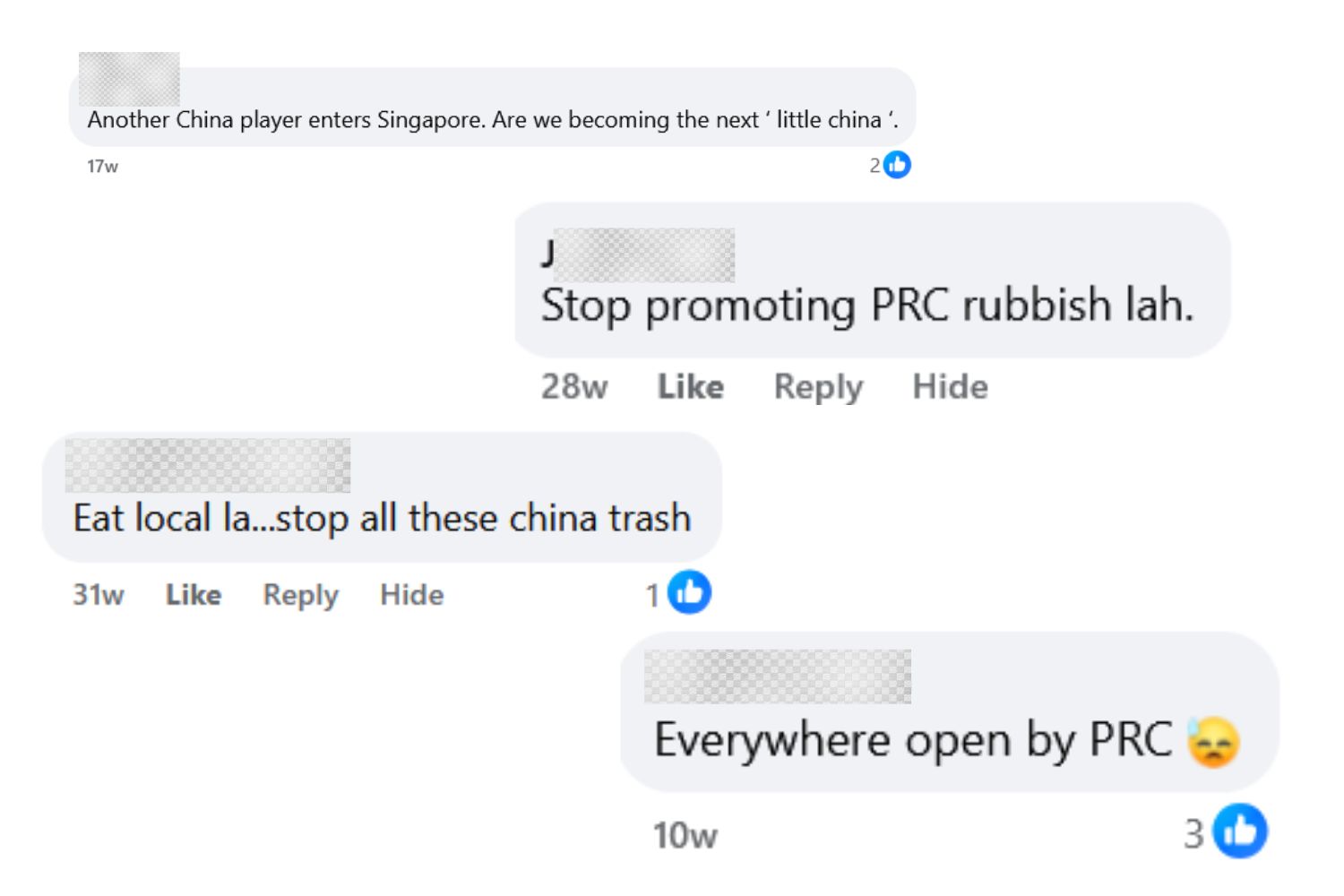 A few anti-Chinese comments on our Facebook page
For decades, the average Singaporean’s impression of China was low. When Chinese tourists visited Singapore, certain loud and uncouth habits, far from ubiquitous in a country as large and diverse as China, were used to stereotype a nation of more than a billion people. To this day, we still hear Singaporeans use anti-Chinese slurs, with some appearing on our Facebook comments.
The more recent expansion of Chinese F&B in Singapore also comes at a time when the US and China are locked in a Second Cold War, so geopolitical anxieties seep into the media we consume, especially those from the West. And so when we go to the shopping mall and see all these flashy new Chinese restaurants, these internalised fears may turn into existential worries for the survival of our food culture.
While many Singaporeans have a low impression of China, positive feelings towards the likes of the US, Japan, and South Korea mean that any soft power projection from those countries is seen as a good thing and not some “takeover”. Some people devote their entire lives to watching anime and listening to K-pop, or are wholly dependent on the Apple and Google ecosystems. But when a Mixue opens next door, someone is going to complain about it. That’s why some have used the term “sinophobia” to describe these anxieties—a specific prejudice against people from China.
We understand where some of these feelings come from, and the geopolitical anxieties and recent controversies—such as the racialised clickbait about Singapore being posted on Chinese social media—definitely exacerbate them. But we must remember to look at things holistically and without prejudice.
The influx of Chinese F&B in Singapore is driven largely by economic factors. We can criticise the economics, yes. We can even criticise the poor attempts by Chinese businesses to adapt to our local culture. But we must never entertain narratives built on prejudice.
For a story about an 80-year-old rice dumpling brand, read our Kim Choo Kueh Chang feature. For a look at Singapore’s first sake brewery, read our Orchid Sake Brewery feature.
Kim Choo Kueh Chang: The 80-Year-Old Story Behind SG’s Iconic Rice Dumpling Brand
Top In Asia


