

Changi Airport will begin the first phase of deploying autonomous wheelchairs following successful trials involving more than 13,000 passengers at Terminals 2 and 3.
Announcing the rollout in a joint media release on Tuesday (Aug 4), Changi Airport Group (CAG) and ground handling partner SATS said the initiative is aimed at enhancing the travel experience for passengers with reduced mobility (PRMs).
It is intended to enable PRMs to navigate the terminals more independently, reducing reliance on one-to-one staff assistance, especially during periods of high demand. This will allow ground staff to focus on passengers who require higher levels of care and assistance, CAG and SATS said.
The airport expects demand for special assistance services to increase as Singapore’s population ages and as air travel continues to grow.
Changi Airport recorded a 20 per cent increase in requests for wheelchair assistance between 2023 and 2025, reflecting the growing need for mobility support among travellers.
“Meeting this growing demand with traditional wheelchair services require significant manpower and coordination across multiple airport touchpoints,” said CAG and SATS.
They added that the deployment is expected to support about 10 per cent of Changi Airport’s daily mobility assistance demand.
How it works
According to CAG and SATS, the autonomous wheelchairs are equipped with advanced sensors which can detect obstacles and human traffic while navigating customised routes.
They are programmed to transport PRMs along predefined routes within departure and transit areas, with every journey monitored by a SATS ground handling supervisor at a control centre.
The wheelchairs come with several safety features, including seatbelt monitoring, which allows the wheelchair to move only when the seatbelt is securely fastened. They also feature an emergency stop button and an assistance call function.
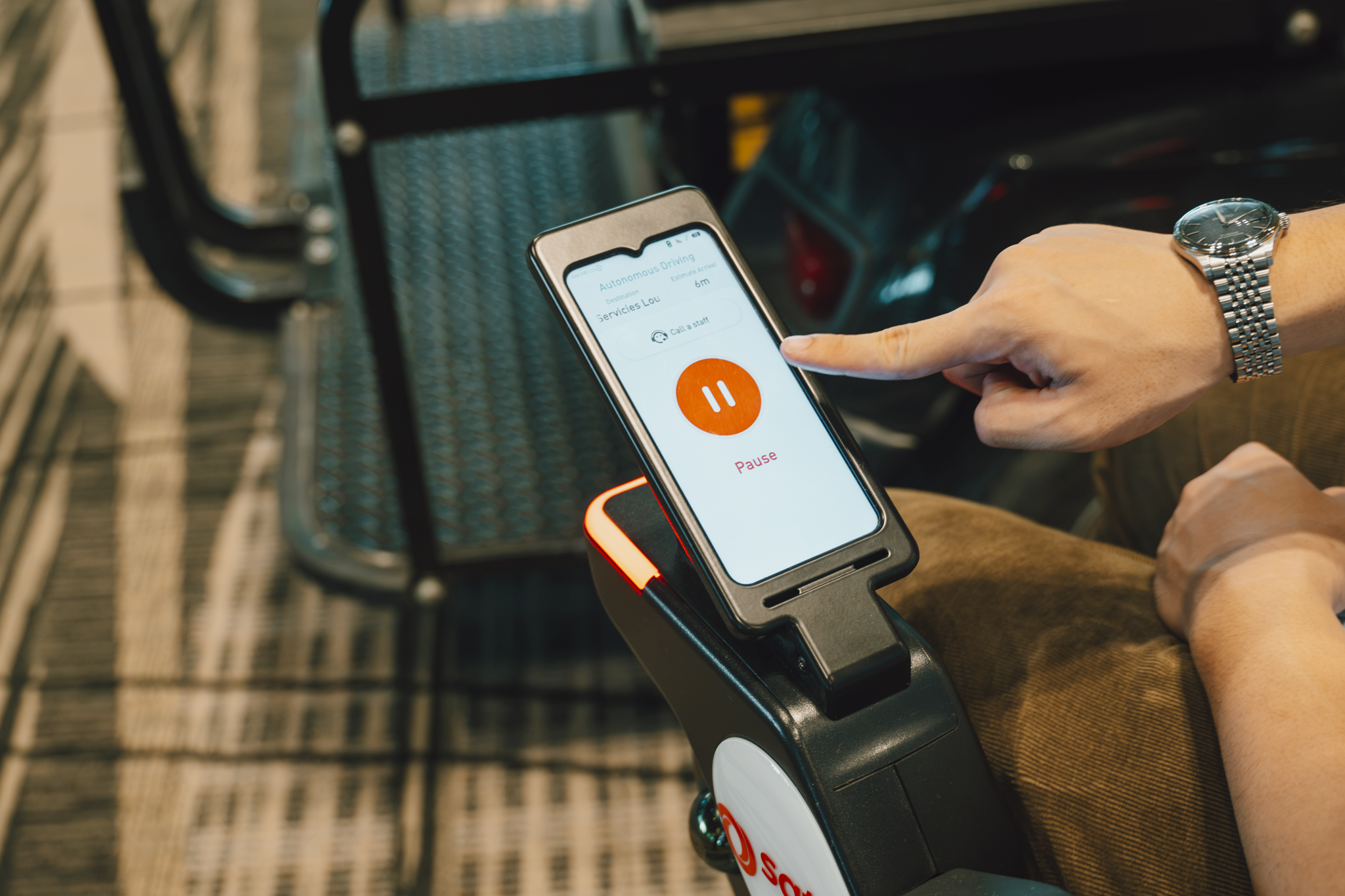
Every wheelchair is also fitted with a rear basket that can accommodate cabin-sized luggage, as well as a control panel for PRMs to request for assistance if needed.
CAG’s senior vice president for airport operations planning, Damon Wong, said the rollout of autonomous wheelchairs is part of the airport’s commitment to make travel “more comfortable and convenient” for every passenger.
“This marks another milestone chapter in our CARE@Changi journey and reflects our ongoing efforts to strengthen the mobility assistance and explore innovative solutions as demand continues to grow,” Wong added.
SATS’ vice president for subsidiary Asia-Pacific Star and terminal services, Edwin Tan, said the introduction of autonomous wheelchairs not only provides PRMs another option, but also equips its workforce with new skills to work alongside advanced technologies.
[[nid:741132]]
editor@asiaone.com
Top In Asia

