

While he declined to reveal the specific organisations he worked for, he tells 8days.sg that years spent building systems, streamlining workflows and managing risks have unexpectedly prepared him for life as a hawker.
“As I was leaving the corporate world, I thought, what’s my next move going to be? It has to be something that I enjoy doing,” he recalls.
The answer, as it turned out, was food.
Wanted to build something of his own
Melvyn, who is of Chinese, Indian, Portuguese and British descent, says the decision to leave cybersecurity stemmed from a desire to create something that belonged entirely to him.
“I spent 16 years in cybersecurity, and over time, I wanted to build something of my own,” he says thoughtfully. “Something where the effort I put in shows up immediately in what I do.”
Interestingly, Melvyn never seriously considered starting his own cybersecurity consultancy.
“I’ve wanted to start an F&B business for a long time, but there was never a chance until I reached a point where I was burnt out and decided it was the right time to put it into action,” he says.
The decision also came with a significant financial sacrifice.
“I would be lying if I said I wasn’t worried about the pay cut. But this is a necessary step when stepping out of your comfort zone,” he says.
Not drawing a salary at the moment
At the moment, Melvyn says he is not drawing a salary at all, choosing instead to pump all revenue back into the business.
After leaving his job, he took a few months to rest before exploring opportunities in the F&B industry. One of his first attempts involved applying for NEA’s incubation stall programme for aspiring hawkers.
He spent months preparing for the selection process but ultimately wasn’t selected after the food tasting stage. Rather than abandon the idea, he decided to secure a hawker stall through the public bidding system instead.
Interestingly, selling nasi lemak wasn’t his original plan.
“I initially wanted to sell chicken curry as I feel I cook a mean chicken curry,” he says with a laugh.
However, after studying the market around him, he concluded that nasi lemak would have broader appeal.
“I analysed the markets around me. Stalls do not last long if they just sell curries,” he explains.
The dish also held personal significance.
“Nasi lemak is one of the comfort foods I go to when I was working around town, and it’s better received by folks looking for a complete meal. Who doesn’t like fried chicken?”
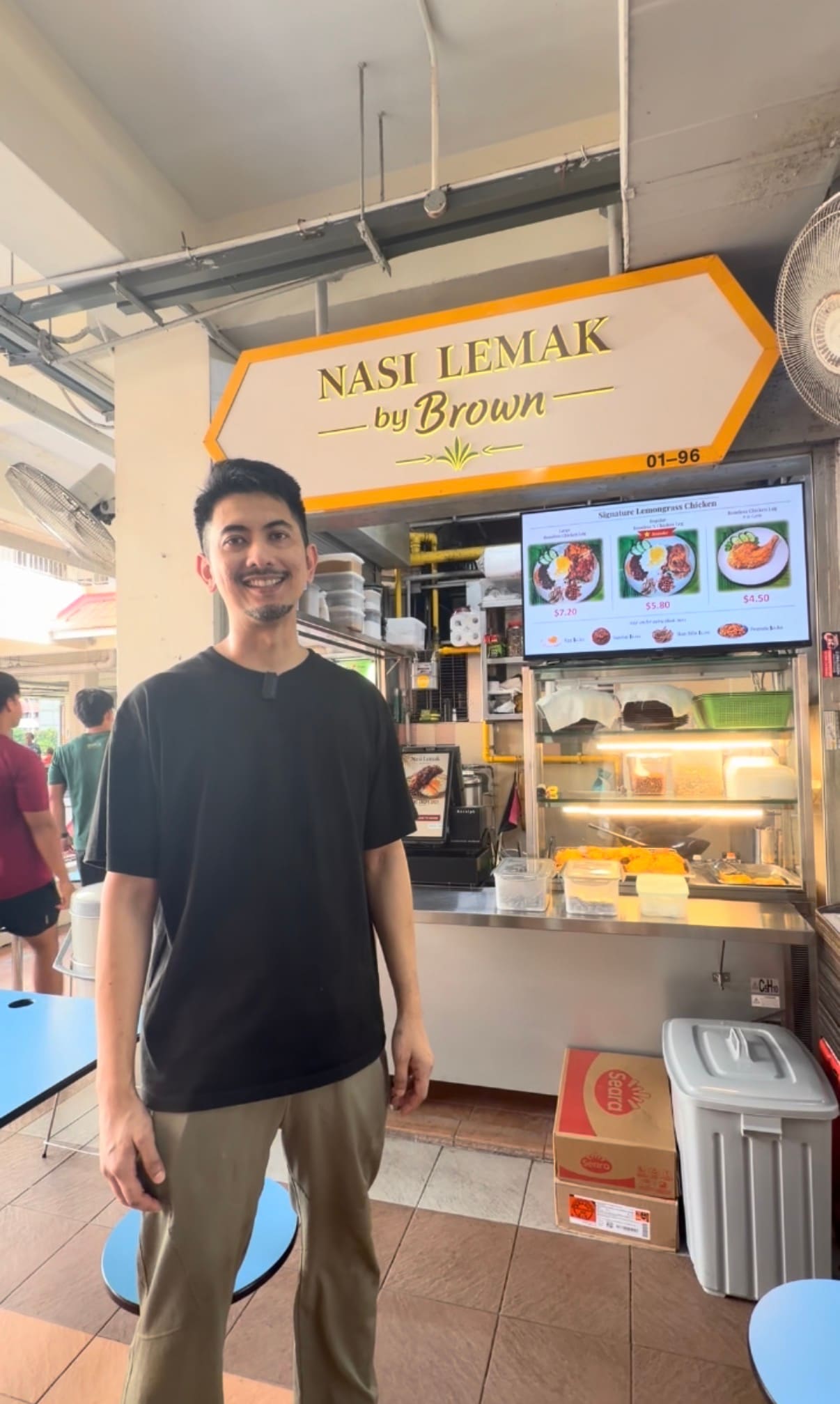
“I chose Golden Mile Food Centre because there wasn’t a specialised nasi lemak stall here,” he says. “It was an opportunity to set up shop and serve the community.”
As for his cooking skills, the hawker says he is entirely self-taught, having learnt from a mix of online resources and people around him.
One-man operation
Unlike many nasi lemak stalls that offer a variety of proteins and side dishes, Nasi Lemak By Brown keeps things remarkably focused.
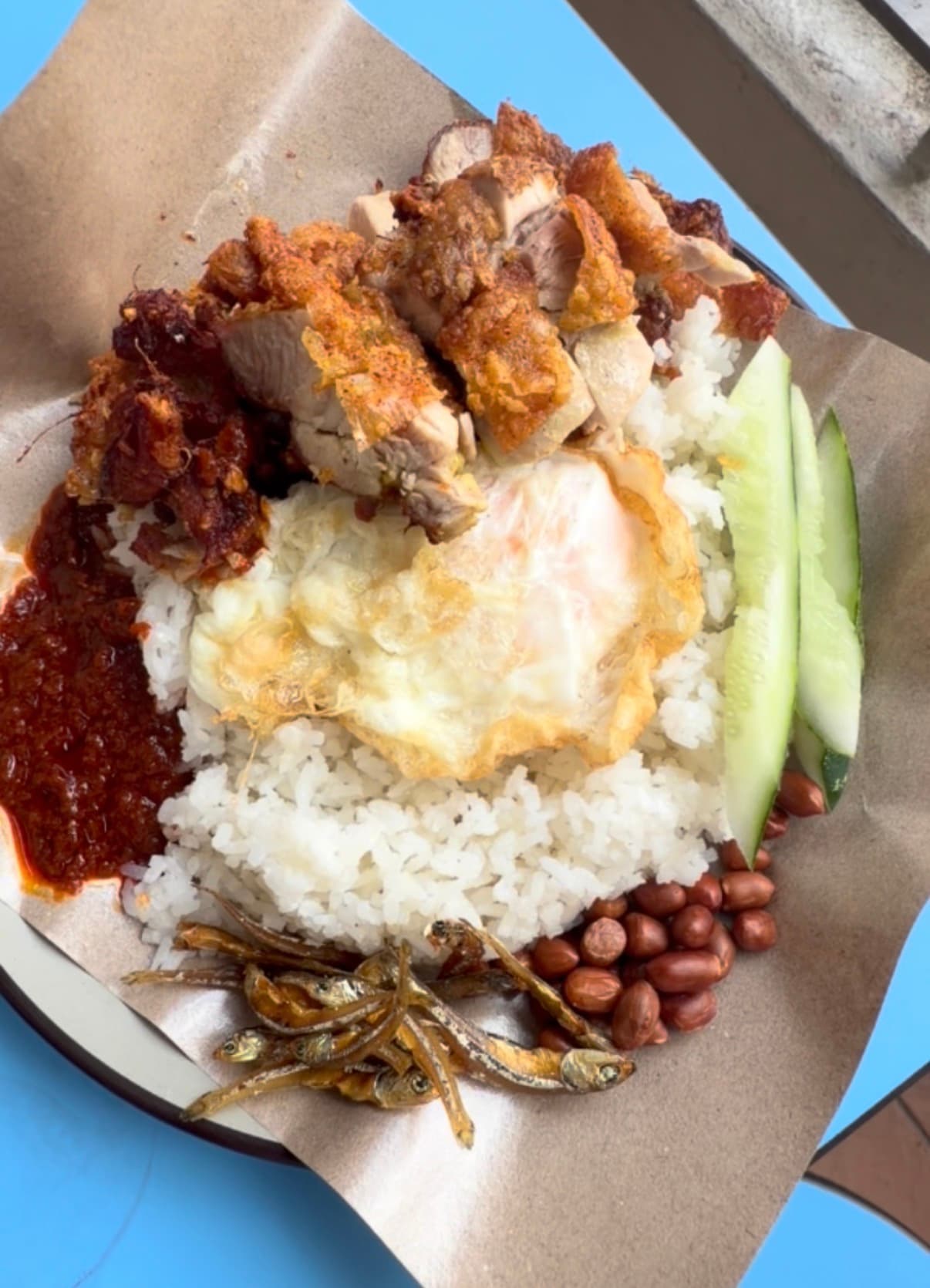
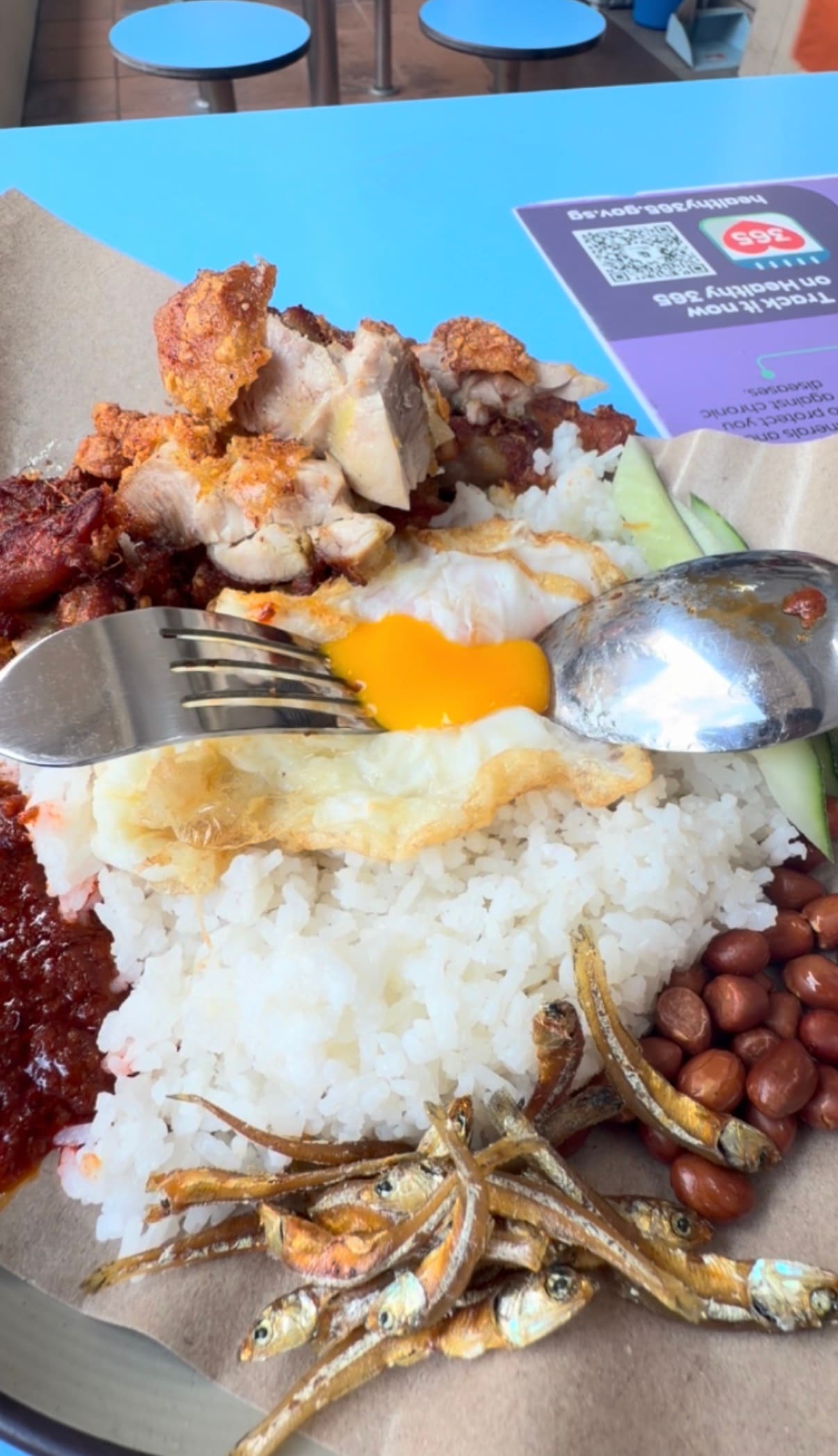
The menu revolves around a single signature item: lemongrass chicken nasi lemak.
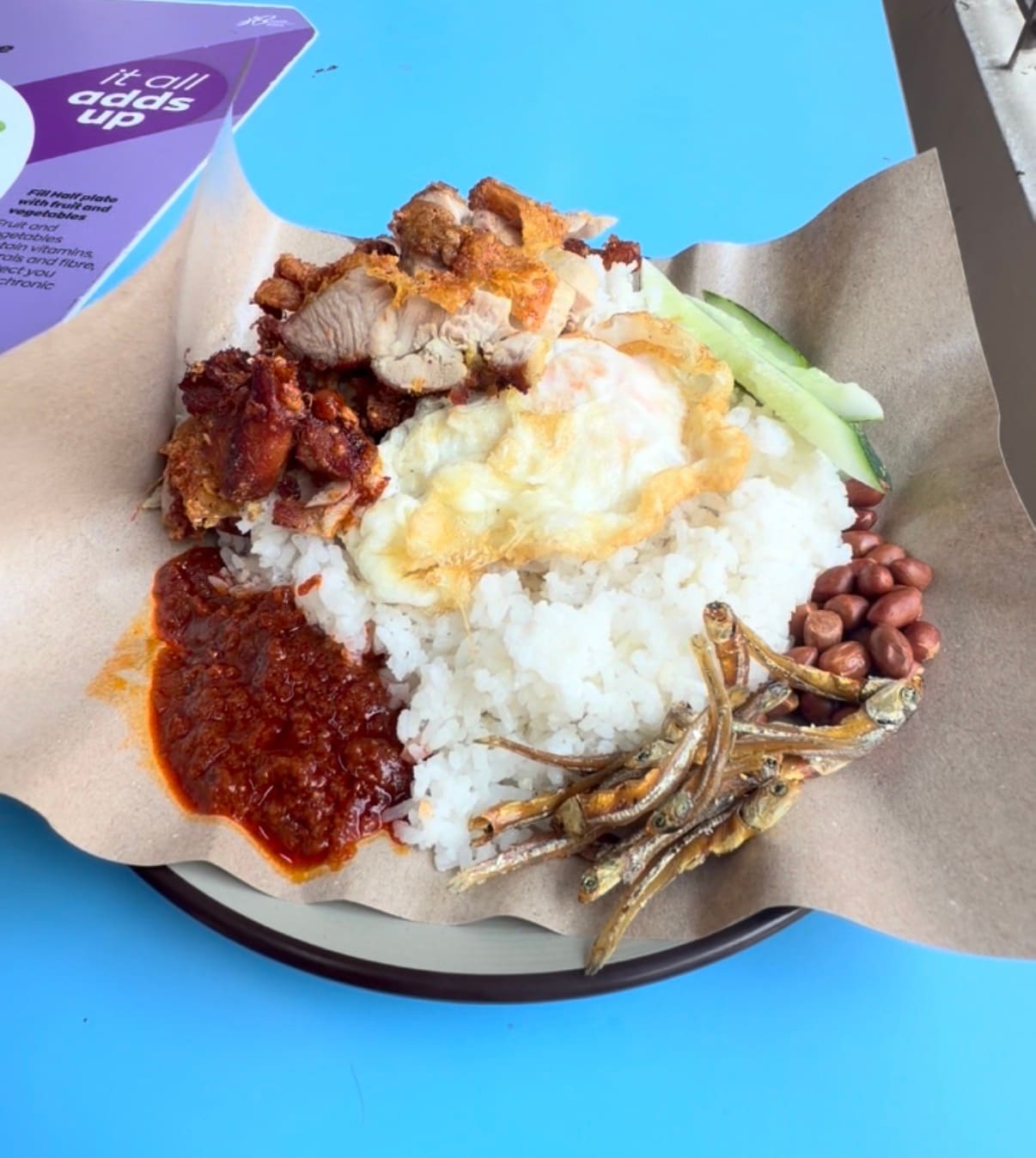
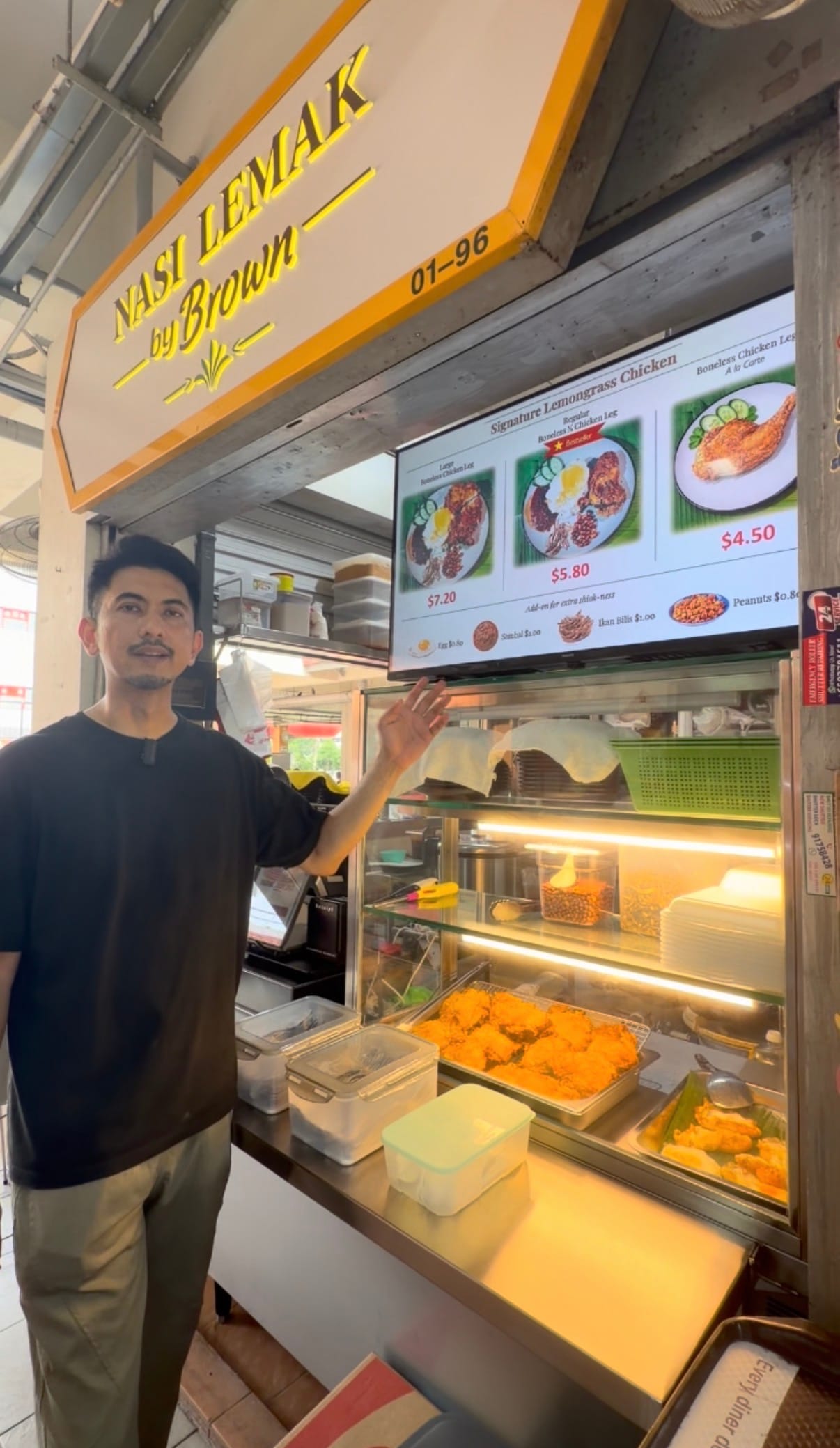
Customers can choose between a Regular Lemongrass Chicken Nasi Lemak ($5.80) and a Large Lemongrass Chicken Nasi Lemak ($7.20), both featuring Melvyn’s signature boneless fried chicken leg. The chicken can also be ordered on its own for $4.50.
To get the business off the ground, Melvyn says he relied on his personal savings, investing an estimated $30,000 into the venture.
These days, Melvyn’s routine looks vastly different from his former corporate life.
A typical day begins at around 7am, when he starts preparing the food. After the lunch rush, he spends another three hours marinating chicken for the next day, taking stock and cleaning the stall.
For now, the business is a one-man operation.
“Everything from cooking, cashiering, logistics and cleaning. Even social media,” he says.
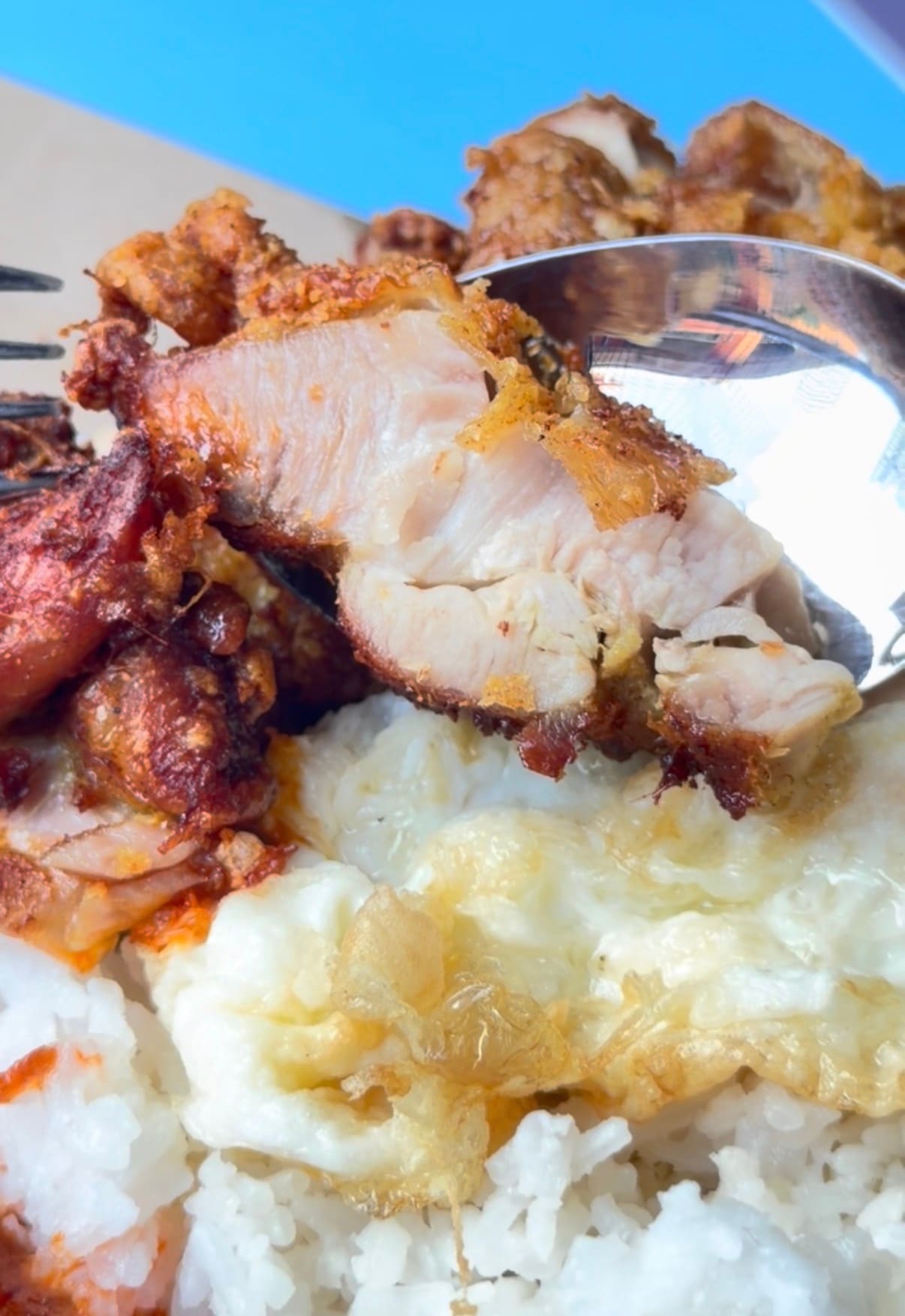
Signature lemongrass chicken marinated for up to 24 Hours
If there’s one thing Melvyn hopes customers remember about his nasi lemak, it’s the chicken. The stall’s boneless chicken leg is marinated for between 15 and 24 hours before frying, allowing the flavours of lemongrass to fully permeate the meat.
“Using it to marinate the chicken will also actually break the proteins apart a little bit,” he explains. After marinating it between 15 to 24 hours, the lemongrass will be infused into the chicken, so when fried, there will be a nice fragrance,” he adds.
For the rice, Melvyn uses Thai jasmine grains. He says the commercial rice cooker and the way the rice is fluffed after cooking can cause some grains to break apart.
“As I’m self-taught, I’m still learning how to minimise the breakage so that the rice remains whole grain.”
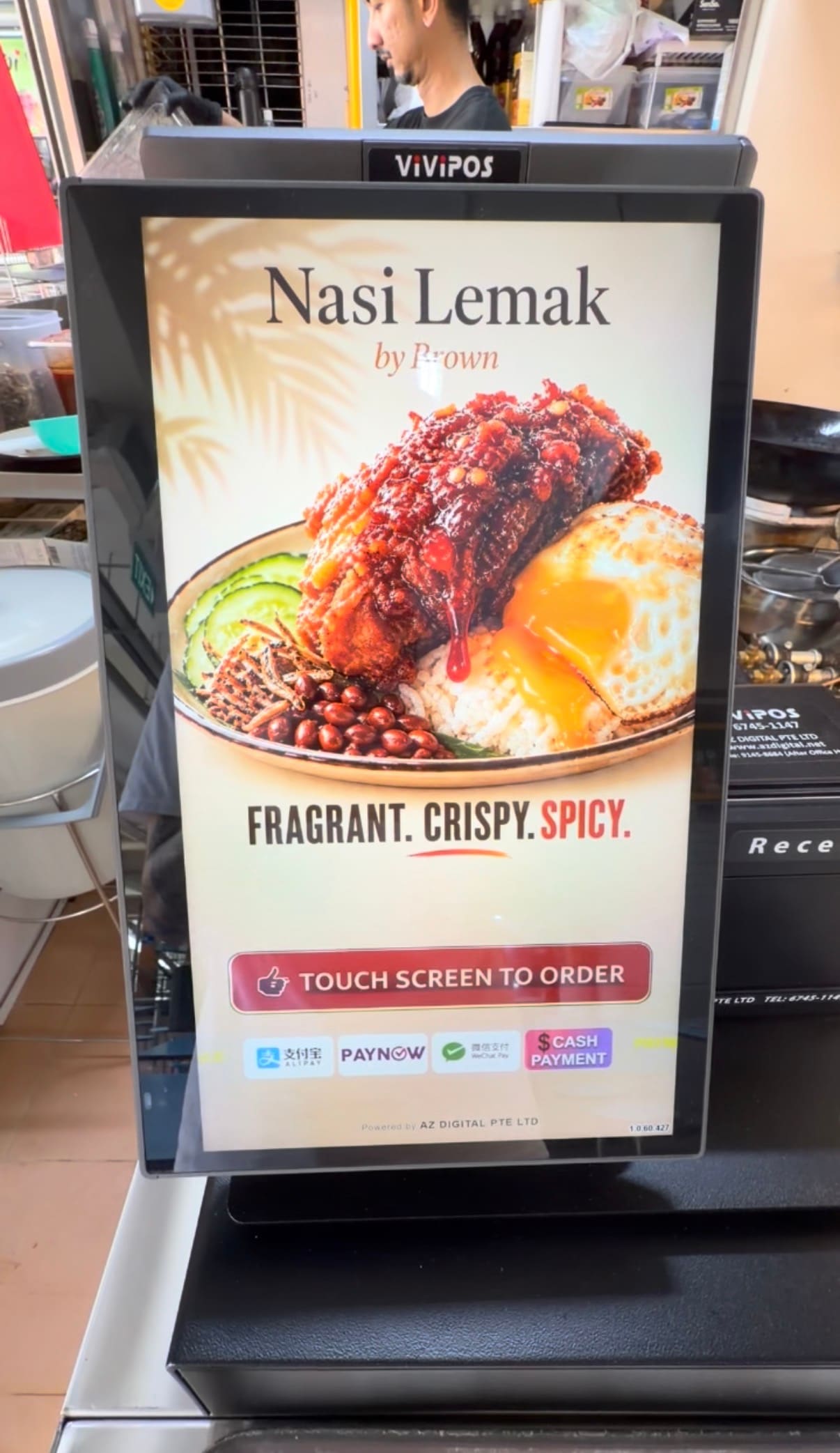
Self-ordering kiosk
Part of his investment went into a self-ordering kiosk installed at the stall, a feature that reflects the former cybersecurity manager’s methodical approach to operations. Customers can place their orders through the kiosk before collecting their food, helping to streamline the ordering process during busy periods.
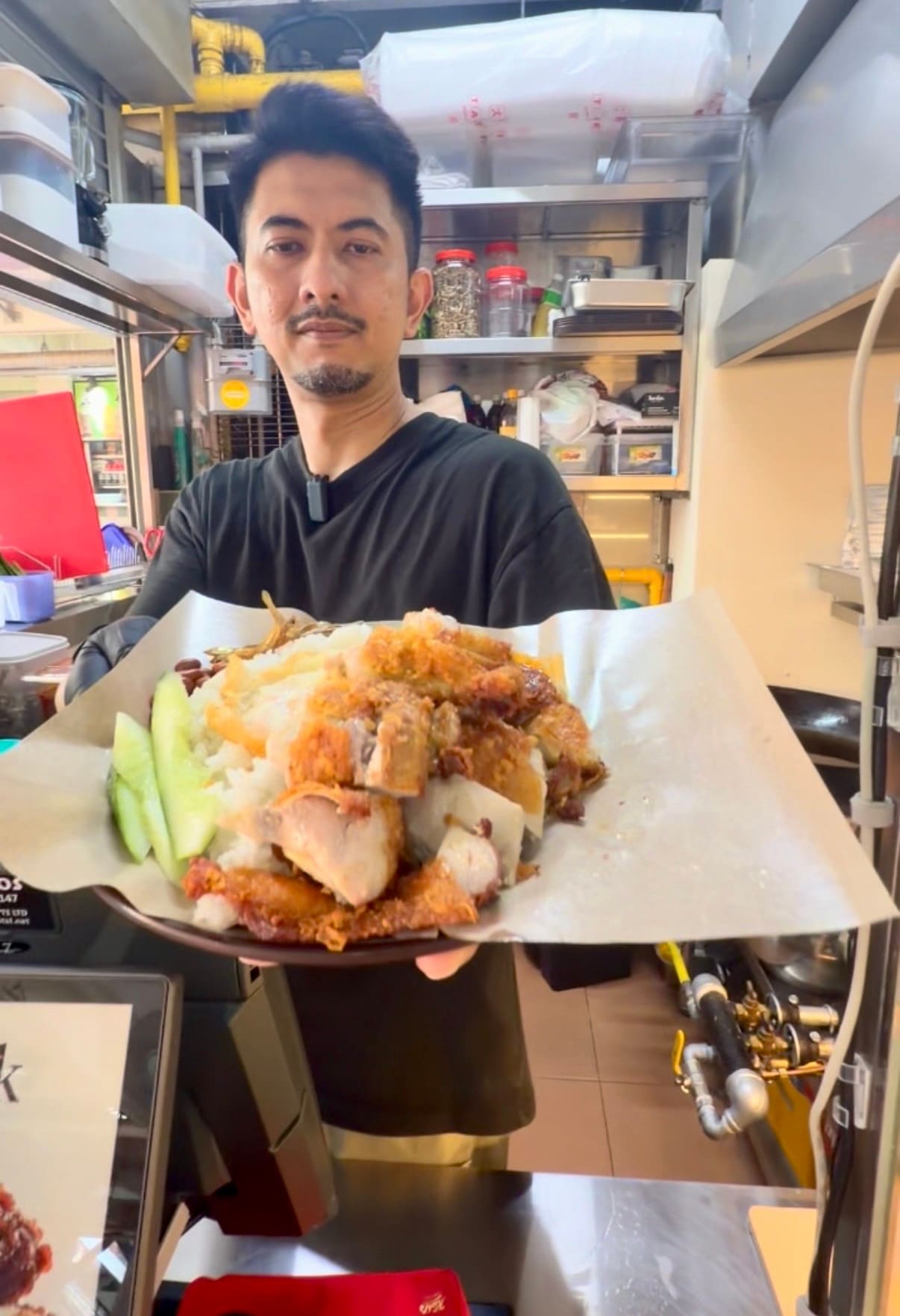
“Changing the suit for an apron has its pros and cons”
Although Melvyn doesn’t regret the career switch, he admits hawker life has proven far more physically demanding than office work. For someone who spent years working in air-conditioned offices, standing beside a fryer for hours daily was an adjustment.
“Changing the suit for an apron has its pros and cons,” he reflects.
Long hours, constant heat and physically demanding work have resulted in burns and heat rashes on multiple occasions. Then there’s the challenge of accurately forecasting demand — something every new hawker eventually learns the hard way.
On some days, Melvyn prepares too much food and ends up discarding unsold fried chicken and coconut rice. On others, the stall sells out faster than expected, forcing him to turn customers away.
“I’m still collecting data on how much to prepare each day,” he says.
Family helped him through the transition
The father of two children aged six and twelve says becoming a hawker wasn’t a decision he made lightly.
“Jumping from a stable corporate job to uncertainty definitely raised some eyebrows, especially from close friends,” Melvyn admits.
However, he stresses that becoming a hawker wasn’t a spur-of-the-moment decision. “I have always wanted to own a business, and my family knows that.”
His wife, who works in the healthcare sector, was particularly supportive of the move. Melvyn also credits his mother and sister for helping him navigate the early days of the business.
Doesn’t miss corporate life
When asked if he misses cybersecurity, Melvyn’s answer comes quickly.
“I don’t miss the job itself,” he says.
That doesn’t mean he’s left everything from his former career behind. In fact, many of the skills he developed over 16 years in cybersecurity continue to shape how he runs his hawker business today.
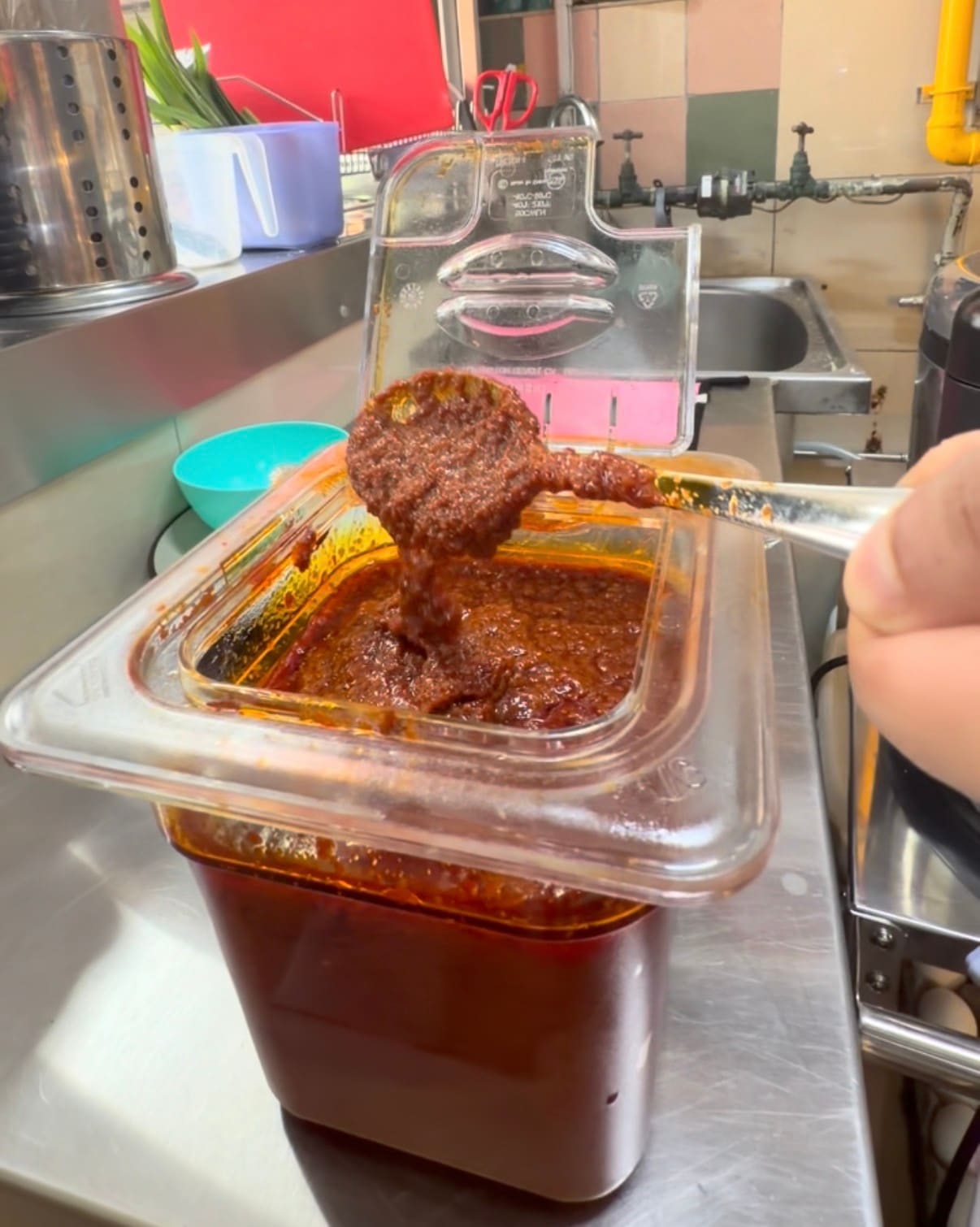
“What I find more meaningful now is that feedback is given immediately and I adjust the food accordingly,” he says, pointing to the countless tweaks he made to his sambal recipe after listening to customer feedback.
For now, Melvyn isn’t in a rush to expand. Instead, he’s focused on refining the systems behind the business and ensuring every plate leaving the stall meets his expectations.
Once that foundation is firmly in place, he hopes to eventually move into a small eatery space where customers can enjoy his food in a more comfortable environment.
These days, the reports and spreadsheets have been replaced by coconut rice, fried chicken and sambal — but the pursuit of constant improvement remains the same.
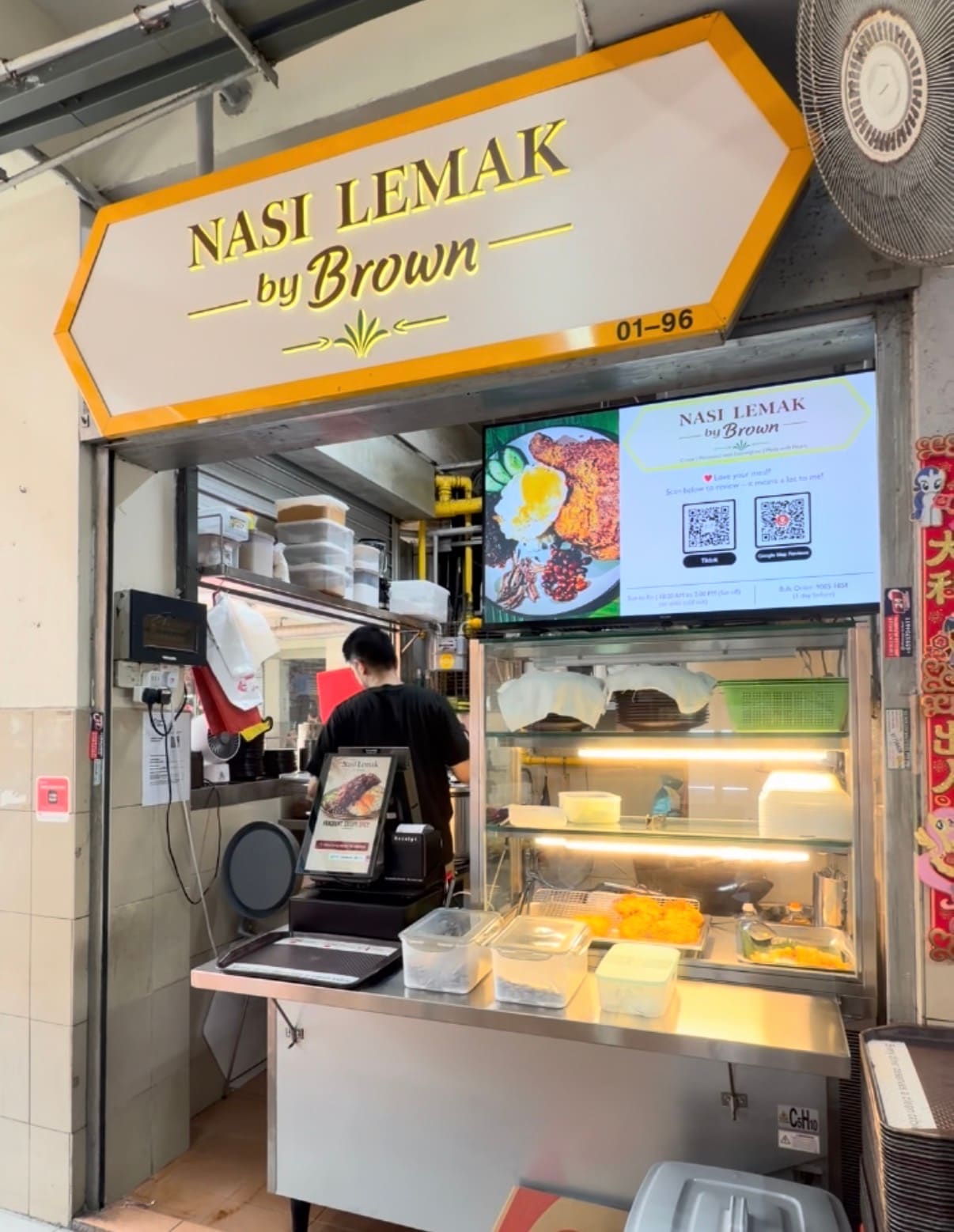
Nasi Lemak By Brown is at #01-96 Golden Mile Food Centre, 505 Beach Rd, S199583. Open Sun to Fri 9am to 2pm. Closed on Sat. Tel: 9005 1858.
Top In Asia
%20after%20a%20350km%20journey%20from%20Sepang.%20PHOTO:%20AsiaOne/Danial%20Zahrin?w=150&resize=150,150&ssl=1 "Satay hunt, cycling and go-karting: What F1 drivers are up to before Singapore Grand Prix")


