

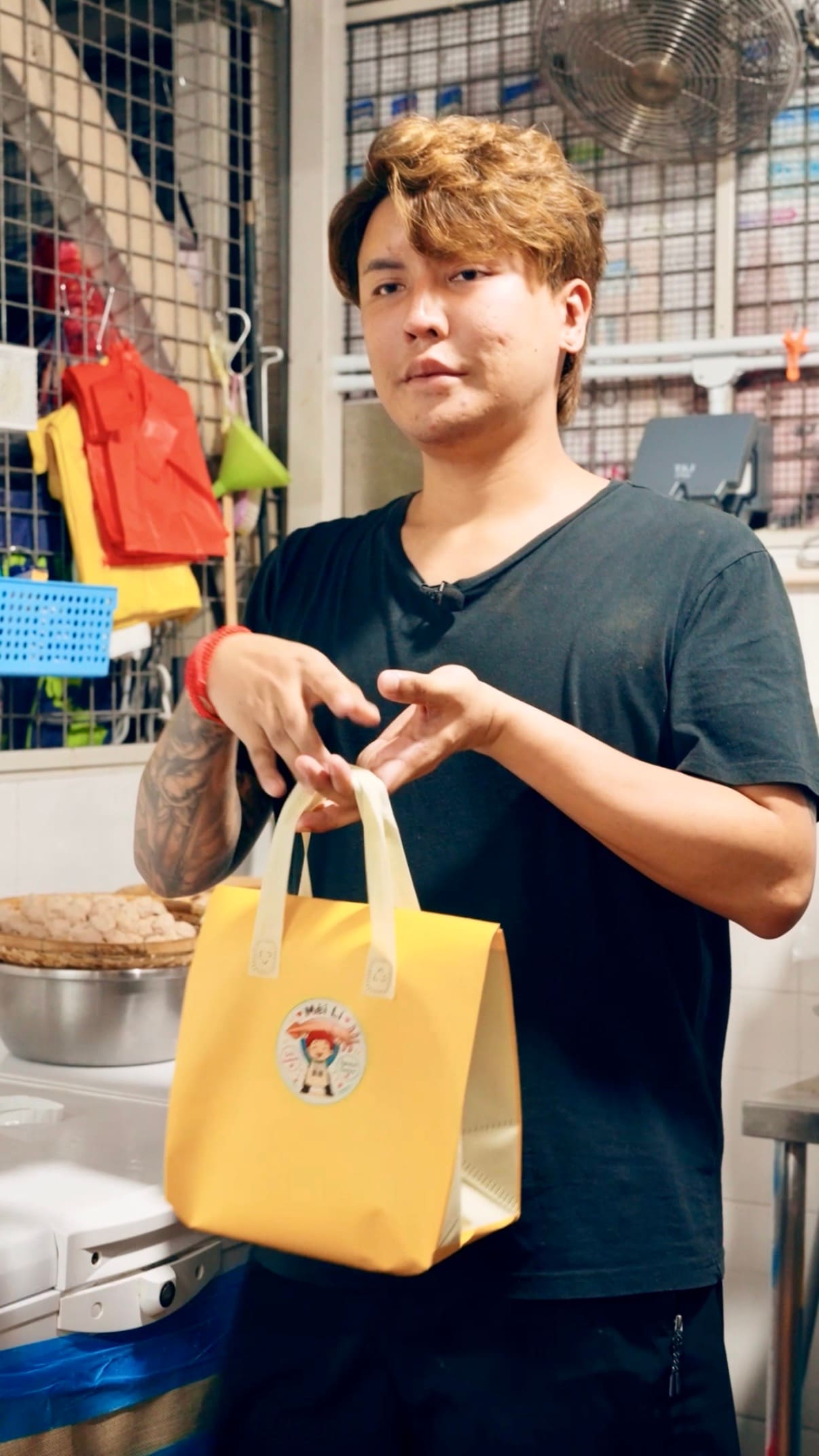
Left Louis Vuitton to pursue social media dream
A Temasek Polytechnic information technology graduate, Eric worked as a client advisor at Louis Vuitton for around two years before quitting at 27 to pursue his dream of becoming a social media content creator. He says he chose customer-facing retail work over IT because he preferred talking to people to working with computers.
Eric began dressing in drag online “for fun, fame and attention”, though he never performed professionally at clubs or live shows.
His content consisted mainly of comedy skits and conversational videos before expanding into live-selling during the pandemic, where he promoted snacks and skincare products through real-time online broadcasts. He has over 150,000 followers across TikTok and Instagram.

Photo: Eric Lim
“There weren’t many people doing [drag content] at the time, and it was difficult for me to land paid campaigns at first. But, I was lucky enough [to be paid eventually],” he says.
His mum was initially unconvinced by her son’s flamboyant online persona.
“She didn’t understand and thought I was making a fool of myself,” he recalls. “I told her, ‘You just wait.’ When the ads and money came in, she then understood.”
Eric earned money from advertisements, live-selling and other campaigns. Although he could make around $4,000 to $5,000 in some months, the income was unreliable.
Social media gigs did not come every month, and clients could take as long as six months to pay him. “Some months, I could have zero [income],” he adds.
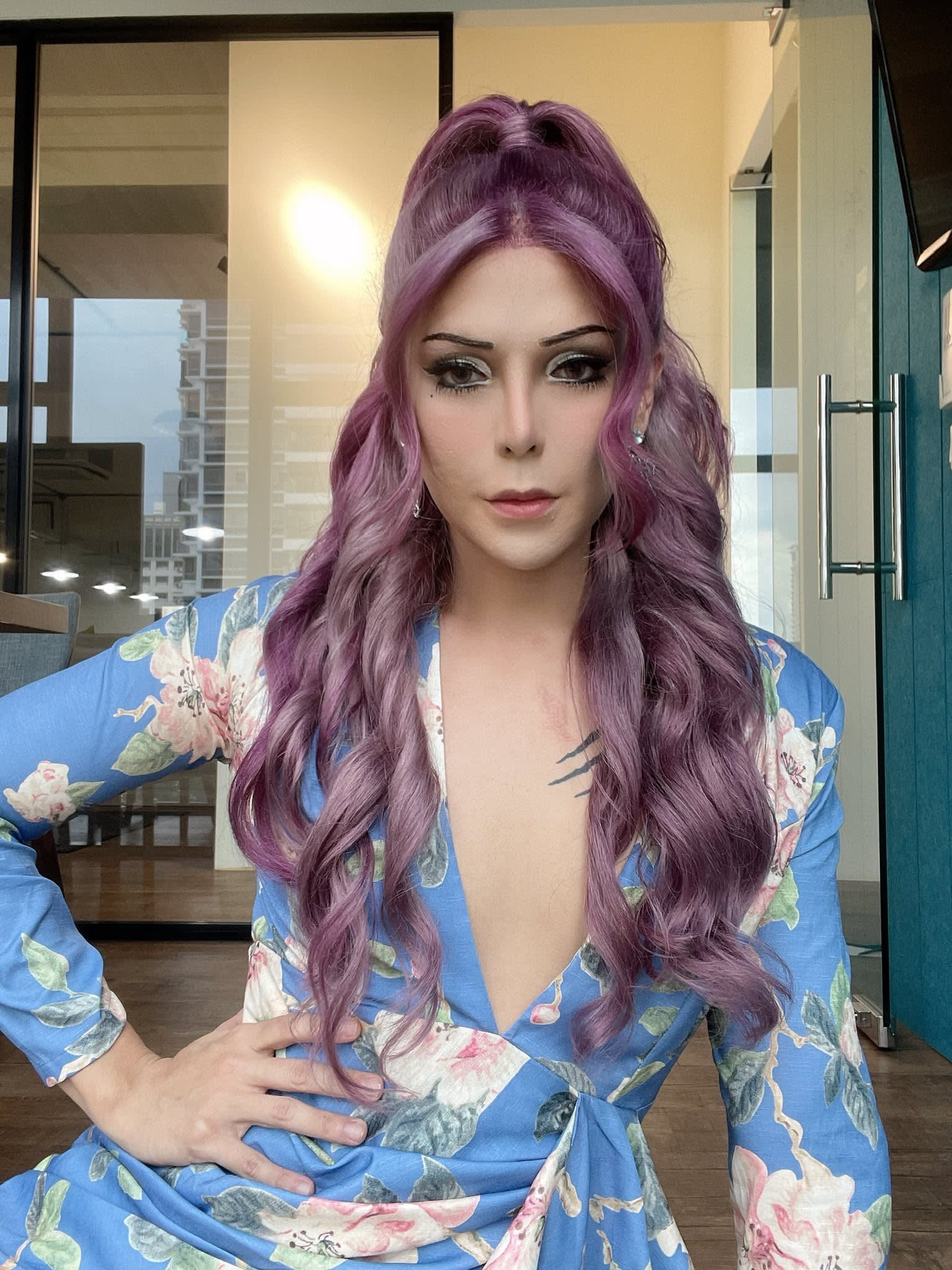
Photo: Eric Lim
Not bothered by cruel comments
With his growing online presence came harassment and nasty remarks about his appearance, but Eric was never one to endure them quietly.
“If someone comments, I’ll fight back. I’ll just say, ‘F*** you, bye,’” he laughs.
Remarks about his nose and speculation over cosmetic procedures no longer faze him either.
“At this age, I really don’t care and I sleep very well at night,” he says.

Quit content creation as jobs dwindled
Eric stopped creating content full-time in November 2025 as the industry became increasingly crowded.
“Content creators, influencers and even actors all moved to live-selling. The market shifted and became more competitive,” he explains.
He subsequently tried returning to full-time retail work at a company he declined to name but was dismissed because, in his words, he “wasn’t up to their standards”.
After eight years in social media, he found it difficult to convince conventional employers that his experience was relevant. Asked whether he considered applying for IT-related roles before joining his mum, Eric says he did not. “Because I’m too old. Nobody wants to hire me,” he says, without wanting to elaborate further.
He eventually decided: “F*** it, I’ll just join my mum.”
Still, Eric doesn’t want his career change framed as a tragic fall from a glamorous life.
“I’ve done it already, so I don’t feel ashamed,” he says of putting aside his makeup and wigs. “It’s a normal stage of survival. I need to move on.”
Mum wanted him to join the business
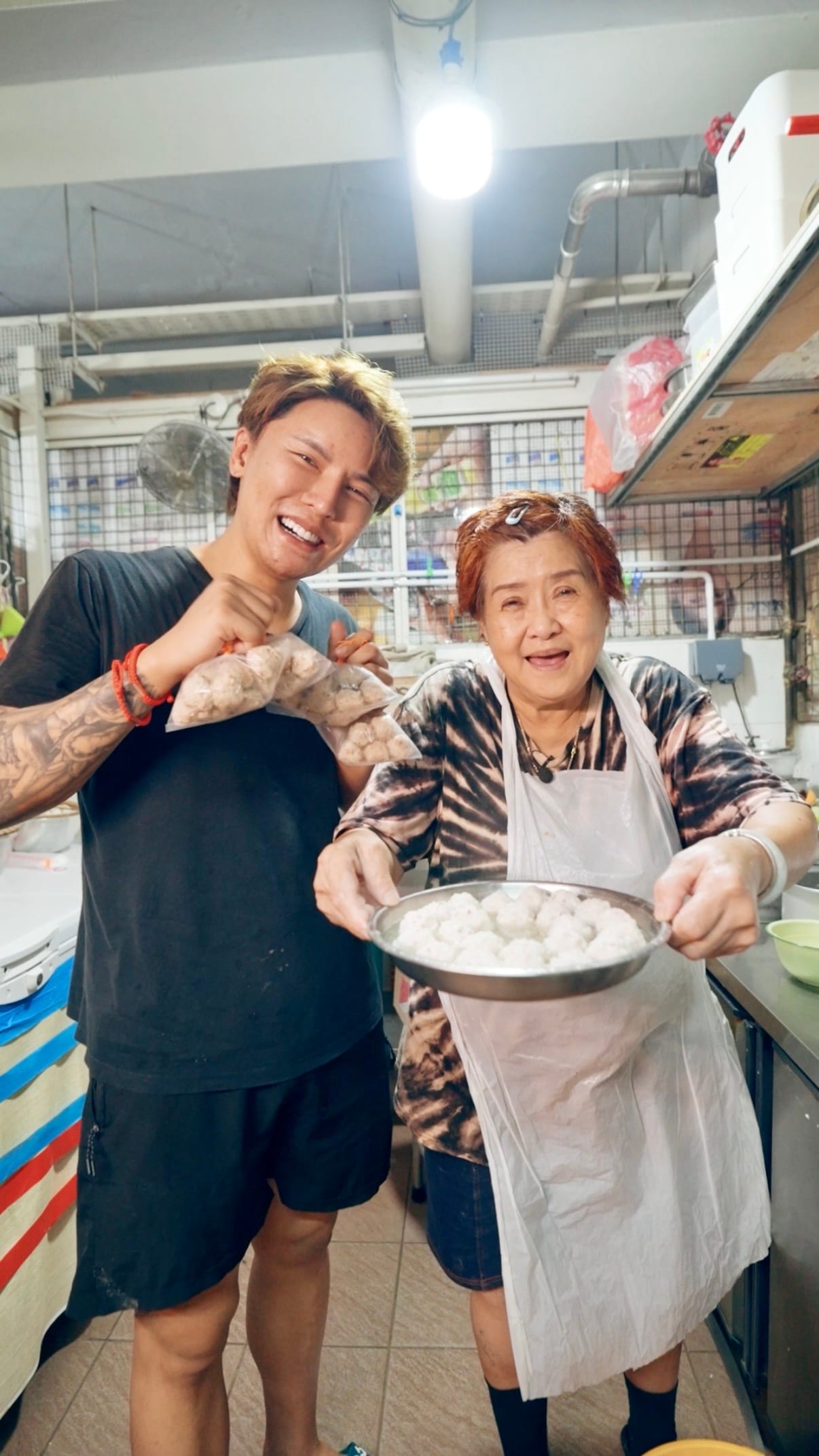
Mei Li had asked her son to join her for six months before he finally agreed.
Part of his decision came from worrying about her age and wanting to spend more time with her. Though she remains healthy and active, Eric hopes to grow the business enough for her to eventually step back.
“I thought, let me give this a try. If I can do it, I can reduce her stress,” he says.
Eric lives with his widowed mum in a three-room HDB flat. He also has an older sister, who works in insurance and is not involved in the hawker business.
“She can scold me, but I can scold her too”
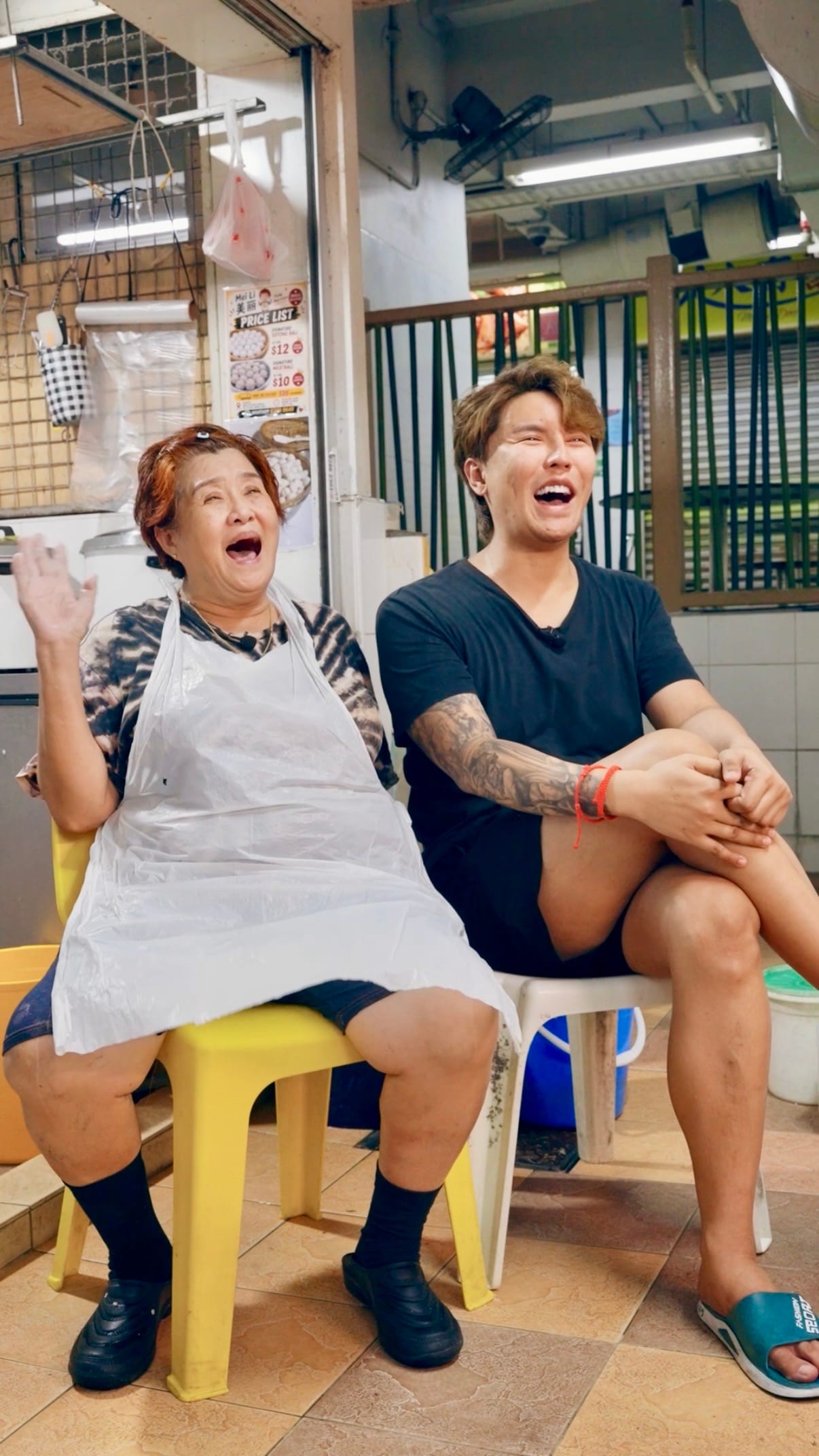
Mother and son occasionally clash over their different working styles: Mei Li is soft-hearted with customers, while Eric takes a more business-minded approach.
“She has the heart to pamper people, especially when she thinks they don’t have much money,” says Eric. “Sometimes I tell her we still need to promote and upsell our items and run it like a business.”
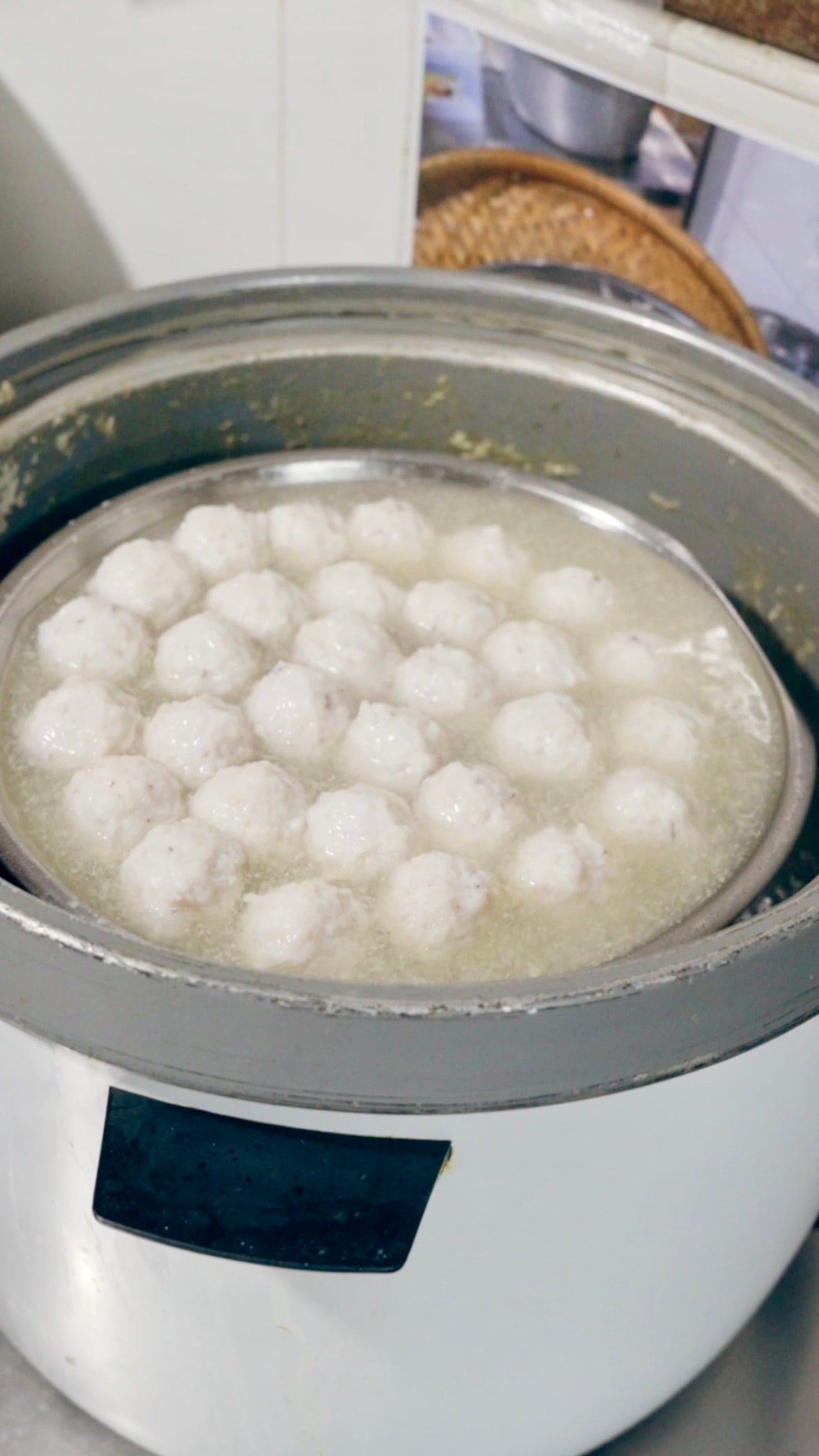
Mei Li appreciates having her son around to handle laborious tasks such as washing and grinding the cuttlefish.
“He helps me, so it takes the pressure off me,” she says. “You can scold your own child. If you hire someone else and scold them like that, they won’t come back the next day.”
Eric laughs that the scolding goes both ways: “She can scold me, but I can scold her too.”

Photo: Eric Lim
Family started selling sotong balls in the 1960s
The family’s sotong ball history stretches back to Eric’s maternal grandfather, who sold them from a roadside stall near the old CID building in the 1960s.
One of Mei Li’s sisters later opened a fish noodle stall called Dong Fang Hong at Hong Lim in the 1980s. However, stiff competition prompted her to revisit their father’s sotong ball recipe, which she refined and turned into the stall’s signature offering.
Mei Li, the middle of three sisters, worked alongside her siblings for more than 20 years. When her older and younger sisters fell ill and stopped working, she continued the business alone.
To make the job less physically taxing, she eventually closed their former stall and switched to the current takeaway-only operation in the wet market section of Hong Lim.
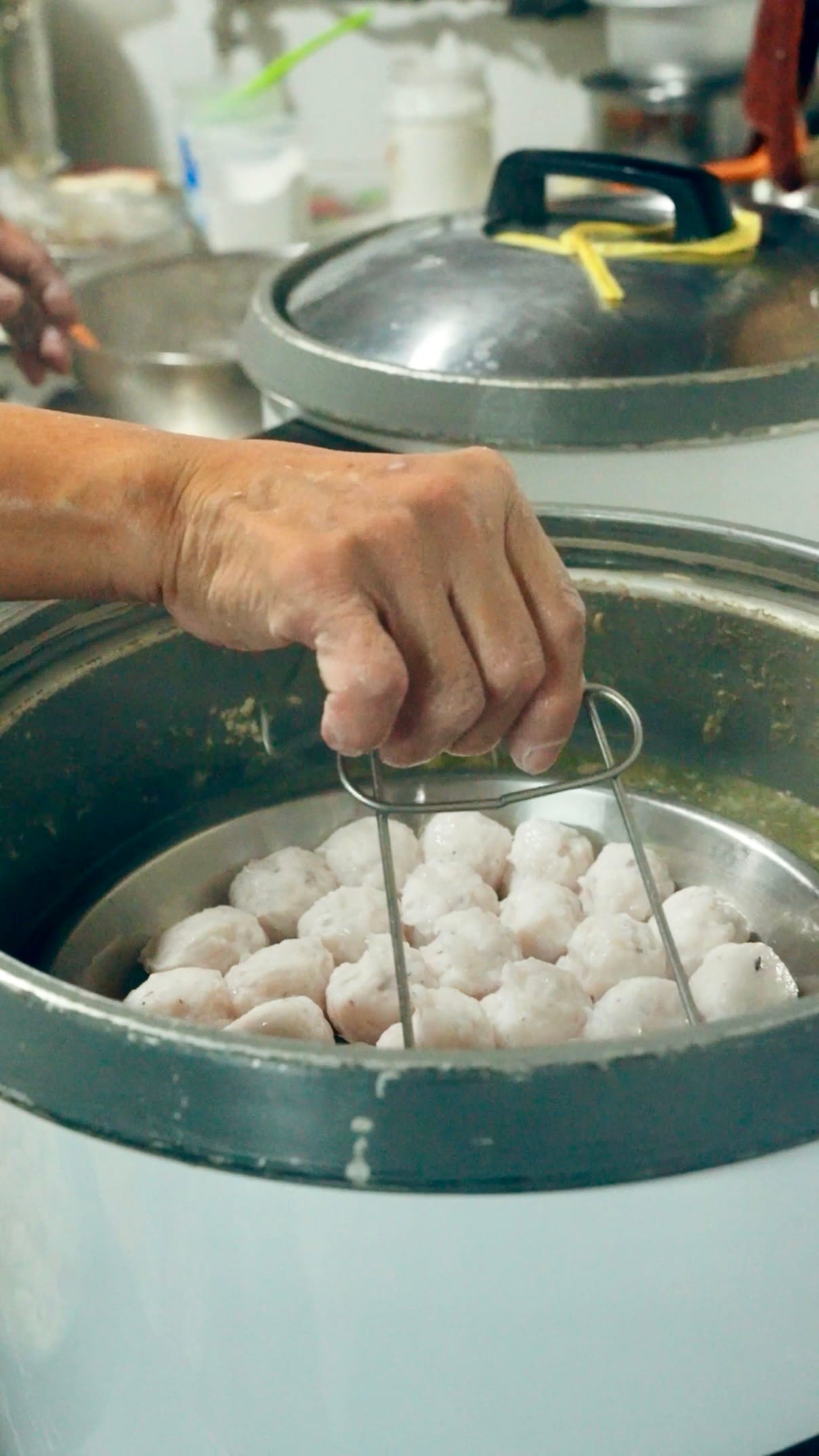
Around 100kg of cuttlefish processed each week
The sotong balls are made using large wild-caught cuttlefish from Indonesia, which the family sources through Jurong Fishery Port. The stall processes around 100kg of whole cuttlefish weekly.
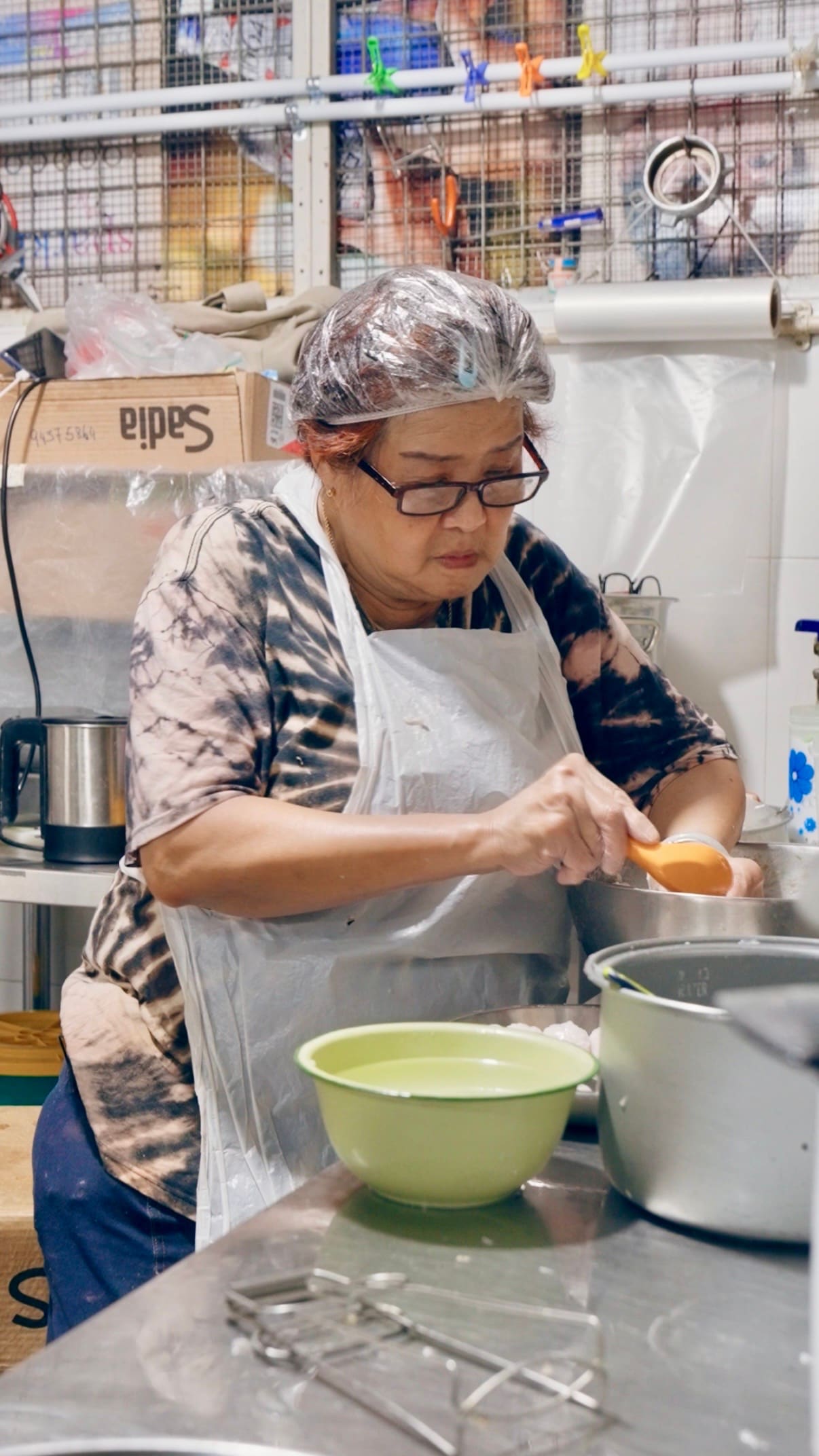
Production is spread across multiple stages. The cuttlefish must first be cleaned and painstakingly skinned before it is ground and carefully seasoned. The paste is then squeezed into individual balls by hand, cooked, cooled and packed.
“The skinning is the most tedious part,” says Eric. “Sotong is very slimy, so it’s really hard to do.”
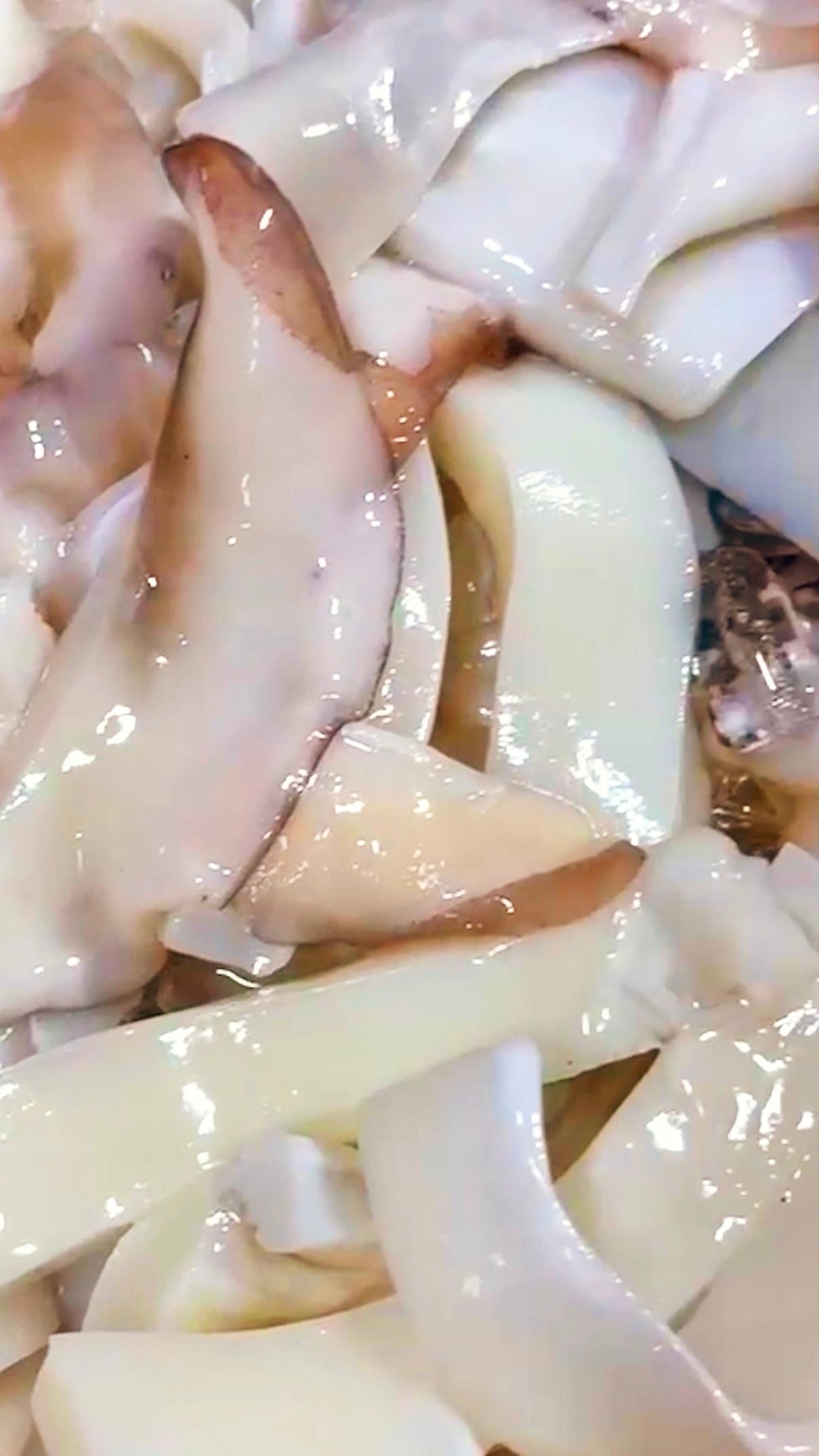
Mei Li also repeatedly slaps the cuttlefish paste to give the finished balls their characteristically bouncy texture.
“A lot of people ask me to use a machine, but what’s the point?” says Eric. “People like the handmade texture. Using a machine and making it by hand are different.”
According to Eric, the balls are made from scratch without additives, though the family keeps its seasoning blend a secret.
“F&B is like art. You add a bit of this and a bit of that, then the whole thing becomes marvellous,” he adds.
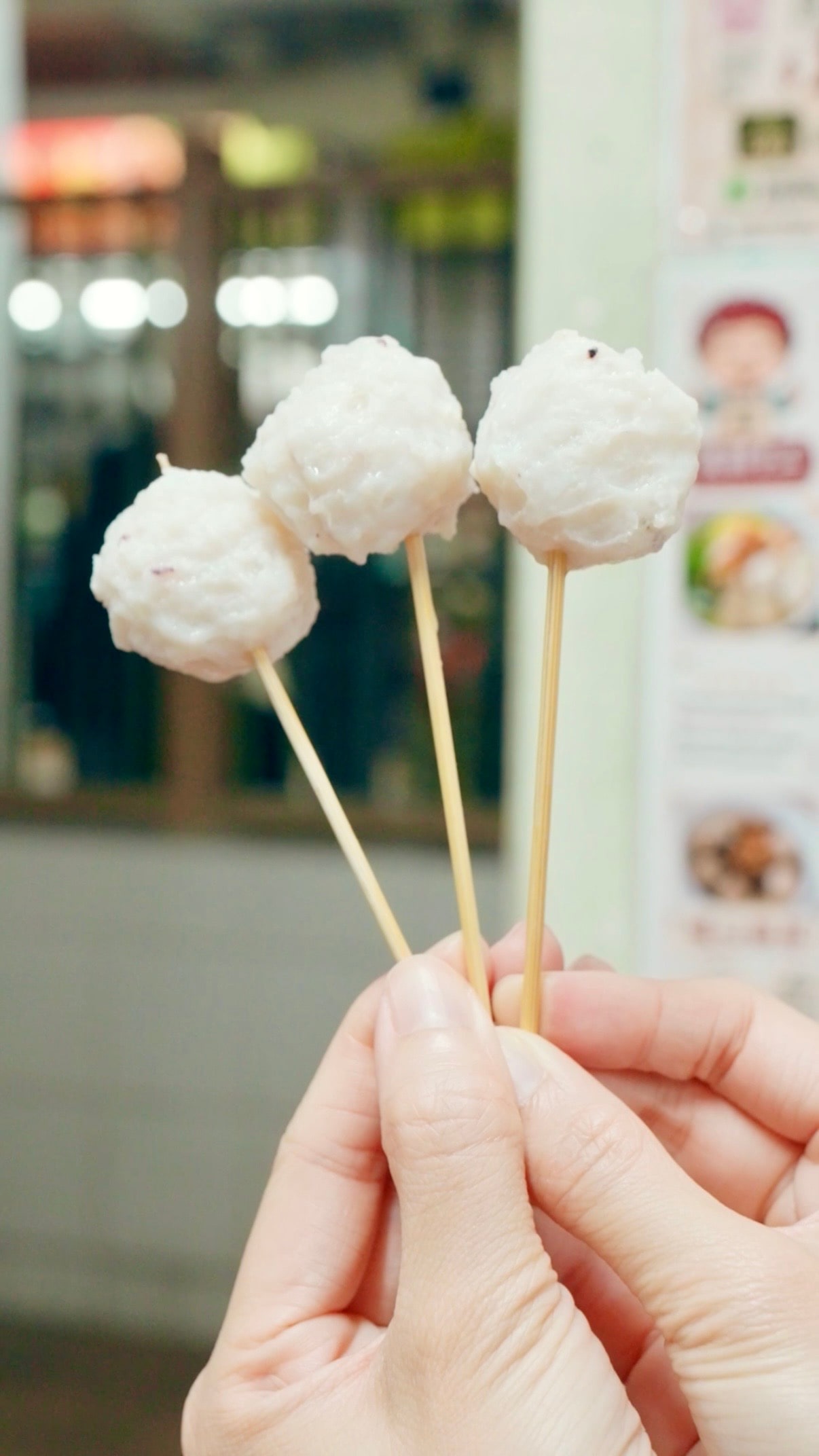
Sotong balls from $12 for 10 pcs
The takeaway stall sells just two main products: Sotong balls ($12 for 10 pcs) and Meatballs ($10 for 10 pcs).
The latter combines pork, cuttlefish and prawn, with dried sole fish added for an extra burst of umami.
Customers receive a complimentary packet of Mei Li’s house-made broth with every order. She prepares the stock using fresh fish and cuttlefish bones bought from the wet market.
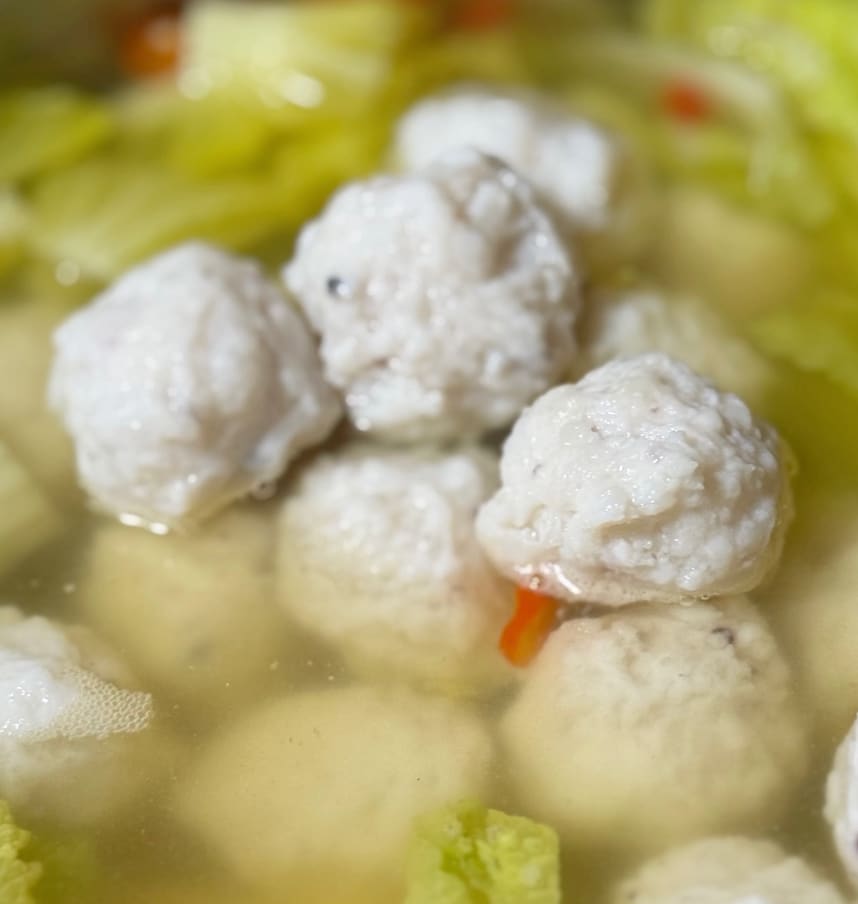
To serve, customers simply heat the broth and add the balls. Eric suggests turning it into a more substantial meal with mee sua, prawns and vegetables. Frozen, the balls can be kept for around two to three weeks.
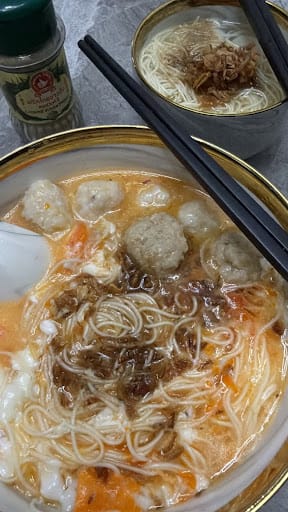
Some of his longtime followers have also visited the stall after discovering his new occupation.
“They’ll ask, ‘You’re working here now?’ or say, ‘It’s nice that you’ve finally found what you want to do,’” he shares.
Beyond reaching his existing followers, Eric hopes to introduce the traditional Teochew delicacy to younger customers who may not have tried it before.
Eric has also put his past experience to use by promoting the business on social media. He helped introduce PayNow and created branded cooler bags for the stall.
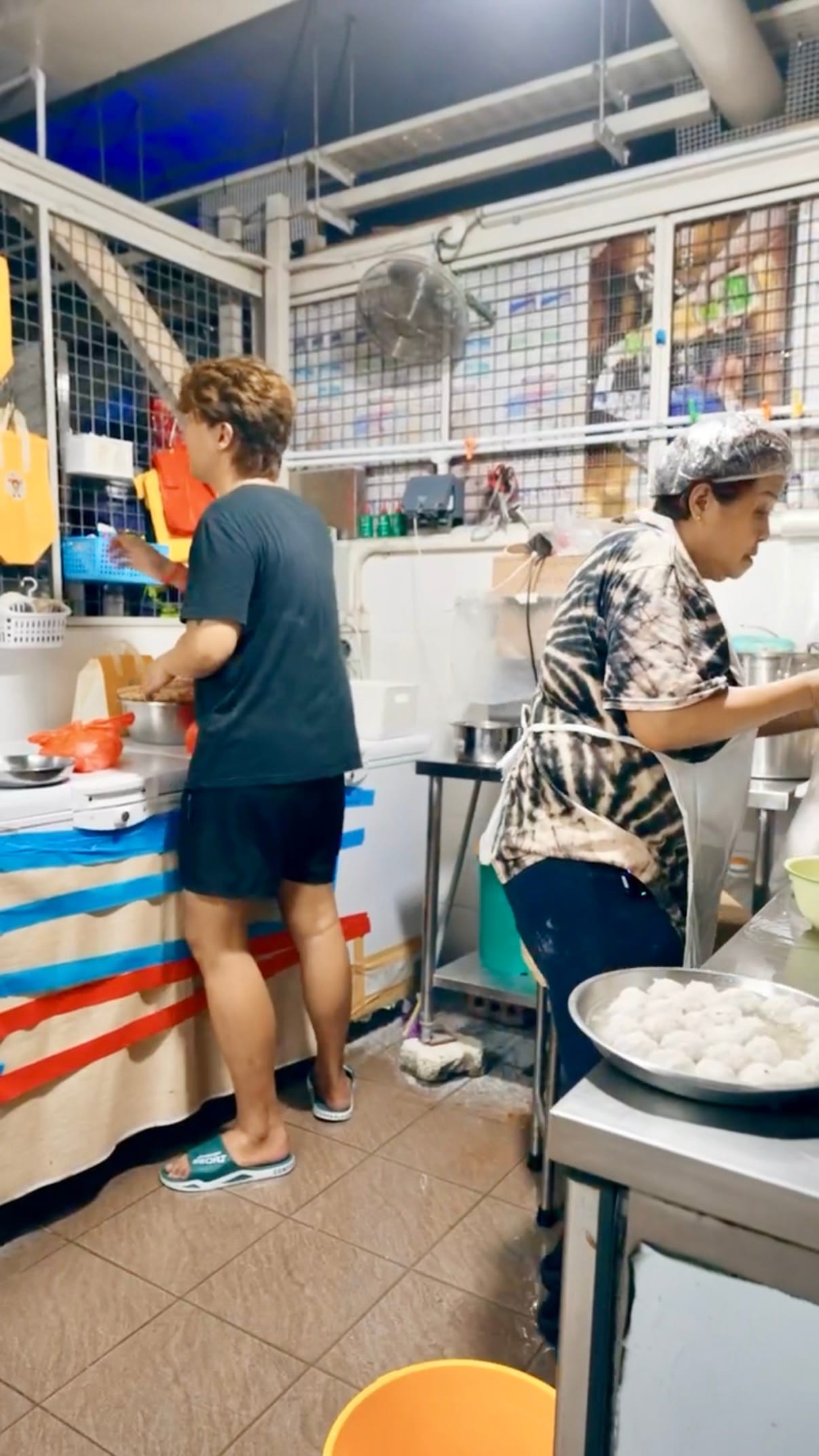
Enjoys his “simple life” now
Eric declined to disclose how much he earns from the hawker business but says it provides the stability that social media never could.
“There’s nothing to show off,” he says.
And what about his love life now that hawker work occupies most of his time?
He is single, with little time to date. “I’m too gay for the wet market. Also, who wants a gay man at a wet market?” he jokes.
He also has no plans to revive the family’s dine-in operation anytime soon as he feels it would be too risky while he is still learning the trade.
Compared with his former career, which he says brought “so much drama and so little money”, Eric finds hawker life more peaceful. “Now it’s just a very simple life,” he says.
Mei Li Sotong Ball and Meatball is at #01-33, Hong Lim Market & Food Centre, 531A Upp Cross St, S051531. Open Mon–Fri, 10am–3pm. More info via Instagram.
Top In Asia


