

When we last spoke to Osaka-born chef Haruyama Yuki in June 2025, he was drawing steady queues at Haru-Haru, his food court stall at Bras Basah Complex serving katsu rice sets with mentaiko (spicy cod roe) mayonnaise and Japanese curry.
Back then, the joint was selling about 100 portions a day. After our feature ran, business surged and daily sales climbed to “slightly over 300 portions” in the months that followed. “It really helped to bring crowds to our stall and we really appreciate it,” says the 38-year-old.
In October 2025, the chef launched Haru-Haru Ramen, his new tori paitan (creamy chicken soup) ramen concept just a few units away from his original katsu stall in the same Bras Basah food court. Two months later, in December, a second outlet followed at an Ang Mo Kio coffee shop.
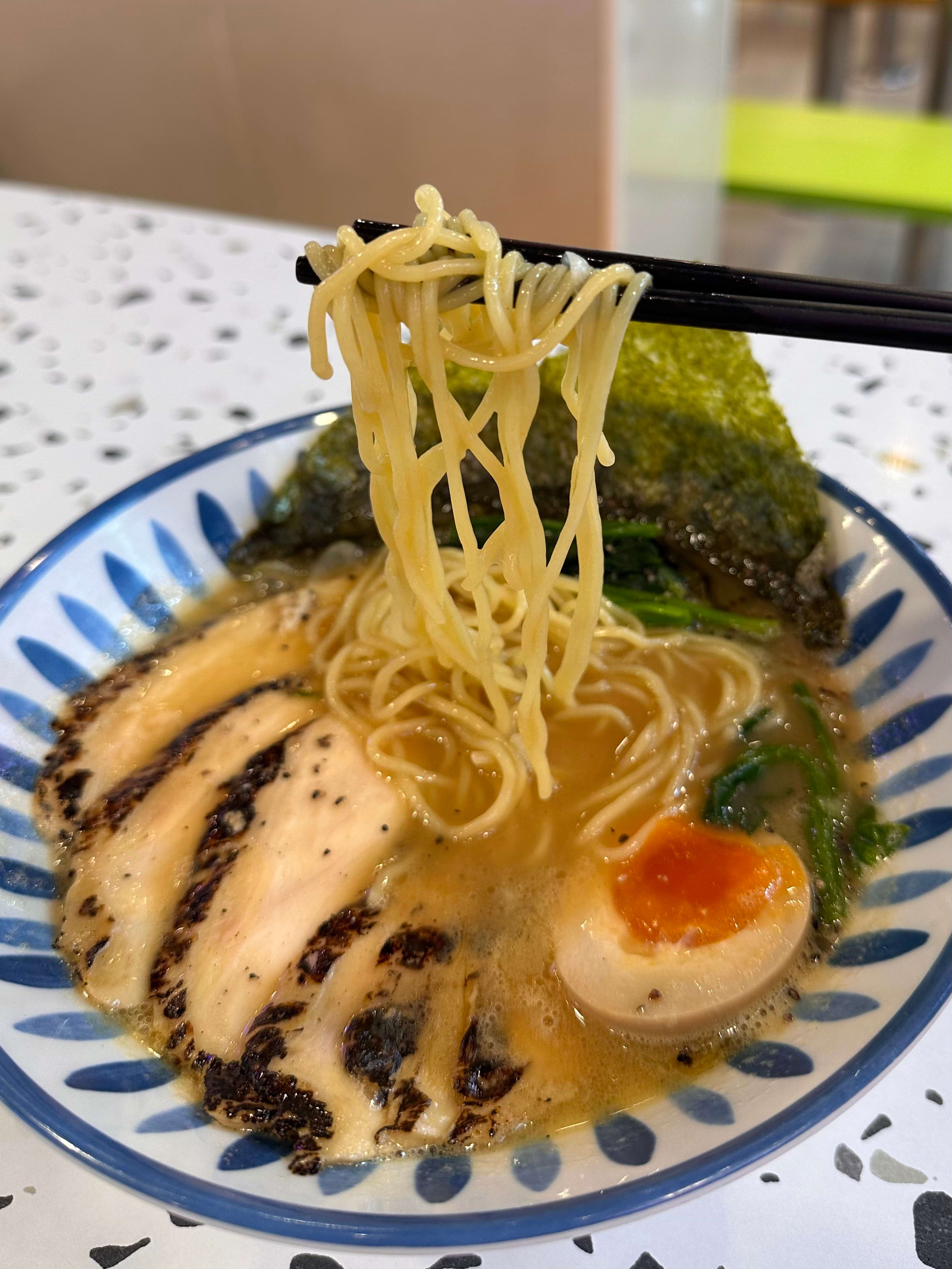
Serving “izakaya-style” chicken ramen
When asked if his ramen follows a particular regional style, Haruyama simply describes it as “izakaya-style”.
Before becoming a hawker, Haruyama was the head chef at Torimaro Charcoal Grill & Sake Bar, where he cooked classic izakaya fare designed for casual drinking and sharing.
Unlike specialised ramen shops, izakayas typically don’t focus on ramen as a main draw. Instead, Haruyama’s tori paitan ramen was conceived as a comforting dish to round off a meal. “Customers would ask for something warm and filling at the end, especially after drinking,” he recalls. “That’s when I started serving ramen.”
The recipe was developed on the job, using leftover chicken and fish bones from the kitchen, along with vegetables, to create a light yet satisfying broth. “It became a popular item,” he says. “That’s when I realised it could work as a standalone concept.”
For Haru-Haru Ramen, Haruyama refined the dish further. Instead of relying on trimmings, he now prepares the broth using chicken parts such as wings and feet, which are rich in natural collagen. The ingredients are simmered with vegetables for over eight hours, resulting in a creamy, full-bodied chicken broth.
Staying competitive in the ramen space
Unlike his mentaiko mayo katsu stall – which was born out of frustration with what he saw as poor-quality offerings at some local joints – Haruyama readily acknowledges that ramen is a crowded and competitive category in Singapore, with many established operators doing things properly.
Rather than positioning Haru-Haru Ramen as a corrective, he believes there is still room for a hawker ramen concept that is affordable and accessible, pointing out that some items on his menu are priced below $10. He has also deliberately avoided using pork or lard in his offerings, which allows a wider group of customers to enjoy his food. “I want more people to be able to try my ramen,” he says.
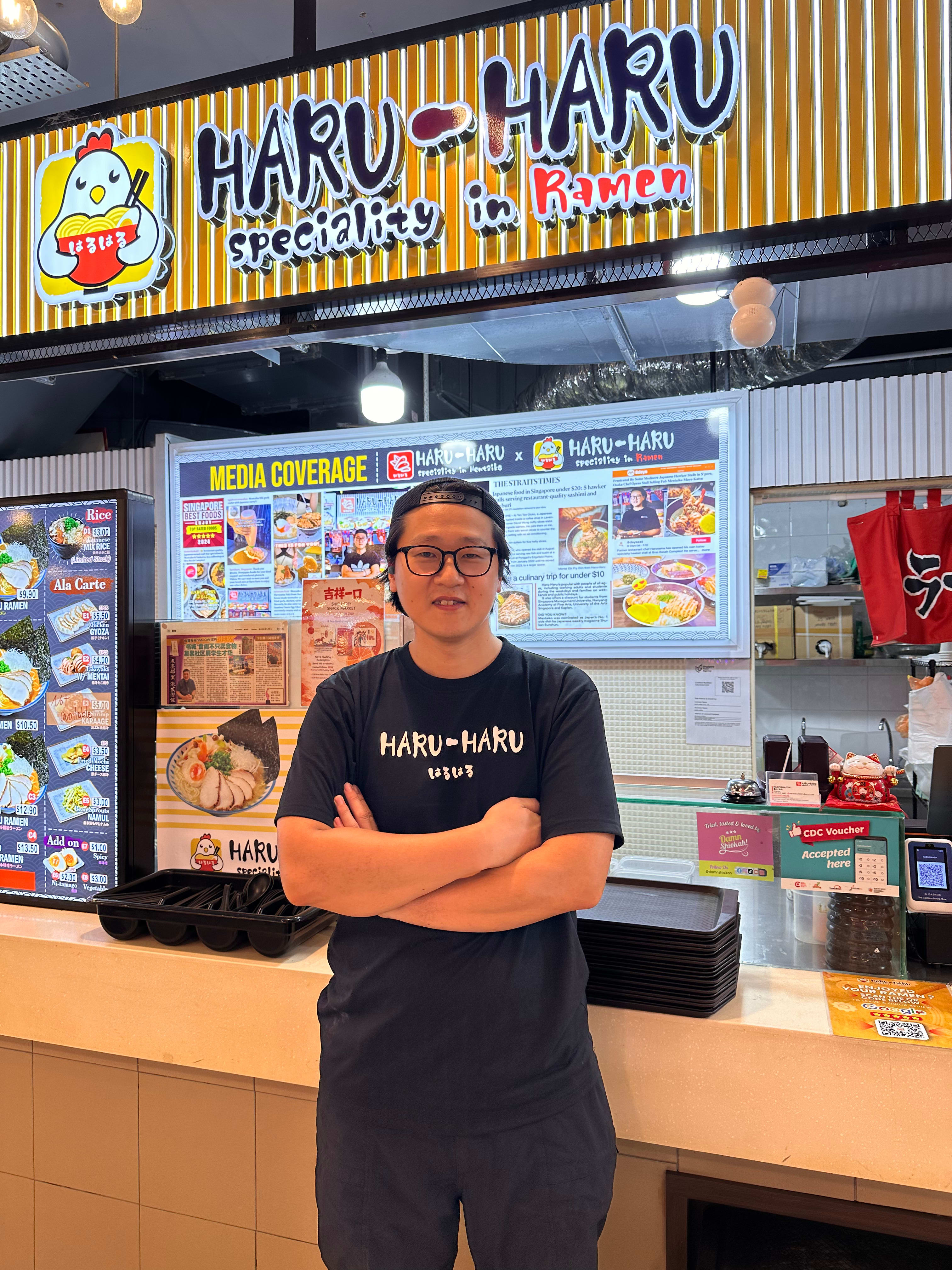
From one stall to three in months
Encouraged by the initial reception at Bras Basah, Haruyama and his two partners moved quickly and opened a second ramen outlet in an Ang Mo Kio coffee shop barely two months later. They invested a five-figure sum to open both stalls.
The Ang Mo Kio branch offers a hybrid menu, with ramen making up about 80 per cent of offerings, followed by katsu for the remaining 20 per cent. Prices are kept the same as the Bras Basah stalls.
The new branch retains a small selection of katsu dishes, as Haruyama believes that is what he is best known for. “That’s the stall people saw in the media, so I wanted to keep some katsu (at the Ang Mo Kio stall) too,” he explains.
At the same time, he reckons ramen has a stronger pull in the heartlands. “Katsu usually draws a younger crowd, but ramen is something older customers are also comfortable eating. There are many seniors living in the area, so I think ramen works better here,” he says.
The two ramen stalls are each selling about 70 bowls a day on weekdays and around 100 bowls on weekends, with both locations performing at roughly similar levels. Haruyama declines to share sales figures, but says the initial response was encouraging.
Business has dipped slightly in recent months – something the chef attributes to year-end travel and the holiday season – though he remains optimistic that sales will pick up soon.
The recent expansion has effectively turned Haru-Haru into a three-stall operation, a fact that prompts a quiet chuckle from the otherwise reserved chef when we tease him about becoming a “big boss”. He brushes it off, but admits there’s practical motivation behind the pace.
His five-year-old son started kindergarten this year, and with that came new financial responsibilities. “I need to work harder,” he says simply.
May explore more Japanese hawker concepts in the future
While Haru-Haru’s current focus is on steadying its katsu and ramen businesses, Haruyama admits he’s not done experimenting just yet. If the concepts continue to gain traction, he hopes to explore other Japanese ideas down the road.
He teases a possible fish-based concept – a nod to his earlier career as general manager and head chef at Sabar, an Osaka-based restaurant chain centred on mackerel dishes, which closed its Singapore outlet in 2020.
For now, however, those plans remain on the back burner. “One step at a time,” he says.
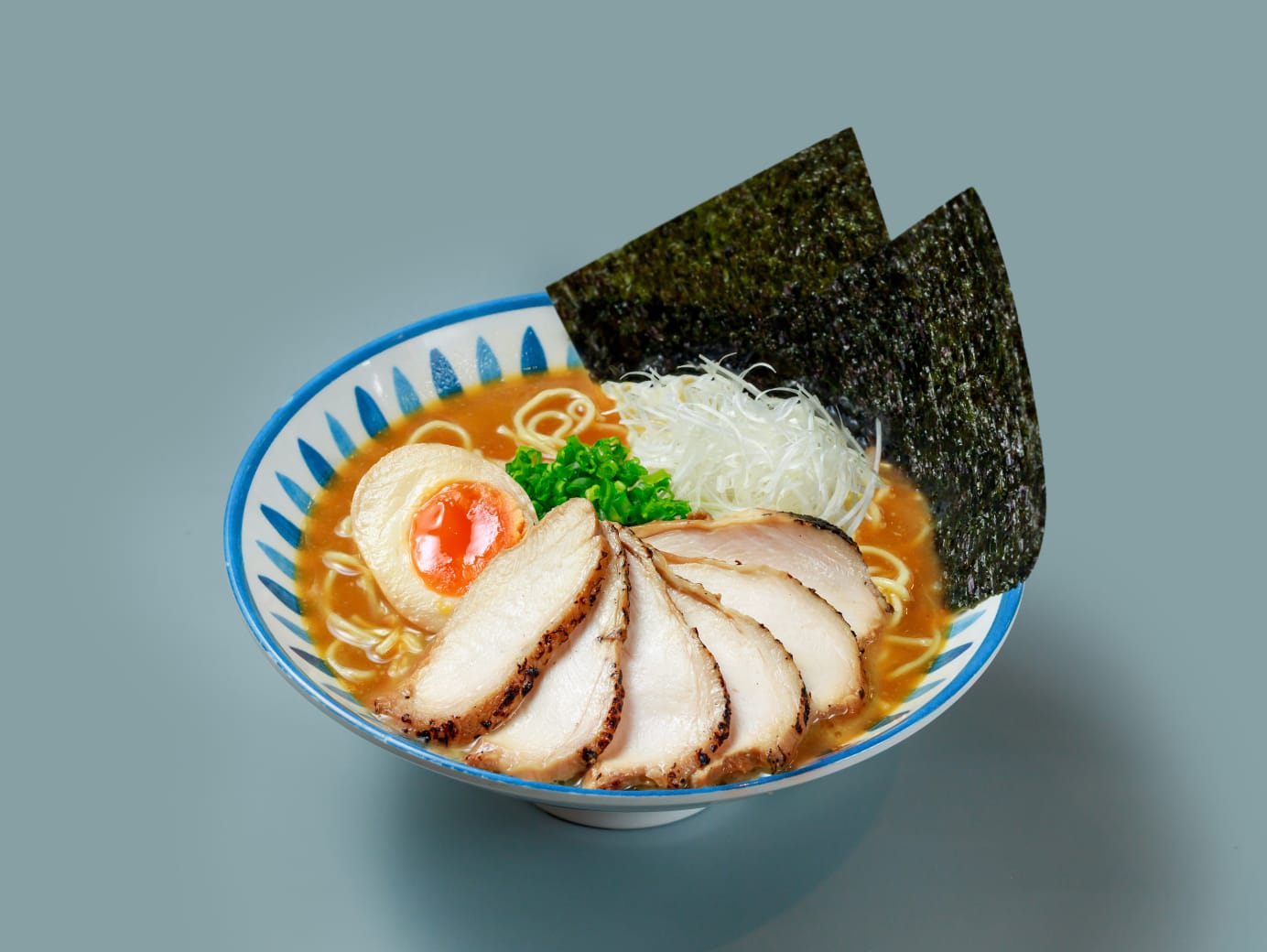
The menu
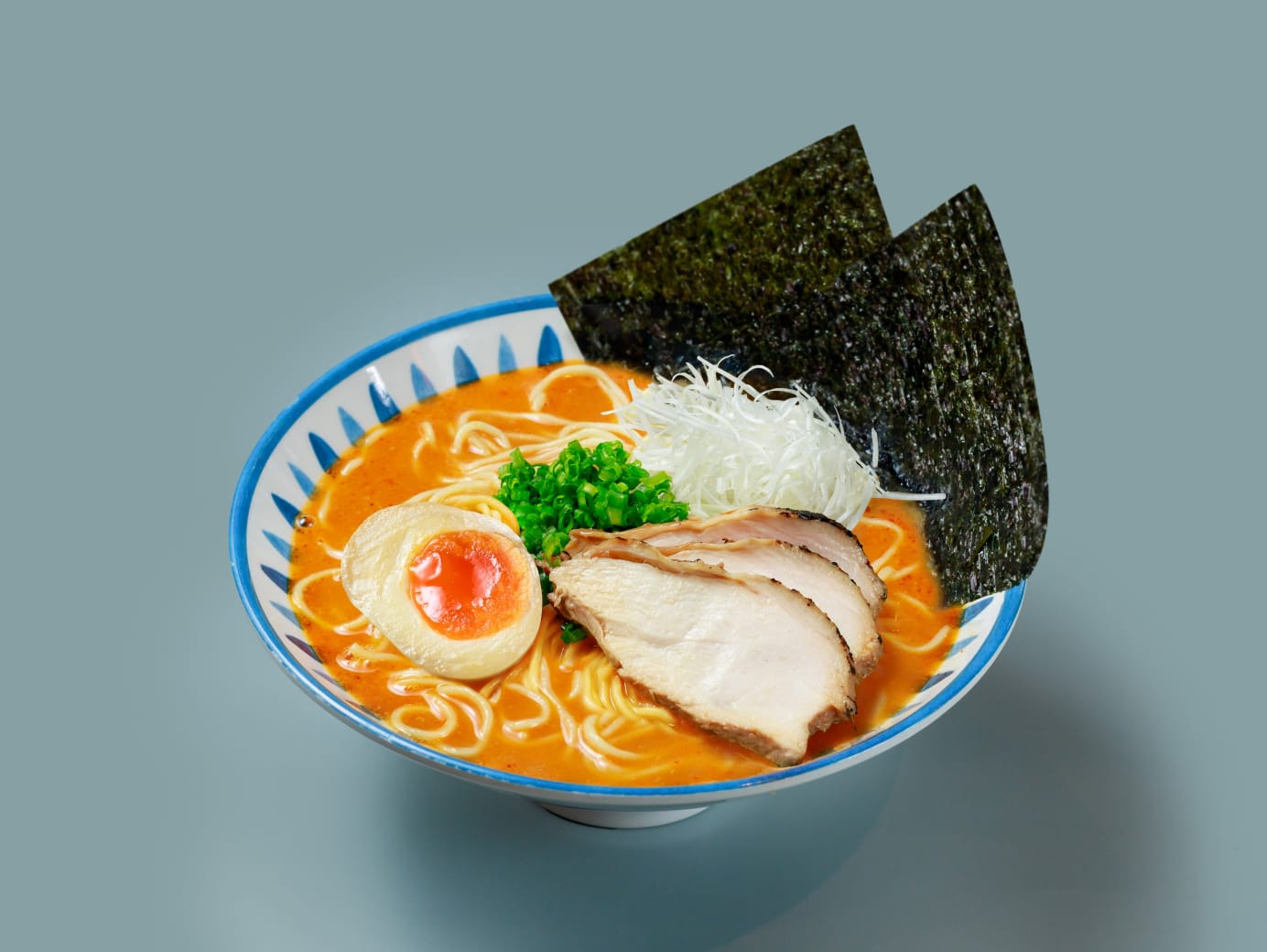
Haru-Haru Ramen’s menu is built around a single chicken-based broth, offered in three variations: shoyu, miso, and a spicy version. All bowls come topped with slices of chicken chashu – made from either sous vide chicken breast or leg, and flame-seared before serving – along with half a soft-boiled egg, veggies and nori. Prices start from $8.90 for a basic bowl of Shoyu Ramen.
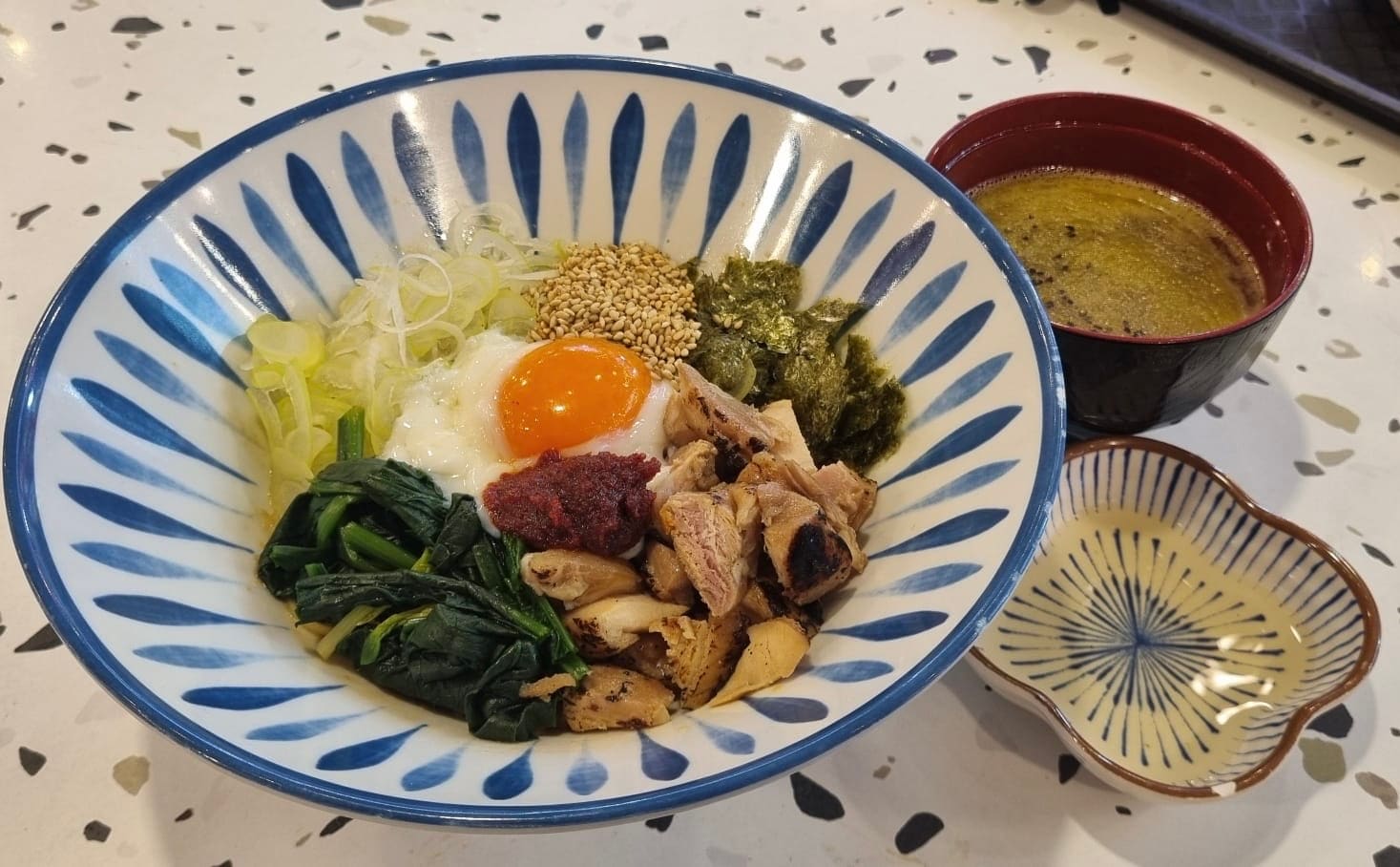
There’s also Tori Mazesoba, $8.90. The dry noodle dish is served with an onsen egg, chicken, nori and scallions, and comes with a side of the same chicken broth used in the ramen, along with rice vinegar. The Spicy version, which costs $9.90, includes an extra dollop of house-made chilli paste flavoured with gochujang.
Haru-Haru Ramen is at #01-79 Bras Basah Complex, 231 Bain St, S180231, open daily 10am – 10pm; and #01-2688 505 Ang Mo Kio Ave 8, S560505, open daily 11am – 9.30pm. More info via Instagram.
Photos: Dillon Tan, Haru-Haru Ramen
Top In Asia


%20after%20a%20350km%20journey%20from%20Sepang.%20PHOTO:%20AsiaOne/Danial%20Zahrin?w=150&resize=150,150&ssl=1 "Satay hunt, cycling and go-karting: What F1 drivers are up to before Singapore Grand Prix")
