

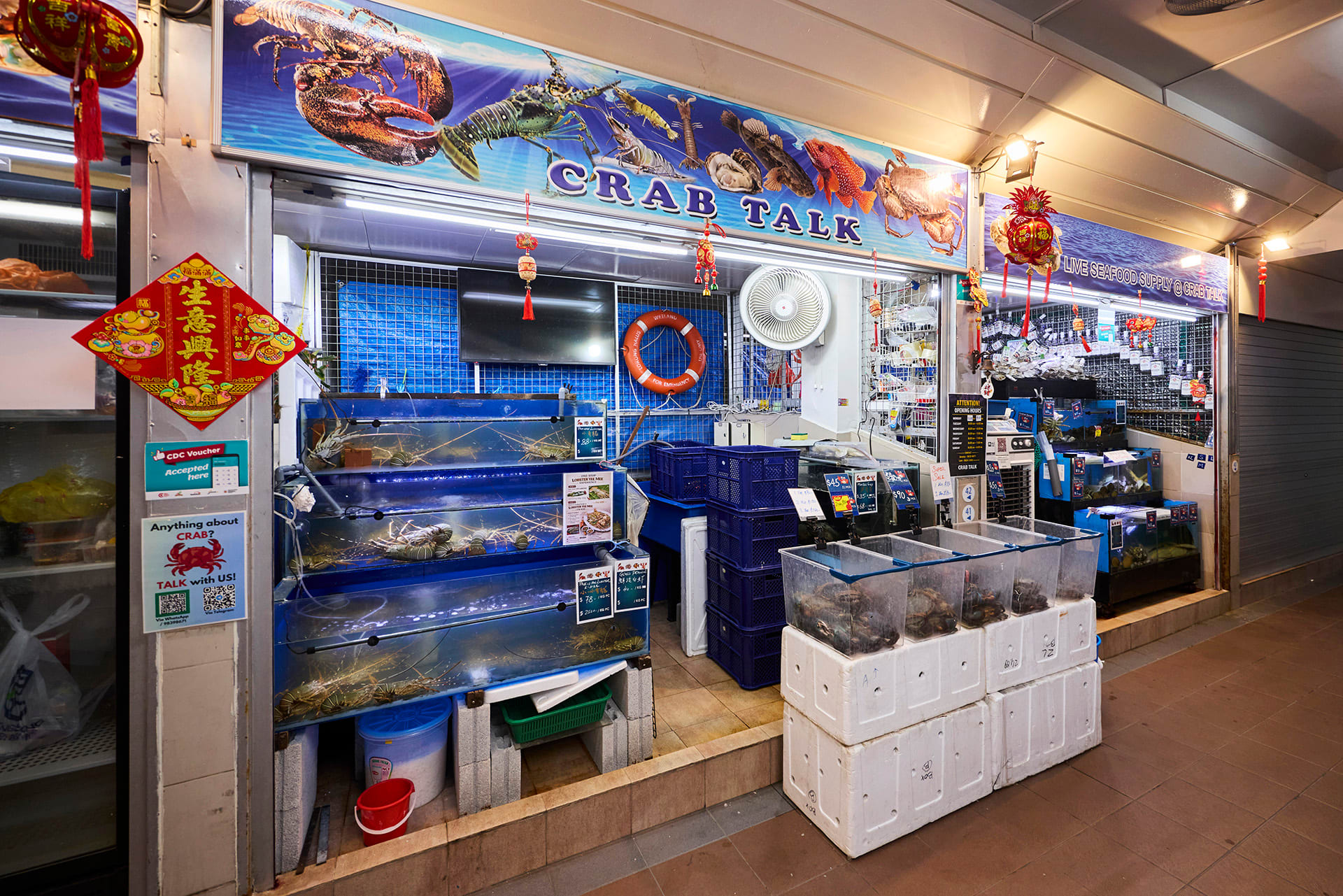
A collab born out of demand
The idea for this cross-stall collaboration happened almost by chance.
When Crab Talk opened a year ago, customers would often buy seafood and ask where they could get it cooked, recalls co-owner Jeremy Teo, 49.
Meanwhile, regulars at Fai Kee were also asking for more variety beyond its usual menu
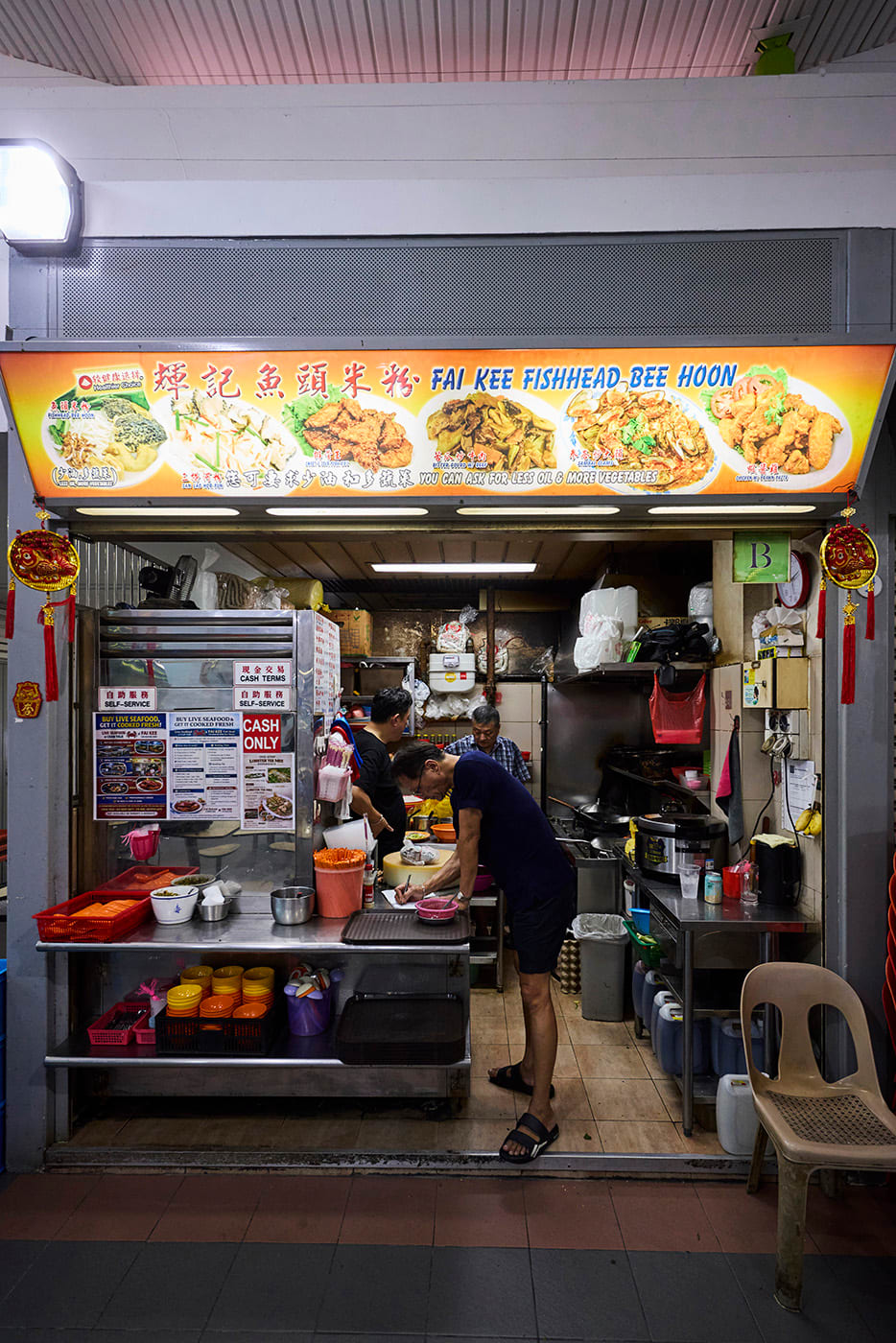
Live seafood cooked at 50-year-old zi char stall upstairs
Fai Kee, a 50-year-old zi char stall known for its Cantonese home-style dishes, didn’t stock much seafood due to space constraints.
“So we just had a chat and I suggested working together,” Jeremy tells 8days.sg.
The collaboration started in December last year and has since picked up traction. On busy nights, especially Fridays and Saturdays, waiting times can stretch up to two hours.
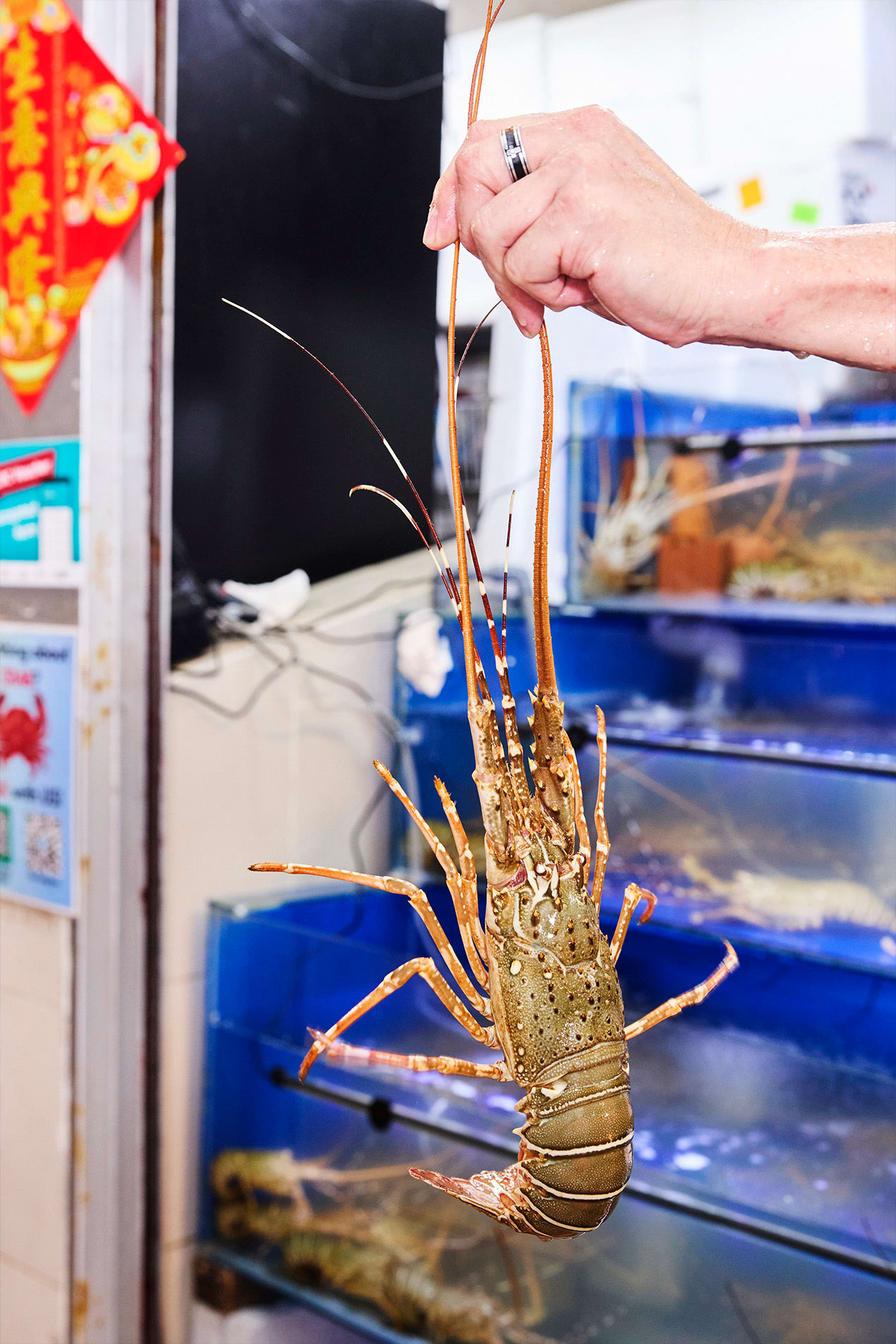
How it works
The concept is simple — think of it as a DIY seafood feast, hawker-style.
First, pick your seafood at Crab Talk, anything from Alaskan crabs and lobsters to fish and even geoduck. The team will clean, chop and prep everything, from cracking open crabs to descaling and butterflying fish, so it’s ready for cooking.
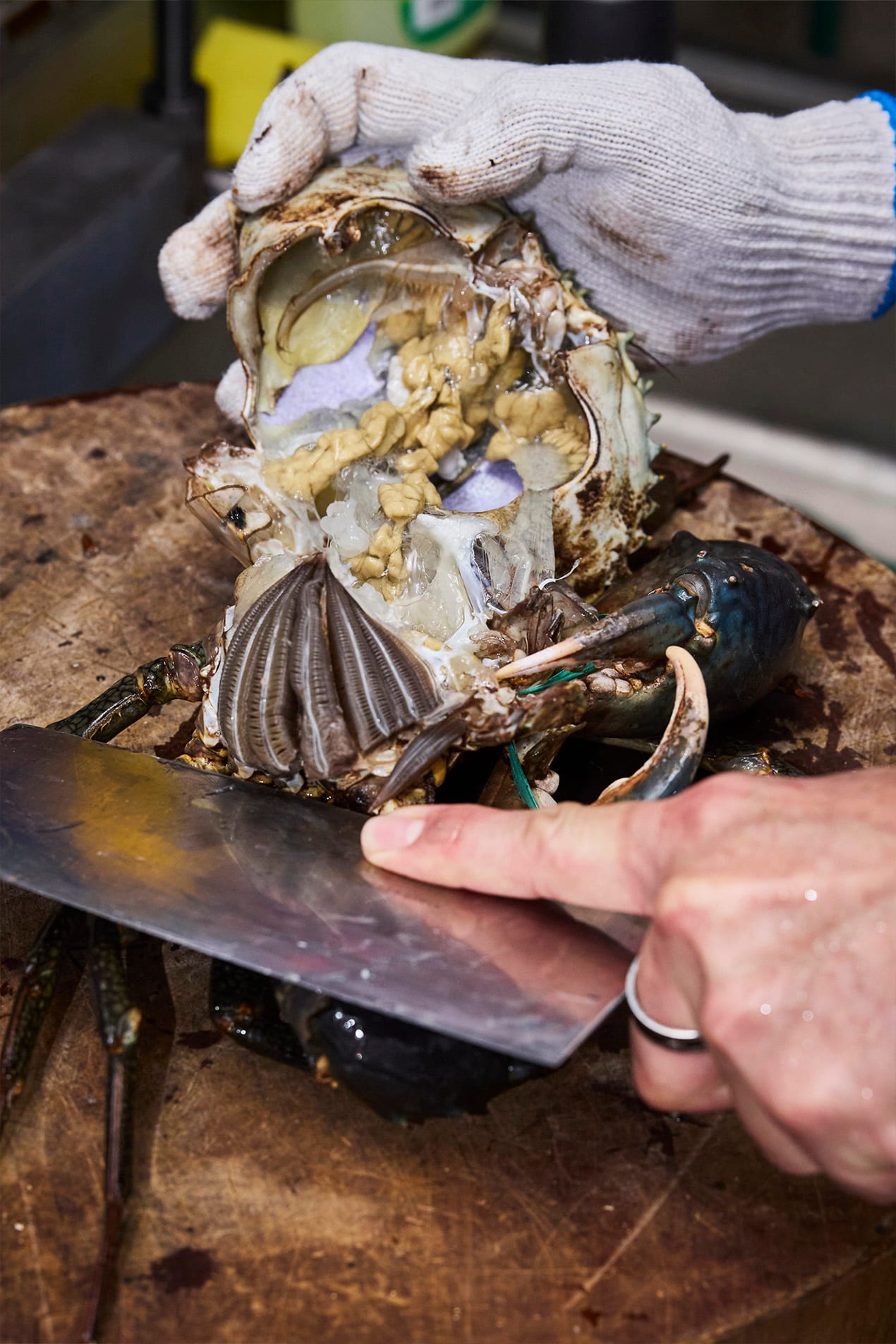
Cooking fee starts from $20
Next, bring your seafood upstairs to Fai Kee and choose how you’d like it prepared. The stall sticks to four classic Cantonese styles: chilli, black bean, ginger and scallion or steamed.
Then, sit back and wait for your meal to arrive.
Cooking fees are paid directly to Fai Kee and are $20 per dish, though prices may vary depending on portion size and the “number of times the wok needs to be fired up”.
“The base is $20, but it depends on how many times we have to cook,” explains Daniel Tham, 62, who helps run the stall with his brother Leonard, 69, the sole chef.
“If two medium-sized crabs can fit into one wok, it’s $20. But if they’re too big or we have to cook twice, then we charge double.”
For dishes like lobster yee mee, the price also increases depending on the number of diners, as additional noodles and ingredients are added.
The entire experience is intentionally kept fuss-free — no fancy customisations or off-menu requests. “They focus on classic Cantonese cooking,” says Jeremy. “We always tell customers, don’t do funny things with the seafood.”
Plan ahead or be prepared to wait
As with any popular makan spot, timing matters.
On weekdays, waiting times are generally manageable. But come Friday and Saturday nights, queues can stretch to two hours, shares Jeremy. Fai Kee is closed on Sundays and Mondays.
Customers can pre-book a slot a day in advance, with dinner service typically starting from around 3pm. WhatsApp your orders to Crab Talk, which relays them to Fai Kee so the kitchen can better manage its queue.
Still, even with pre-orders, some waiting is inevitable. “There’s only one chef,” Jeremy says. “Even without the collab, they’re already very busy.”
To cope with demand, Crab Talk has begun exploring additional partnerships with other zi char stalls nearby.
Old-school cooking, done right
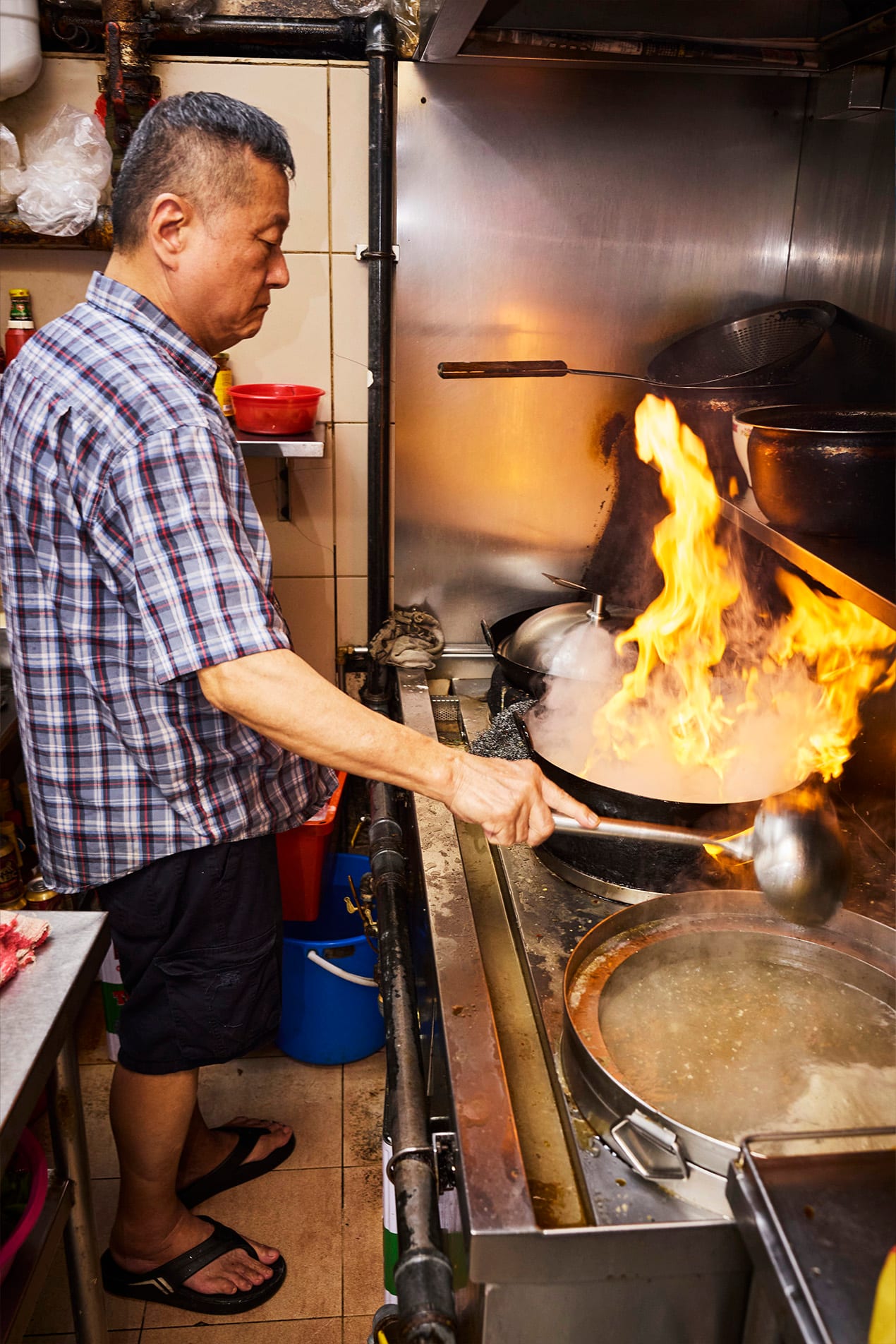
Fai Kee keeps things deliberately traditional, focusing on a tight menu of Cantonese-style preparations. That means no black pepper crab or “fancy cooking styles”, just the classics done well.
The stall was started in the 1970s and today, it is helmed by second-generation owner Leonard. Previously a restaurant manager at the former Sheraton Hotel, Leonard stepped in to help out in the biz after his dad fell ill and eventually took over in the 1980s.
That old-school grounding still shows in the food today. Fai Kee is known for its wok hei dishes like san lou hor fun, bitter gourd beef, and fish head bee hoon, all rooted in classic Cantonese home-style cooking.
“The simpler the cooking, the more you can taste the freshness,” says Jeremy, who adds that it’s a “waste” to drown premium seafood in strong flavours.
Popular dishes include ginger and scallion crab, lobster yee mee and steamed fish, while clams are often ordered either steamed or in chilli sauce.
“If the seafood is fresh, you don’t need too much seasoning,” says Jeremy. “The more you add, the more you cover the natural flavour.”
Restaurant-style seafood at hawker prices
Part of the draw is the value.
Live green lobsters from Southeast Asia start from about $30 each for 300g, while large Sri Lankan crabs, which can weigh over 1kg, go for around $70 each. Add a standard cooking fee of about $20 per dish, and you’re still paying significantly less than at a restaurant — especially for live seafood.
For comparison, a quick check at Jumbo Seafood shows that a 1kg crab can cost about $118. A similar-sized crab from Crab Talk would set you back roughly $90, including the $20 cooking fee.
The concept has struck a chord with diners, many of whom see it as a novelty that’s hard to find elsewhere in Singapore, unless you have a long-standing relationship with your favourite zi char stall.
“Some customers even bring their own booze to pair with the meal — they create their own dining experience,” shares Jeremy.
Since launching the collaboration, Crab Talk’s business has grown by about 25 per cent, and it has extended its opening hours to cater to demand.
“Though we state that we close at 7pm, we usually try to stay open until we clear Fai Kee’s crowd,” shares Jeremy.
From luxury booze to live seafood
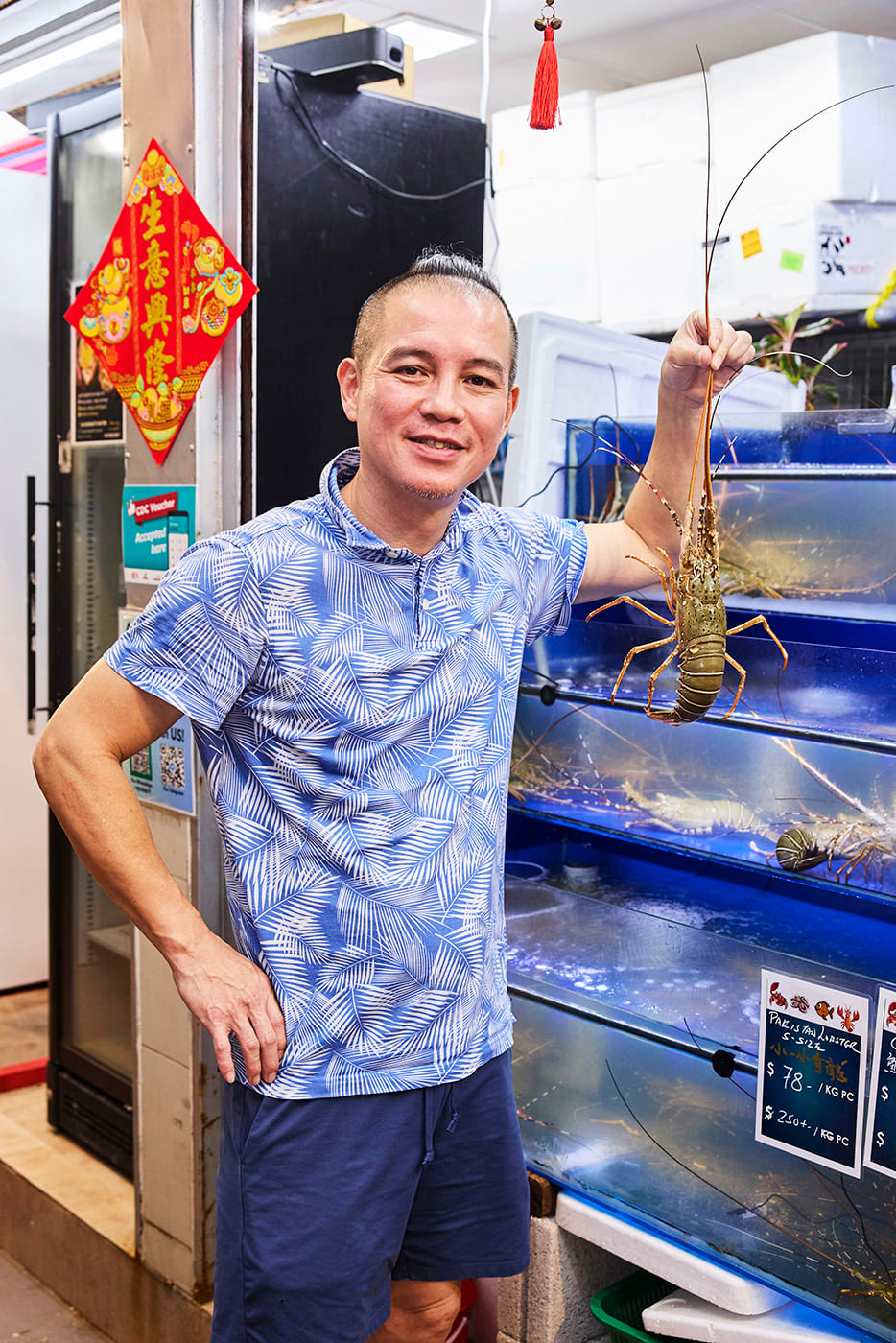
For Jeremy, running Crab Talk marks a sharp departure from his previous life.
Before this, he was a private client director at Moët Hennessy, entertaining high-net-worth clients and closing big-ticket deals. The pay was good, but the late nights and constant socialising took their toll.
“I was coming home in the morning almost every day,” he says.
With two young children, now aged two and eight months, Jeremy realised the lifestyle was no longer sustainable.
He had initially planned to relocate to Japan with his wife, who is from Saga in southern Japan, and had even sold his house and car in preparation. But those plans were eventually shelved when she decided she preferred raising their children in Singapore.
That left Jeremy at a crossroads and open to something completely different.
Took a 90 percent paycut
An old friend, Lam, who has several years of experience in the seafood trade, suggested going into the business together. The pair invested around $50K to start Crab Talk in January 2025, with Lam handling operations while Jeremy focuses on sales and marketing.
Jeremy estimates he took a 90 per cent pay cut.
“Of course you have to downgrade your lifestyle,” he says. “But once I start something, I’ll put my full attention into it.”
They chose Commonwealth Crescent Market for its relatively low overheads and saw potential beyond the immediate neighbourhood. Jeremy says many of his customers travel from places like Holland Village, Bukit Timah and Orchard.
Up to 20 types of live seafood for sale
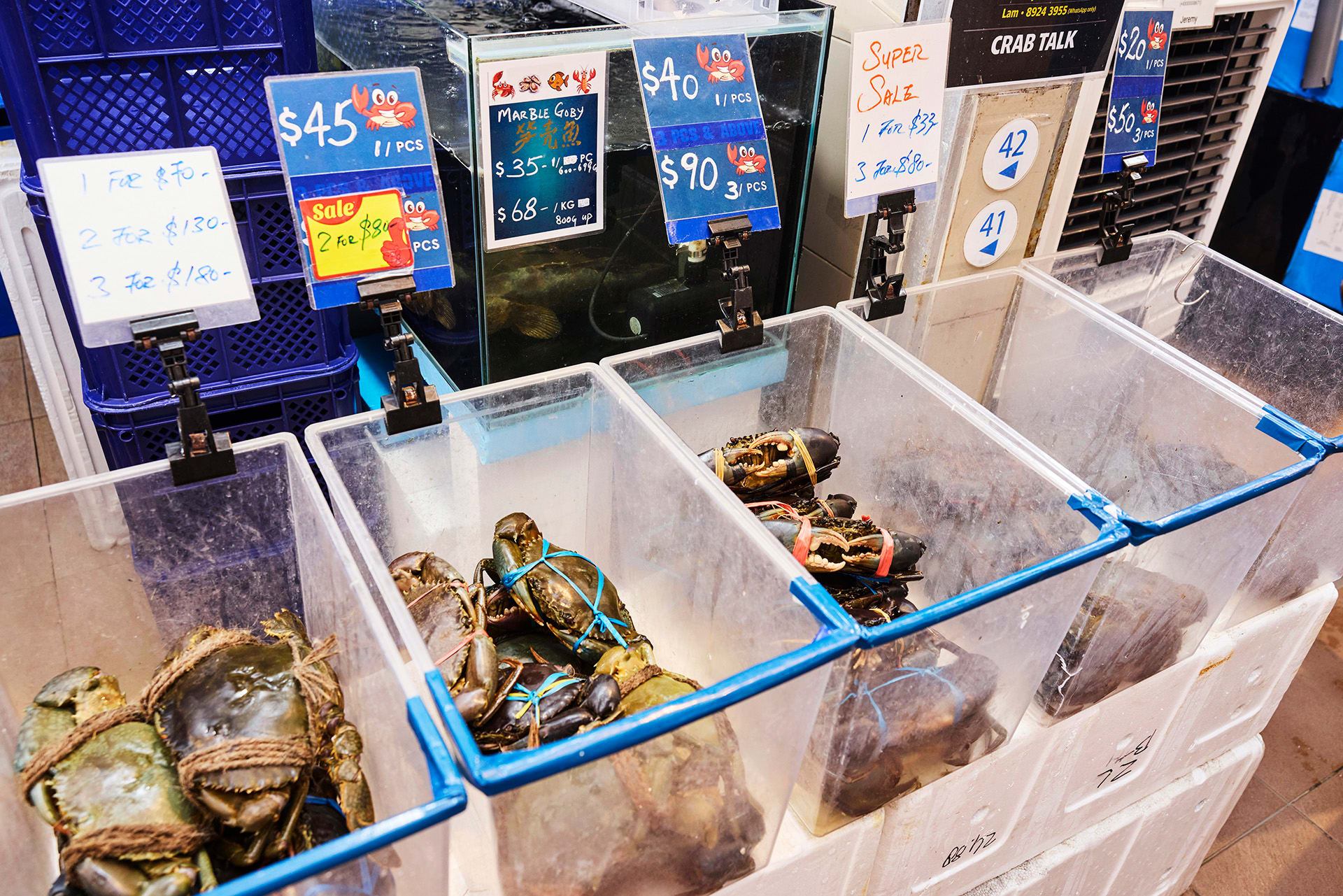
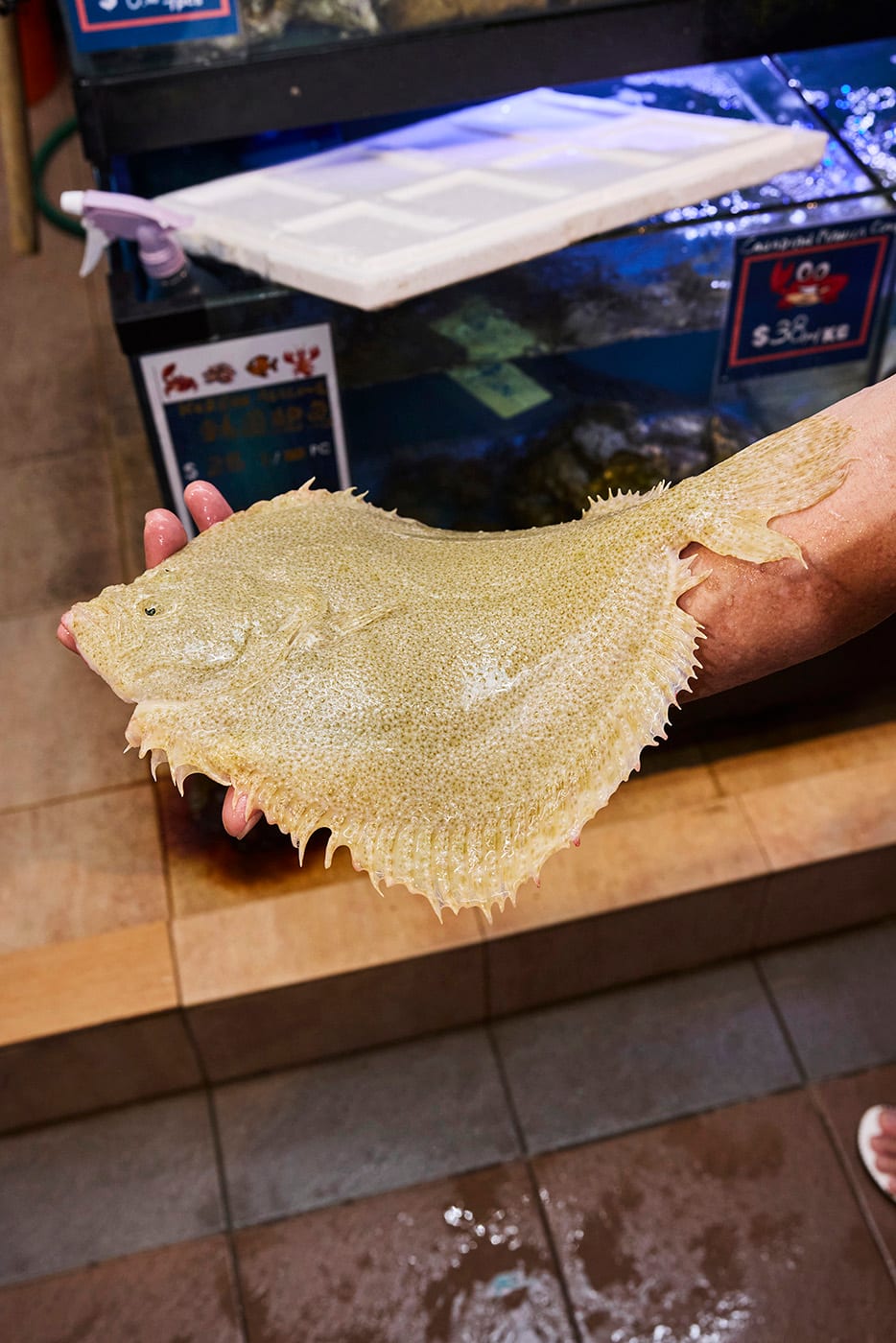
Today, Crab Talk carries between 10 to 20 types of live seafood, including crabs, lobsters, and abalone, as well as seasonal items like bamboo clams and Dungeness crab.
Fresh stock arrives daily but the best time to visit is on Fridays and Saturdays, when they bring in more variety and quantity.
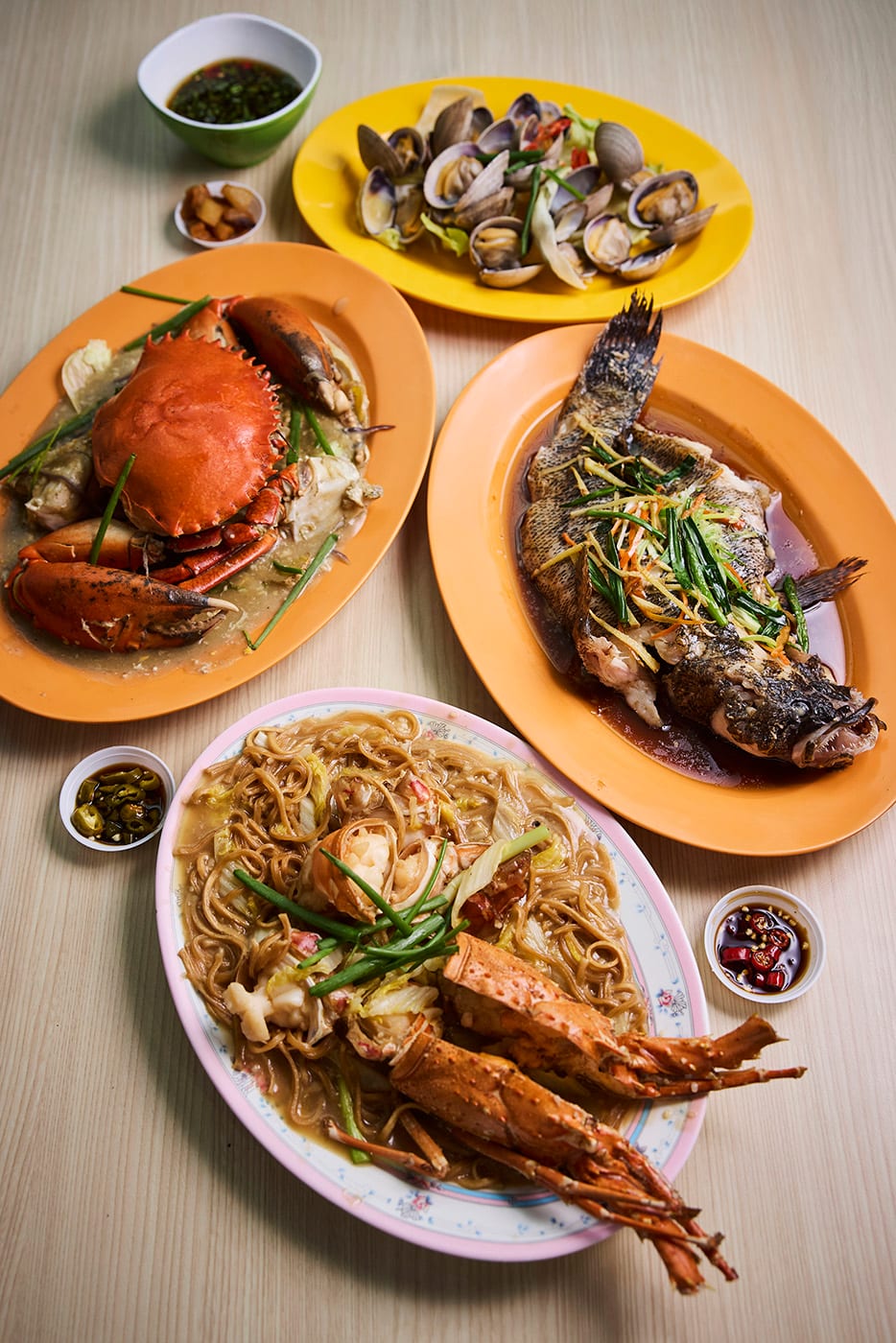
Here’s what we tried. Prices listed refer to the cost of the live seafood selected. Each dish has an additional $20 cooking fee, unless otherwise stated.
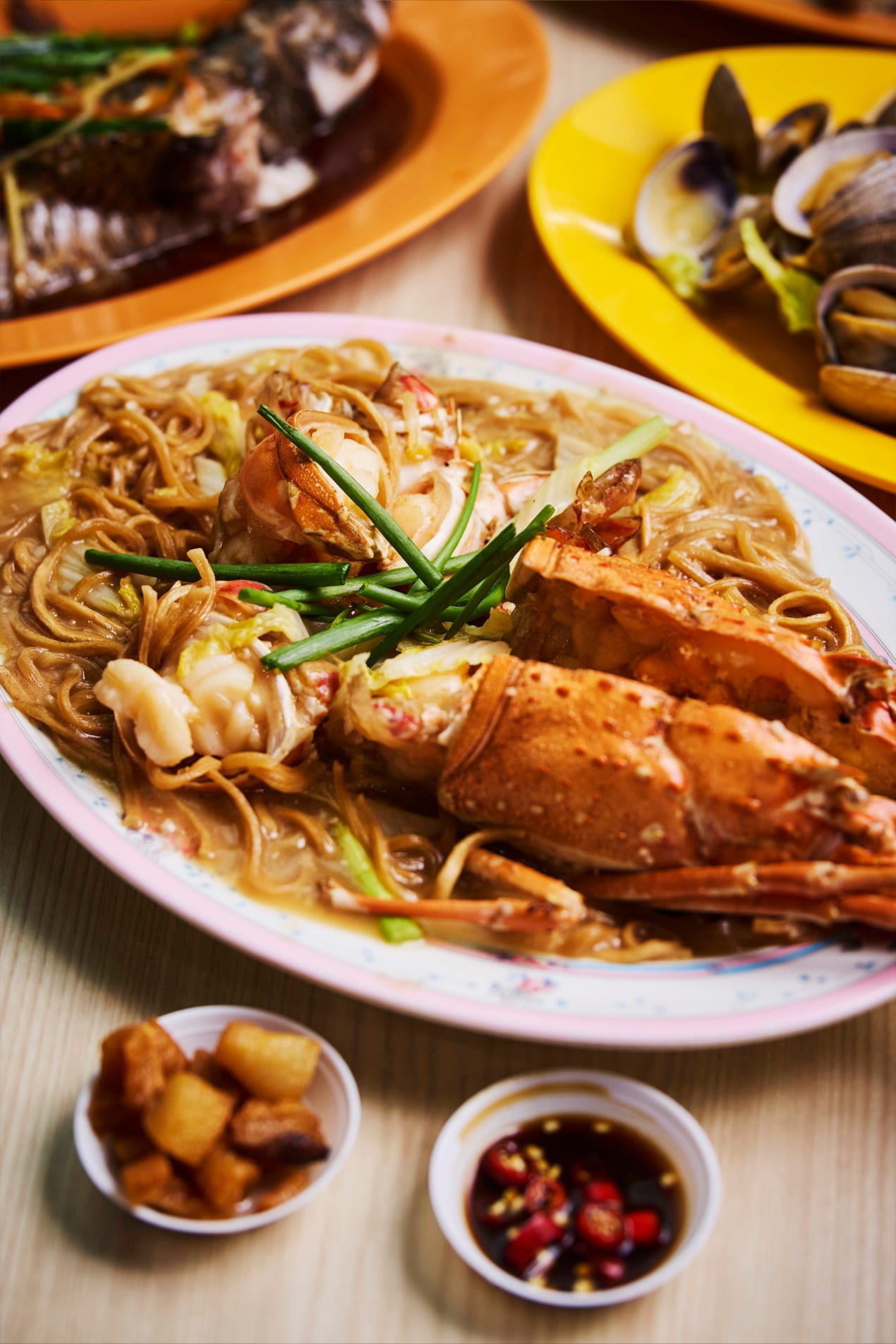
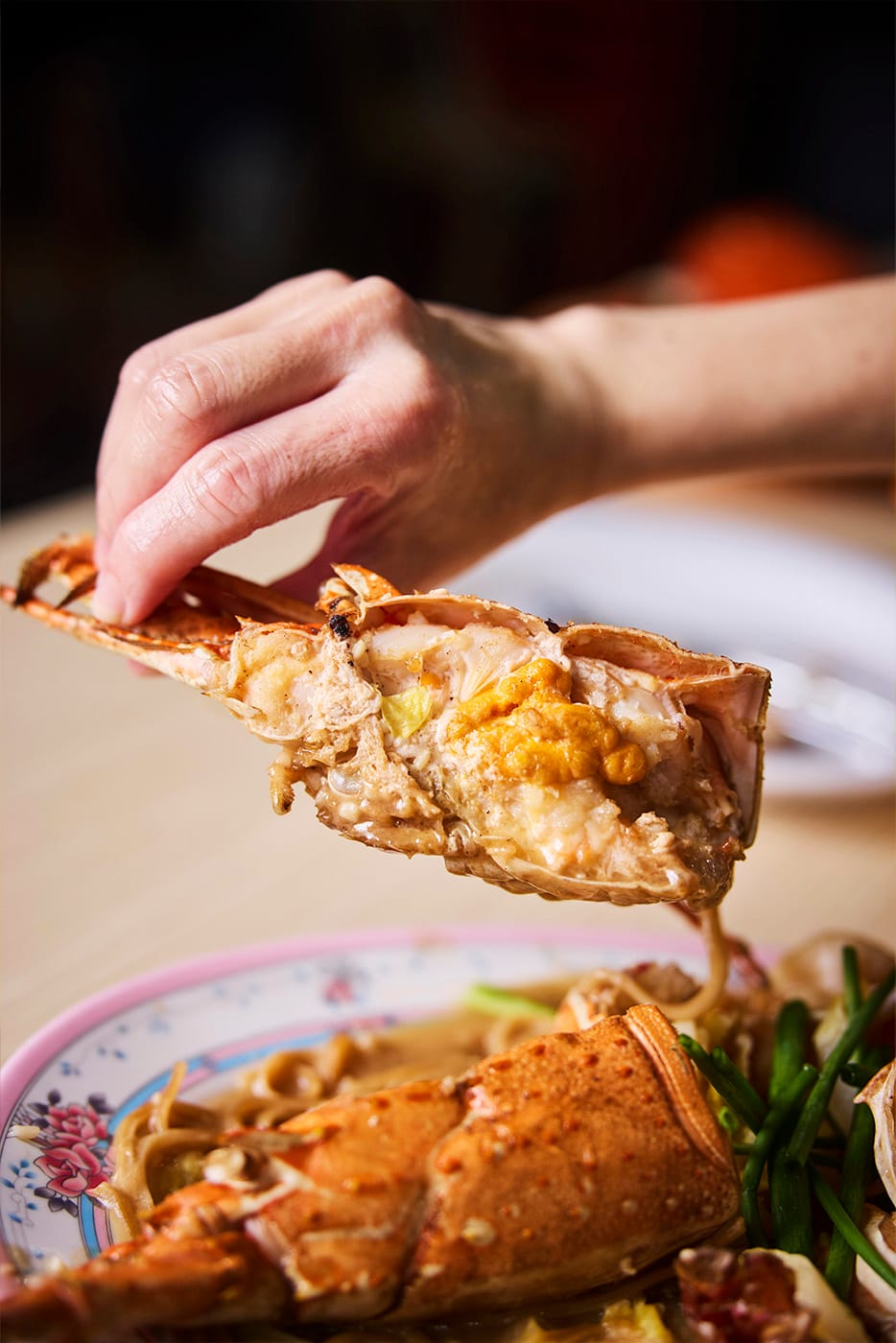
Lobster Yee Mee, $33 (extra $24 cooking fee); feeds 2 pax (8 DAYS Pick!)
We start with the lobster yee mee which came highly recommended. The green lobster (about 380g), chopped and tossed with yee mee, was firm and sweet, while the real highlight was the roe — soft, creamy and packed with flavour.
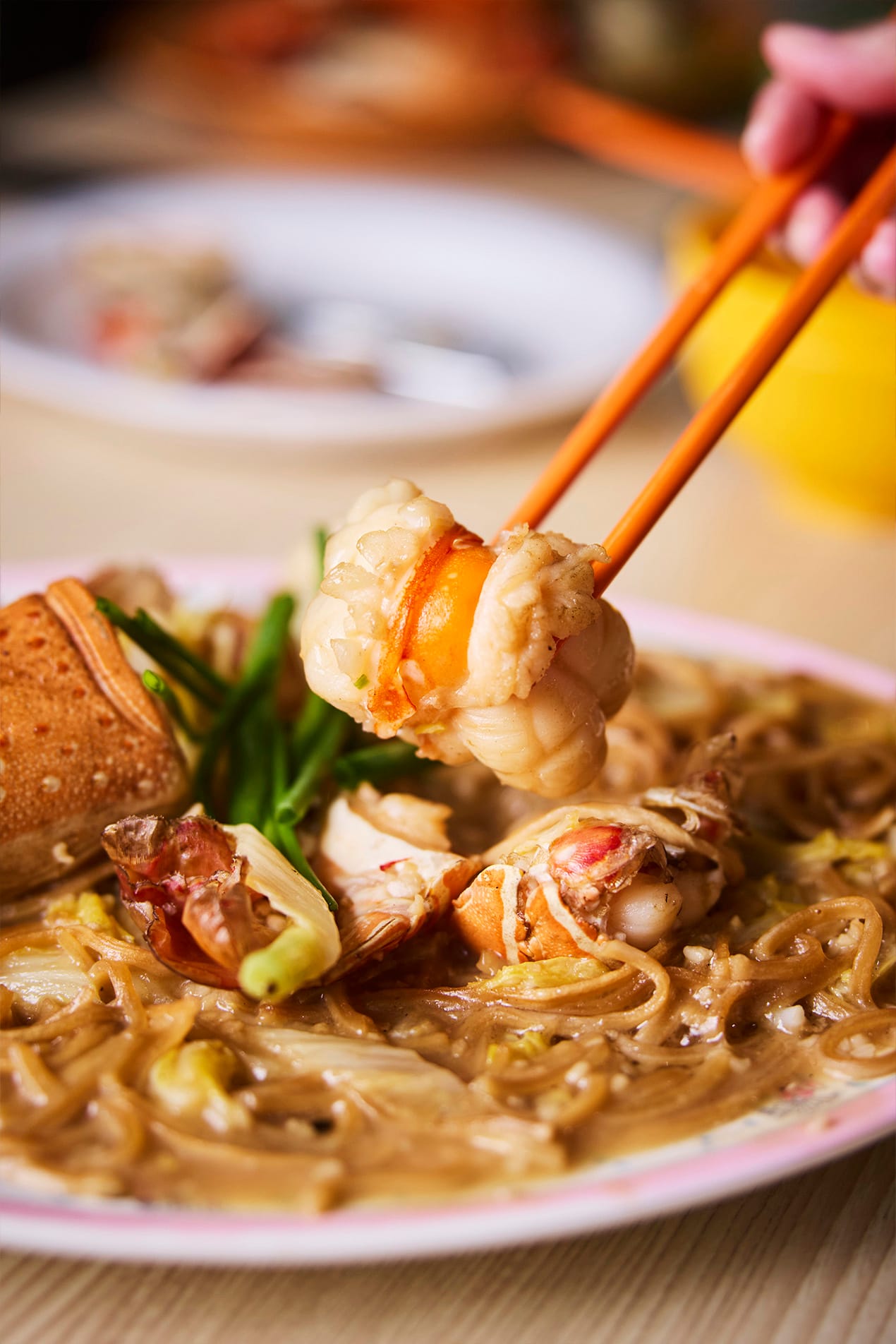
The noodles were slurp-worthy, soaking up all that crustacean-rich umami gravy. Delish when eaten with the crunchy fried lard.
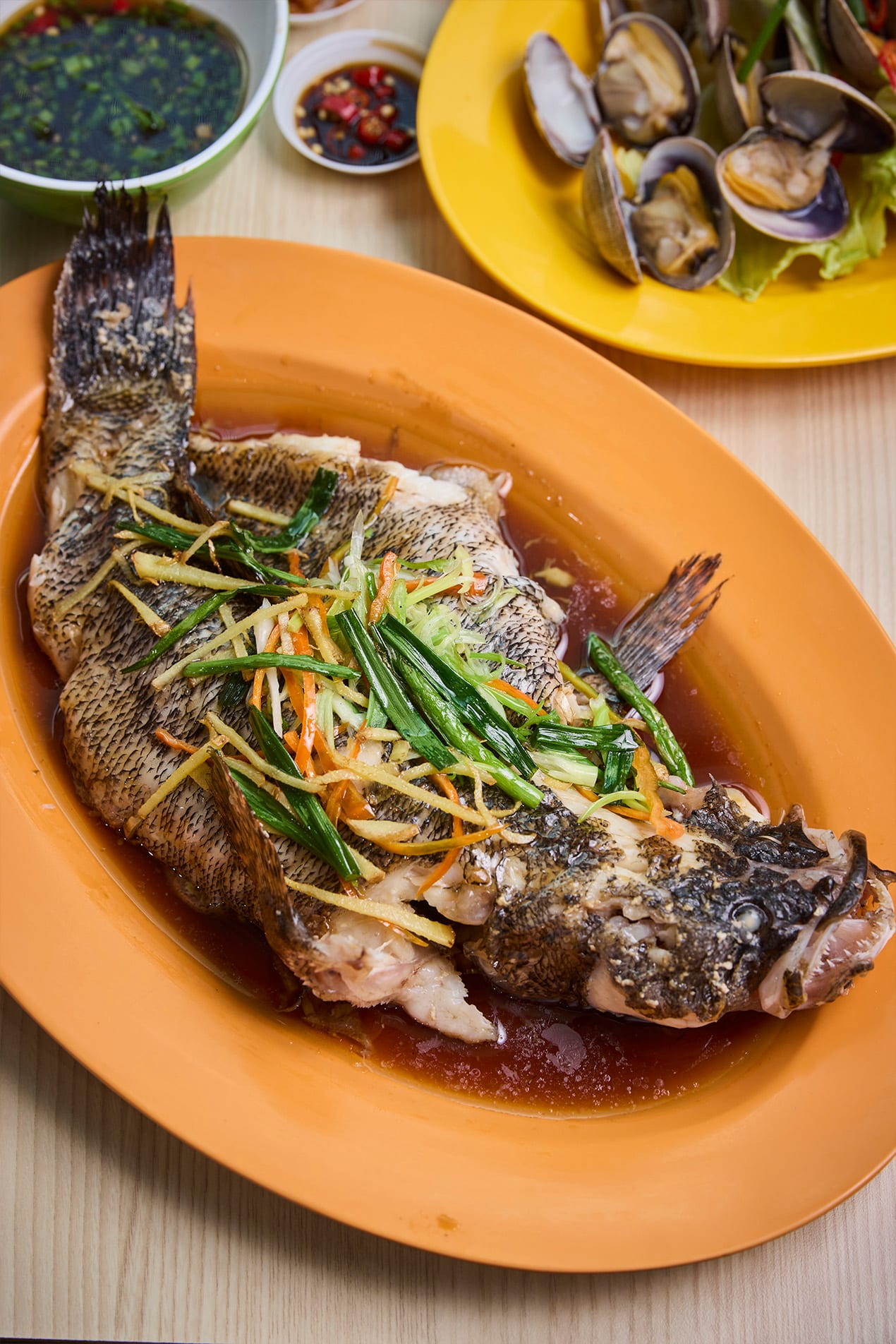
Steamed Soon Hock, $35 (8 DAYS Pick!)
A must-try if you like Hong Kong-style steamed fish. Here, the soon hock (about 700g) isn’t steamed in the traditional sense, but gently cooked in a master broth with aromatics before being finished with a drizzle of sizzling oil and a light soy sauce dressing. Not that it matters — the fish was perfectly done, with moist, buttery-smooth flesh and a clean, natural sweetness that shone through.
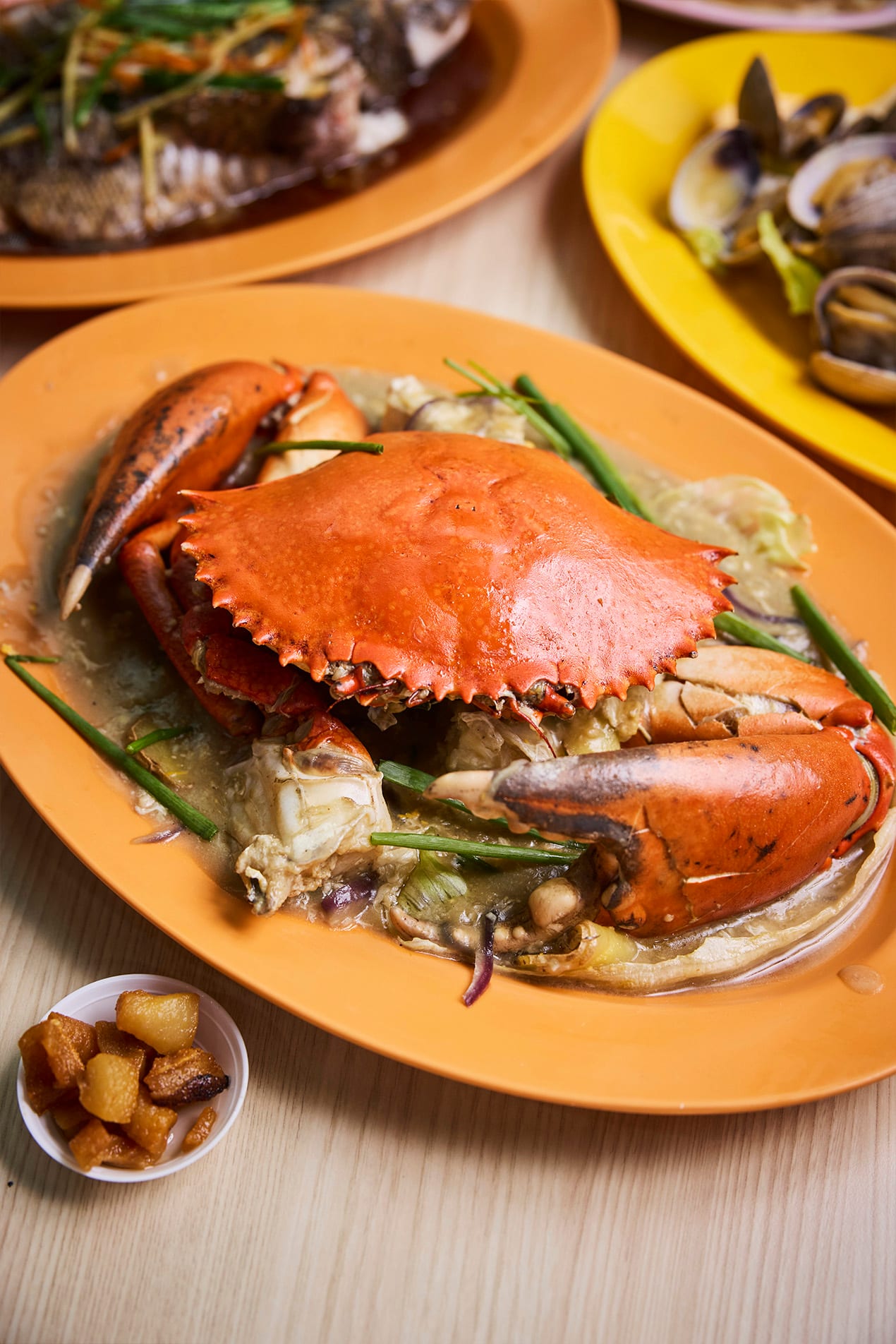
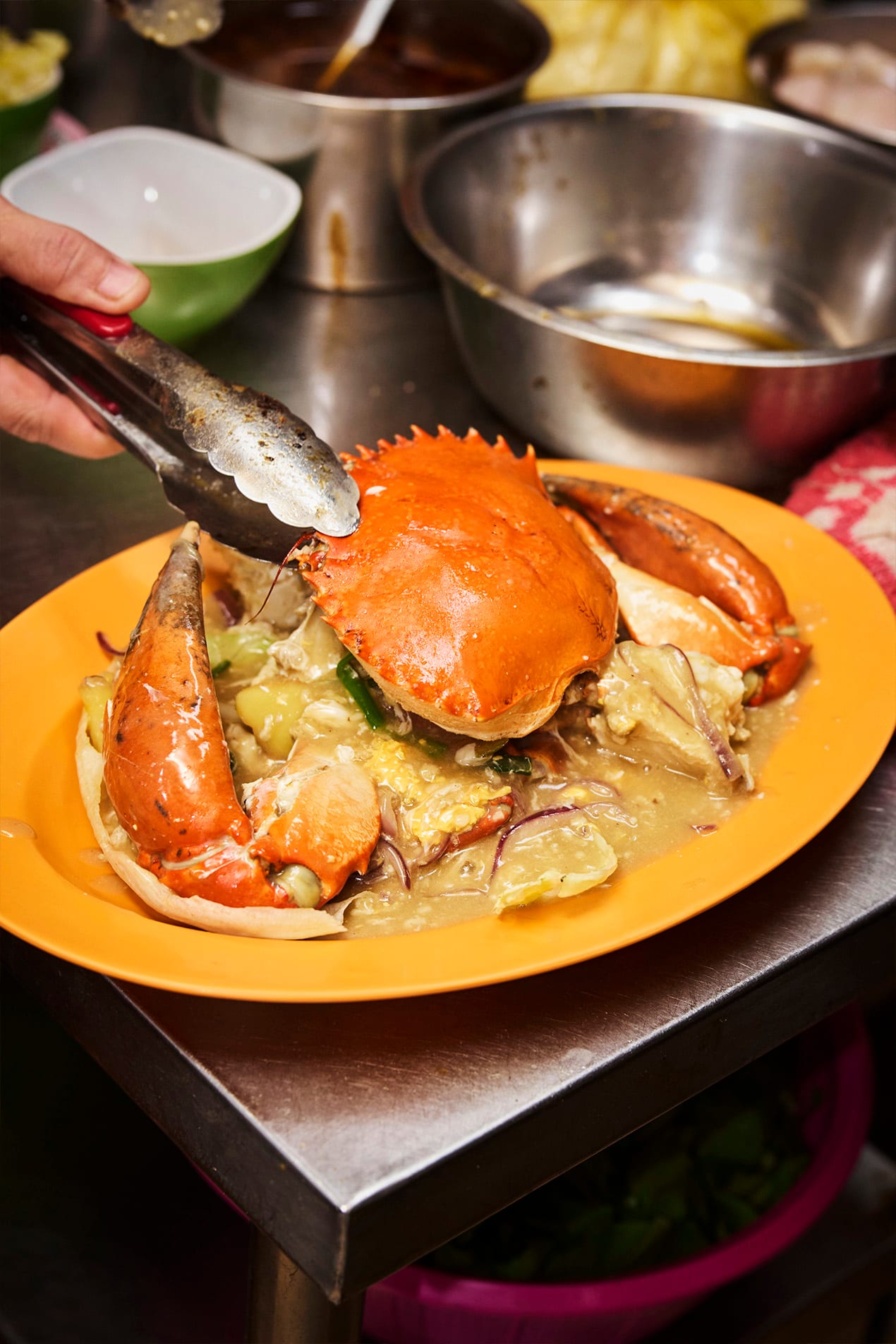
Ginger & Onion Crab, $45
We went for a large Indonesian crab, weighing about 700g, cooked in Fai Kee’s signature ginger and onion style. The crab was very meaty, with a decent amount of roe, and the flesh was firm and naturally sweet.
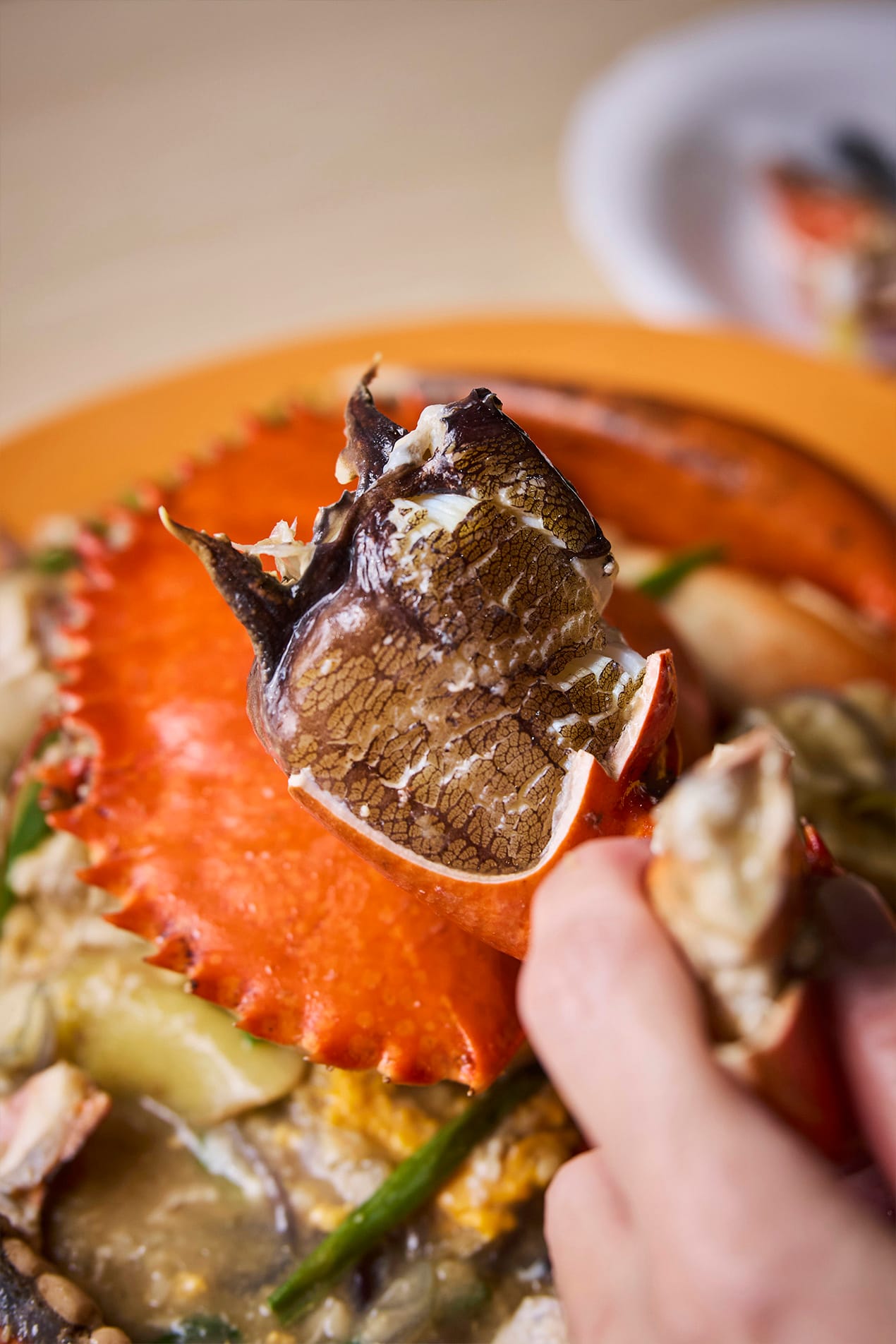
The savoury, fragrant sauce brought everything together nicely, enhancing the crab’s sweetness without overpowering it.
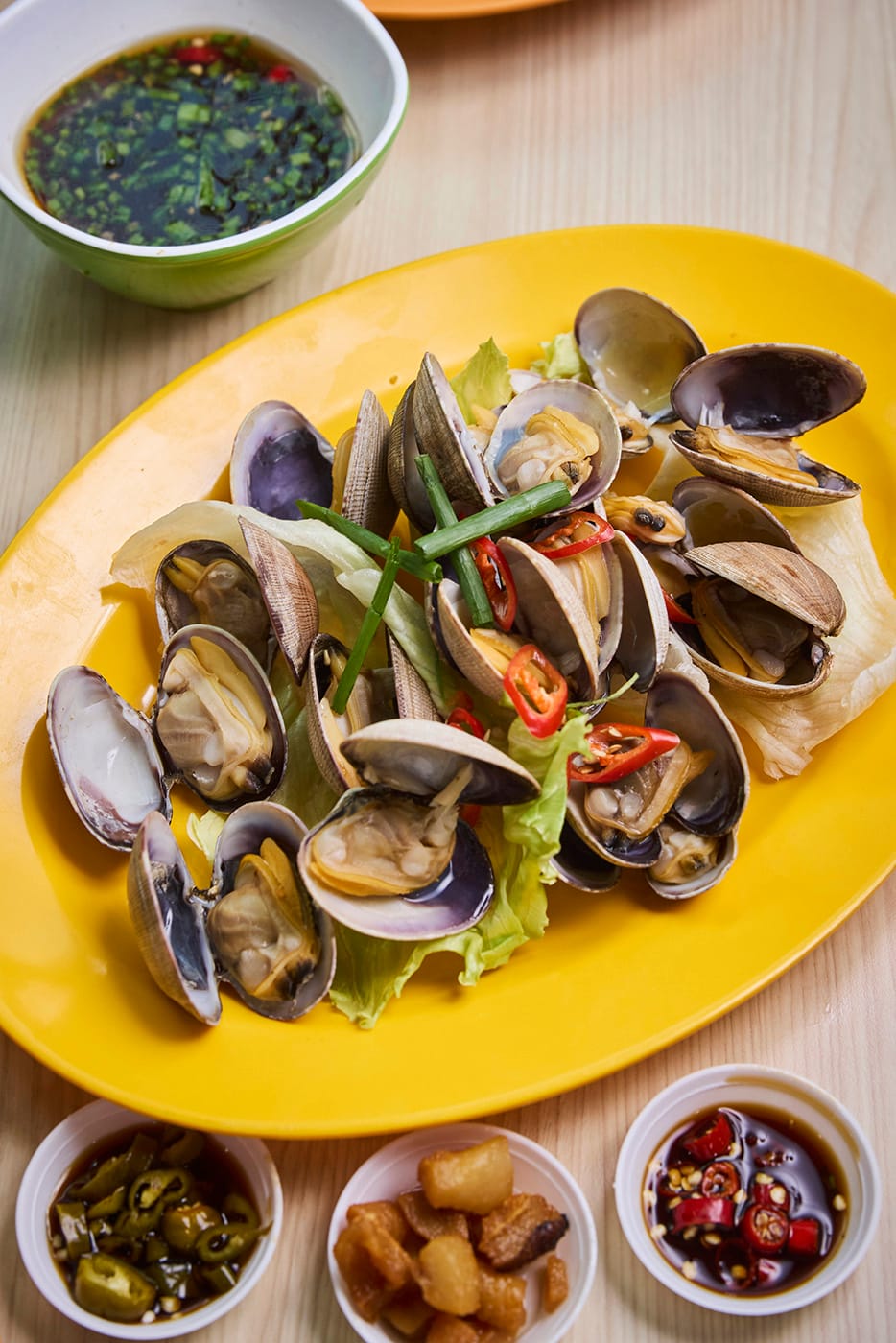
Steamed Lala, $19
Simply prepared to let the freshness shine, the manila clams were lightly seasoned and cooked just right. On their own, the plump clams were juicy with a briny sweetness. The dipping sauce — a mix of soy sauce, chopped garlic and plum sauce oil — added an extra punch of flavour without overpowering their natural taste.
Bottom line
Yes, the wait can be long, especially on weekends, but the payoff is worth it. Between the freshness of the live seafood, Fai Kee’s solid Cantonese cooking and prices that undercut most restaurants, it’s easy to see the appeal. It may not be quite Noryangjin, but for a no-frills, hawker-centre take on the concept, this comes pretty close. Pre-book a dining slot if you want to avoid the queues.
Top In Asia


%20after%20a%20350km%20journey%20from%20Sepang.%20PHOTO:%20AsiaOne/Danial%20Zahrin?w=150&resize=150,150&ssl=1 "Satay hunt, cycling and go-karting: What F1 drivers are up to before Singapore Grand Prix")
