

SINGAPORE — Step into a mall and you cannot avoid stumbling across yet another colourful display replete with vibrant squishies, fidget clickers and various other small trinkets.
These little items deck the racks of home and lifestyle chains such as Sparkle, Turtle and Gadget Mix, but shoppers can also see them in the wild at heartland bric-a-brac stores like Valu$.
Mom-and-pop children’s retailer Tom & Stefanie is among the home-grown brands that have hopped on the trend.
It installed do-it-yourself (DIY) squishy and fidget clicker displays at the front of its three outlets at PLQ Mall, Woodlands Civic Centre and Simei Street in the first quarter of 2026.
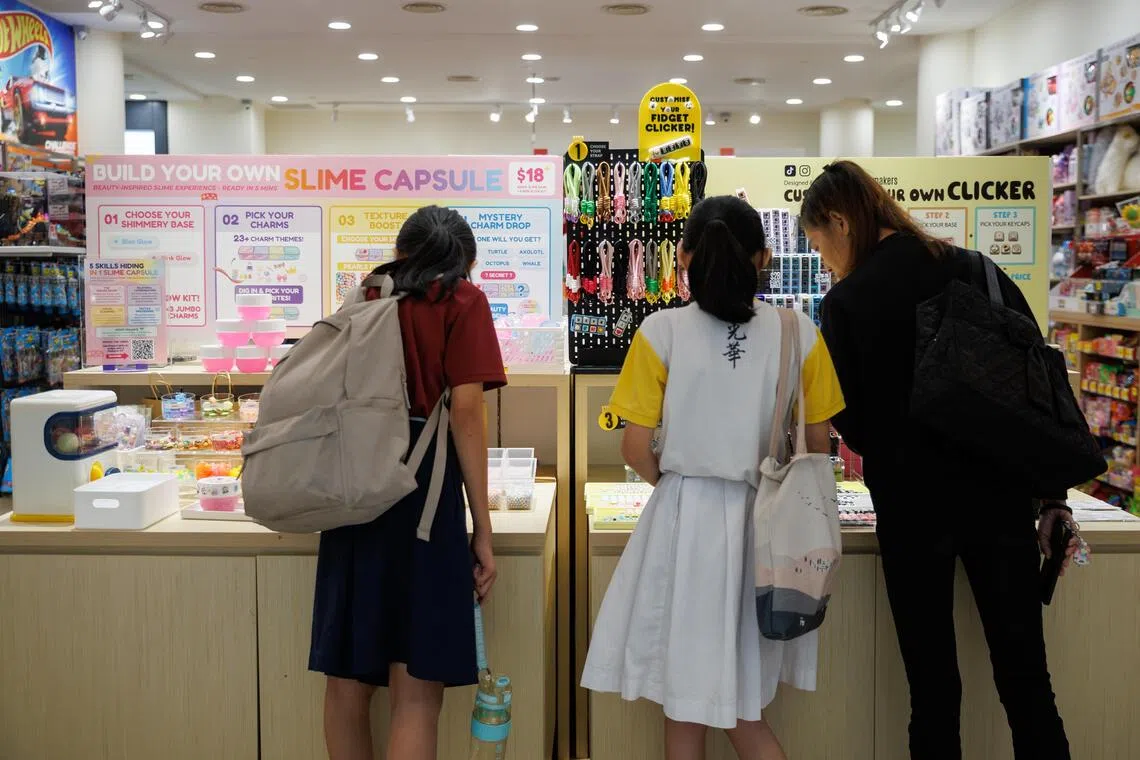
PHOTO: The Straits Times
Since then, these offerings have drawn a steady stream of children — and their parents — into the stores. In September and October, squishies and squishy accessories were completely sold out for a two-week period.
An Instagram post on Tom & Stefanie’s official account explaining the DIY aspect of the squishy display had gone semi-viral, racking up more than 300,000 views. It brought in customers faster than the brand could keep up, says Stefanie Chua, who manages business development for the brand.
But stocks have since been replenished, with regular jelly squishies costing $16 a piece and “crunchy” ones at $18 each.
There are different kinds of squishies, but the ones sold at Tom & Stefanie are made of slime. Customers can mix in charms of their choice before it is wrapped in a thin plastic film that makes for easier “squishing”.
Keyboard clickers — which shoppers can assemble from keys of various designs — start at $10 for a three-key piece.
Chua, 22, is not just the mastermind behind the DIY squishy and fidget clicker displays. She is also the eldest daughter of Tom & Stefanie’s founders, Edmund Chua and Kevi Chong, and has been helping out at the family business since November 2025.
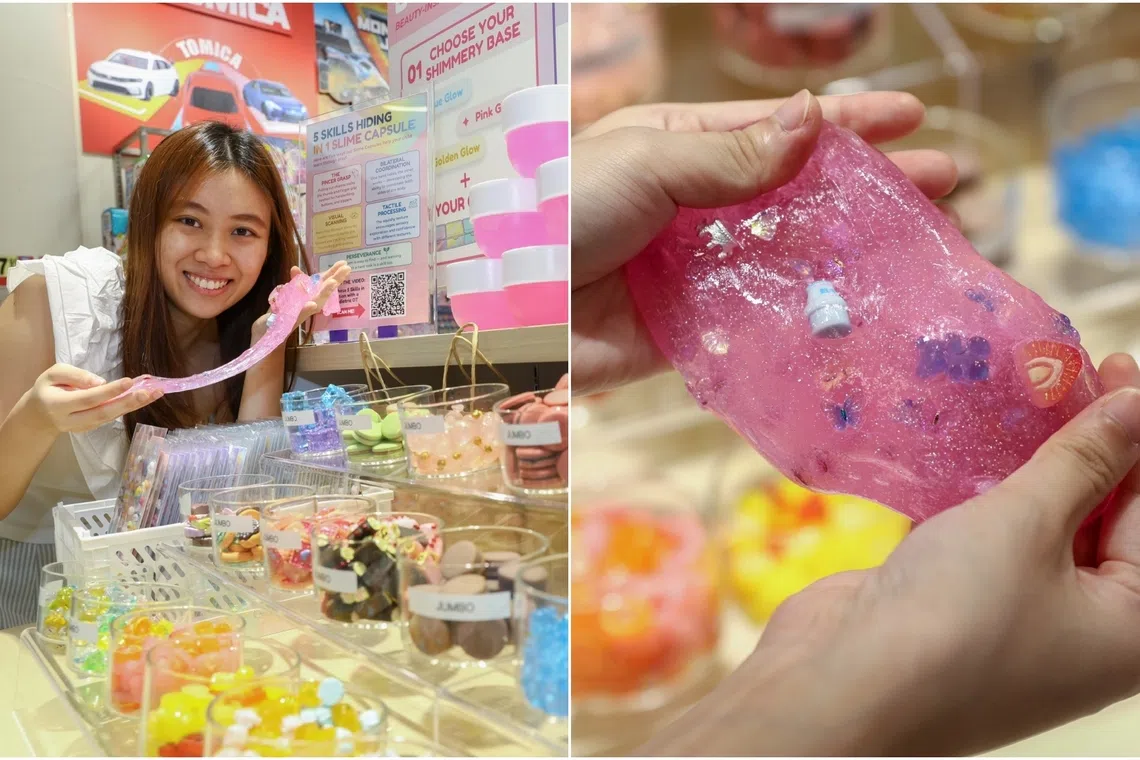
PHOTO: The Straits Times
“We noticed how popular squishies and DIY sensory experiences were becoming online, and instead of just bringing in ready-made squishies, we wanted to create something that would be more fun for families to do together,” she tells The Straits Times.
“We wanted it to be less about just buying a trending toy and more about having a little hands-on experience in the store.”
In an era dominated by e-commerce, it has been a way to draw people back into Tom & Stefanie’s bricks-and-mortar spaces.
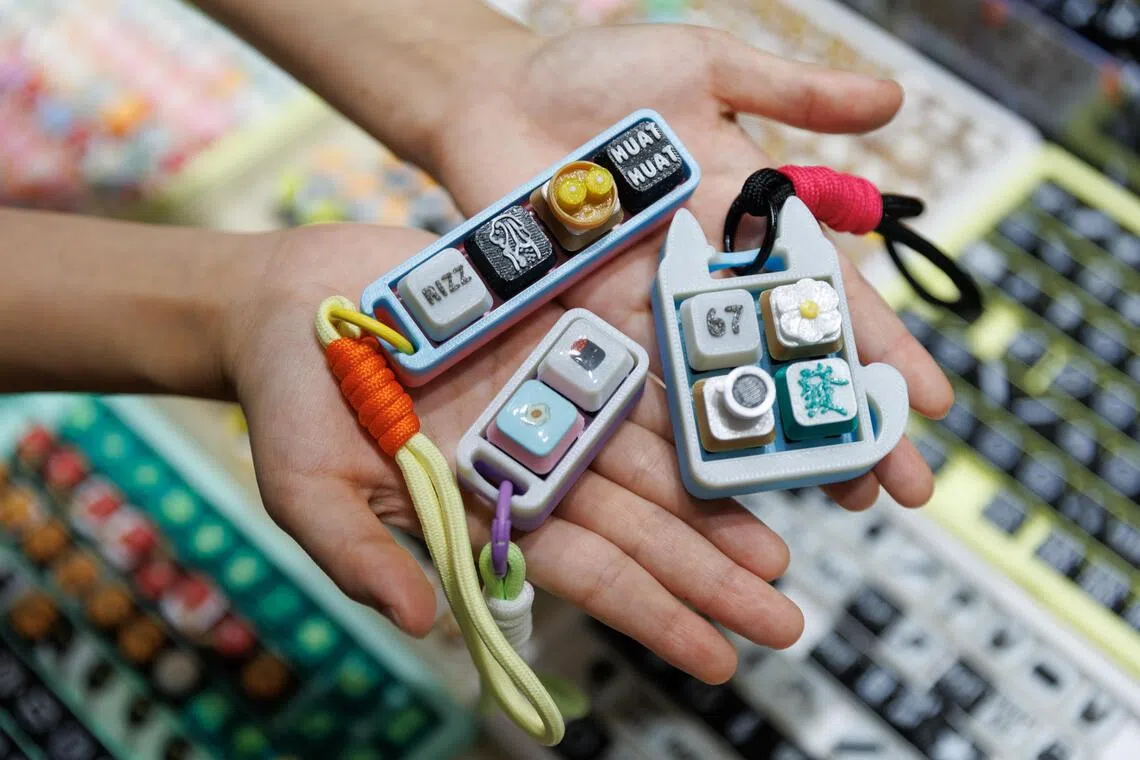
PHOTO: The Straits Times
“The squishy and clicker experiences have shown us that customers are looking for something they can personalise and experience for themselves. Moving forward, we’re looking to introduce more hands-on experiences that give customers a reason to visit our physical stores,” she says.
Indeed, the reception has been so positive that Chua started a side business in October called Confetti Club (https://confetticlub.vercel.app/), which hosts squishy-making activities for birthday parties and corporate events.
Self-expression made easy
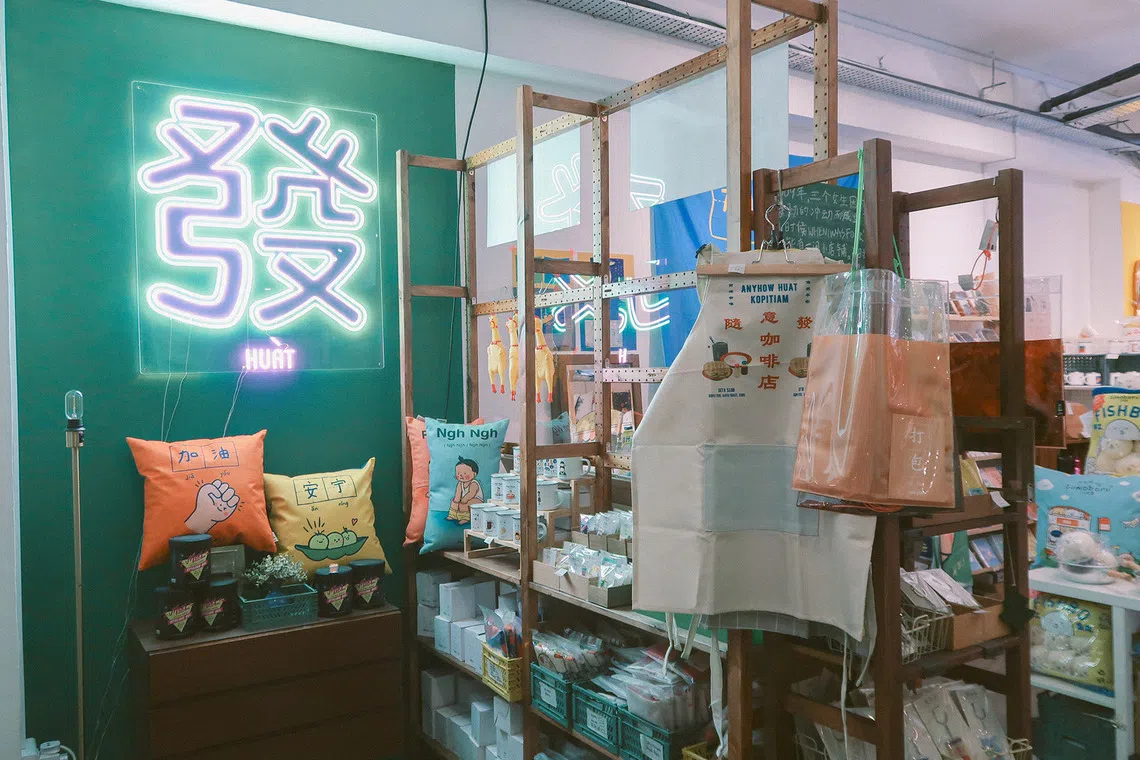
PHOTO: The Straits Times
Tan Liling, co-founder and designer of wheniwasfour (https://shop.wheniwasfour.com/), a brand that specialises in Singapore-inspired novelties and lifestyle items, has observed an increasing interest in trinkets and other small items used to “personalise everyday things”, especially among Gen Z customers.
“I think a lot of it is tied to identity and self-expression — these small things allow them to show a bit of who they are and make their belongings feel more personal, like hanging keychain charms on their bags, customising their own charms, putting stickers on their tumblers, journalling or using magnets to decorate their workspace,” says Tan, 40.
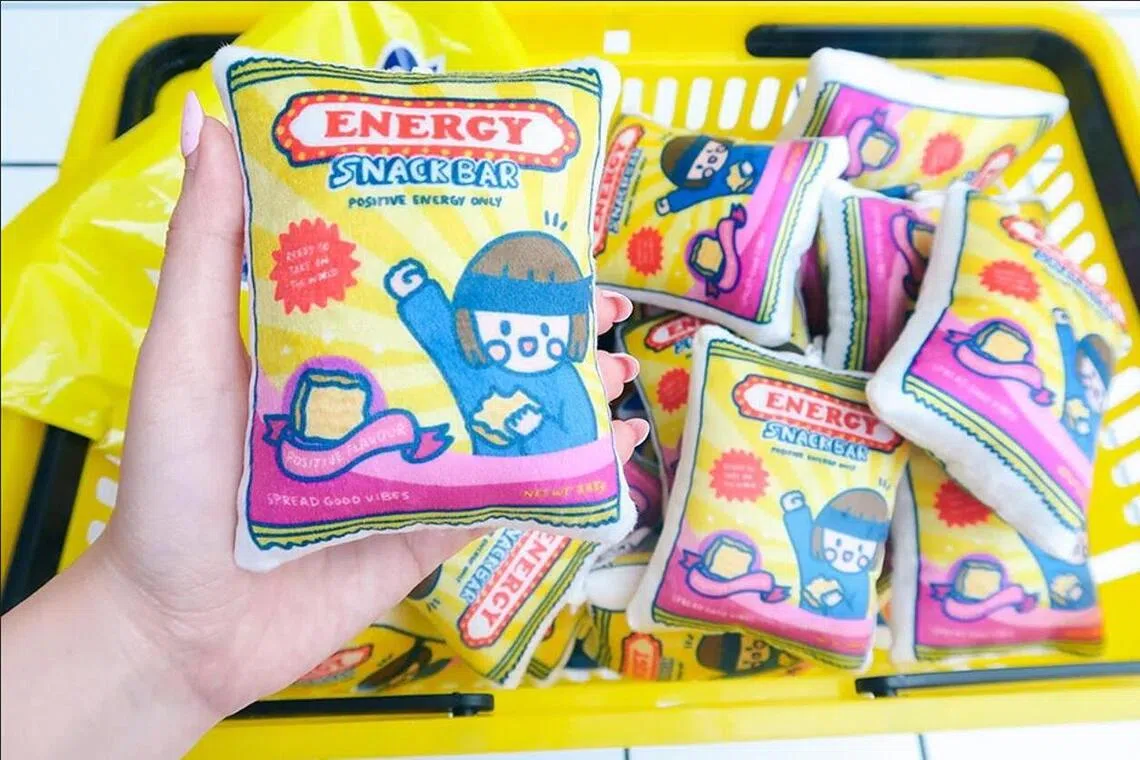
PHOTO: Instagram/wheniwasfour
At wheniwasfour’s Bras Basah retail outlet, shoppers can find pins inspired by canned mushrooms ($8.90) and plush keychains inspired by childhood snacks such as Mamee Monster ($9.90).
“They’re also relatively affordable, so people can collect and mix different pieces without making a big commitment,” Tan says.
Jerry Chiew, co-founder of the Charm Library (https://www.instagram.com/charmlibrary/) in Haji Lane, muses that “with things becoming more commercial and homogeneous”, such trinkets offer a simple, low-stakes way to express one’s personality.
He and his business partner-wife, Athena Khoo, both 30, opened the Charm Library in December 2025.
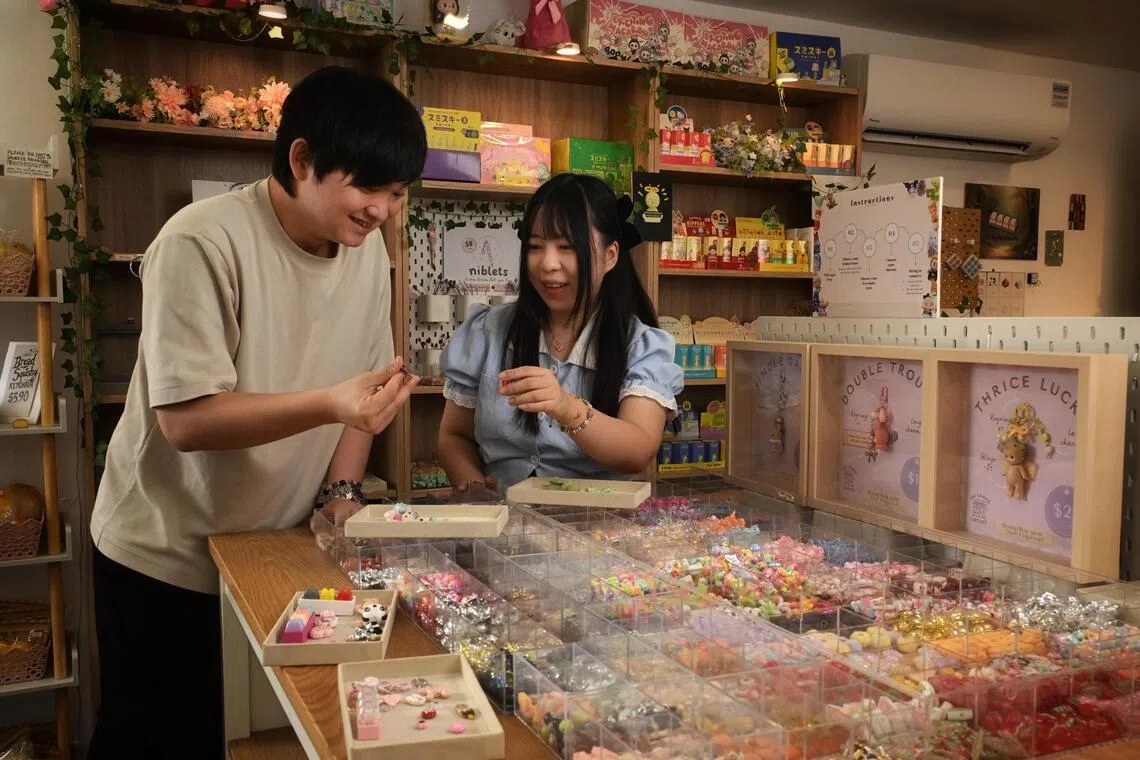
PHOTO: The Straits Times
They both left more conventional careers to open the business: Chiew previously worked in the hospitality industry, while Khoo was in academia.
The couple are big fans of trinkets — he is partial to anything related to Pikachu or Cinnamoroll, while Khoo is open to anything cute — and enjoy shopping around for different ones.
“But there was always just something missing, and we realised it was the feeling of making it yourself, or choosing your own parts,” he says.
“We wanted to create a cosy space where people could customise something that is uniquely theirs — rather than open yet another shop selling things that can be found online or anywhere else.”
They began with custom keychains (from $10). Customers begin with a base “ingredient” — such as a Smiski or Pop Mart character — and then add as many charms as they want. They can also choose the type of key ring to finish it off.
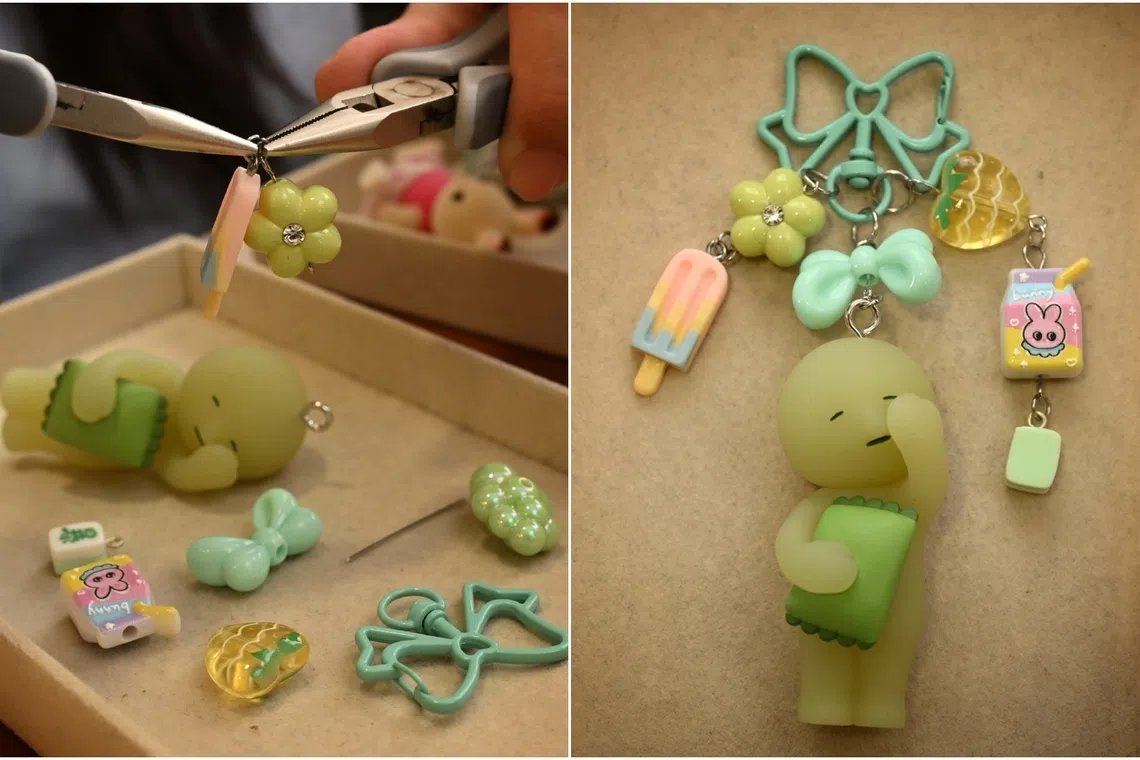
PHOTO: The Straits Times
Customers can choose to do the assembly themselves on-site or have the shop’s staff do it for them.
“Along the way, we introduced other customisable products such as keyboard keychains, charm bracelets and even pens,” says Chiew, citing bolggu, a viral trend in South Korea that involves the decoration and customisation of ballpoint pens in the vein of charm bracelets and keychains.
“Everything involves being able to choose individual parts and assembling them into a product that reflects the customer’s likes and personality.”
The largest demographic coming through is 16- to 28-year-olds, but the overall customer mix is “very healthy”, he adds.
“We occasionally do corporate events for working adults and school events too. And when children come in, they, of course, bring in their parents. It helps that the custom nature of the products means we can make something suitable for everyone.”
Though it is located in the heart of Haji Lane, Charm Library’s cosy 300 sq ft space on the top floor of a unit occupied by Nirvana Cafe on the first two floors means it is less likely to get random passers-by stopping in.
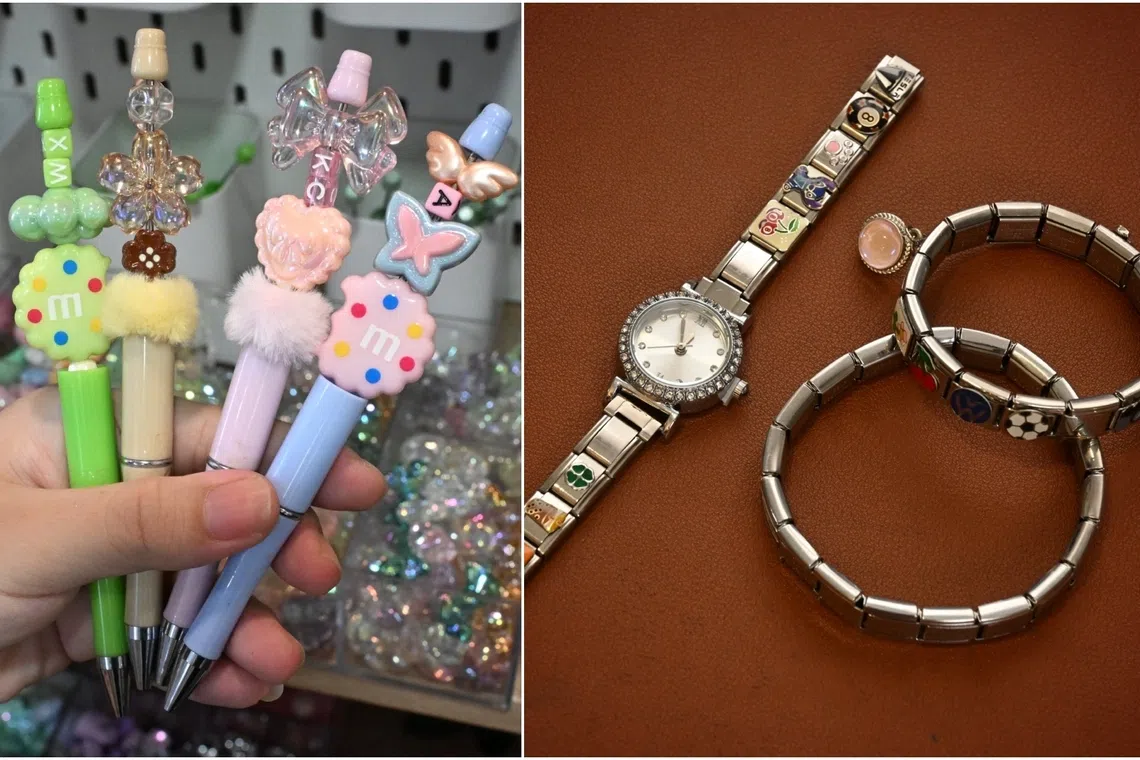
PHOTO: The Straits Times
The “hidden shop” vibe was intentional, say Chiew and Khoo, but it means they rely heavily on social media to spread the word.
“Some days we don’t get many customers, so we need to work very hard to push out social media content to promote the store,” Chiew says.
On the flip side, he adds, it makes a more pleasant experience for the customers who do find them. “They get to take their time to choose the charms they want for their trinket. Many spend easily one to two hours in the shop, even though the space itself is small.”
Evolution of the cute economy
Custom or otherwise, the “cute economy” has been steadily rising over the last two to three years, ever since the global mania over Labubu figurines and blind box plushies in 2024 and 2025.
Even home and lifestyle goods stores that offer more practical home objects are finding smaller gifts, trinkets and playful home accessories to be a strong sales driver.
Stacked Store (https://stackedstore.com/), which opened its first full, standalone retail store in New Bahru in May, sells lamps, side tables and even curtains, but has also introduced and expanded its range of blind box offerings due to their popularity with customers.
These blind boxes include the Fluid Market Mini Vase Surprise box ($26 a box), which has several themed sub-collections such as animals, food and garden.
“We see customers gravitating towards smaller, accessible pieces, whether they’re shopping for themselves or looking for an easy gift,” Anthea Han, Stacked Store’s e-commerce manager, tells ST.
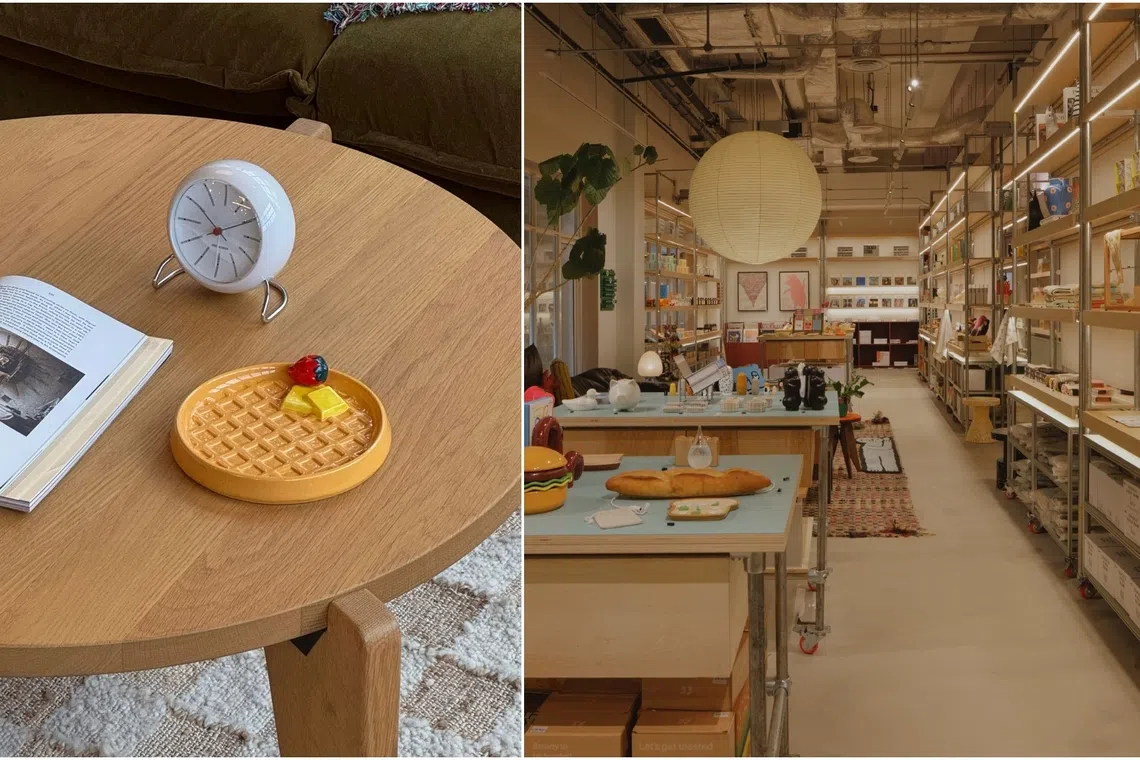
PHOTO: Stacked Store
Perhaps ironically, some other strong sellers at Stacked Store are trinket trays that hold other trinkets: for instance, one by Spanish design brand DOIY that is inspired by a round waffle ($35).
She agrees with the observations made by other proprietors about why these items seem to be resonating with local customers.
“They’re an easy way to bring personality into the home without requiring a lot of space or a big commitment. And they’re generally at a more accessible price point too, which makes them suitable for both self-purchasing and gifting,” she says.
Beyond that, she has noticed shoppers are “drawn to pieces that feel playful, unexpected and conversation-starting”.
“Even if something serves a simple function, there’s an added appeal when the design makes you smile or creates an emotional connection.”
Moreover, visually interesting objects perform well on social media, further amplifying customer interest in them.
Why Singapore shoppers are buying small luxuries
Dianna Chang, associate professor of marketing at the Singapore University of Social Sciences, observes that in our relatively high-pressure society, inexpensive lifestyle products can offer a lot of enjoyment.
“Even a small purchase can provide much of the psychological satisfaction associated with shopping: browsing, discovering something, making a choice and completing the purchase. It can create a small sense of reward and even control,” she says.
For young Singaporeans, who seem to be embracing the idea of “kidulting” — engaging in experiences traditionally meant for children, such as toys and other “cute stuff” — with gusto, such simple pleasures punch above their weight.
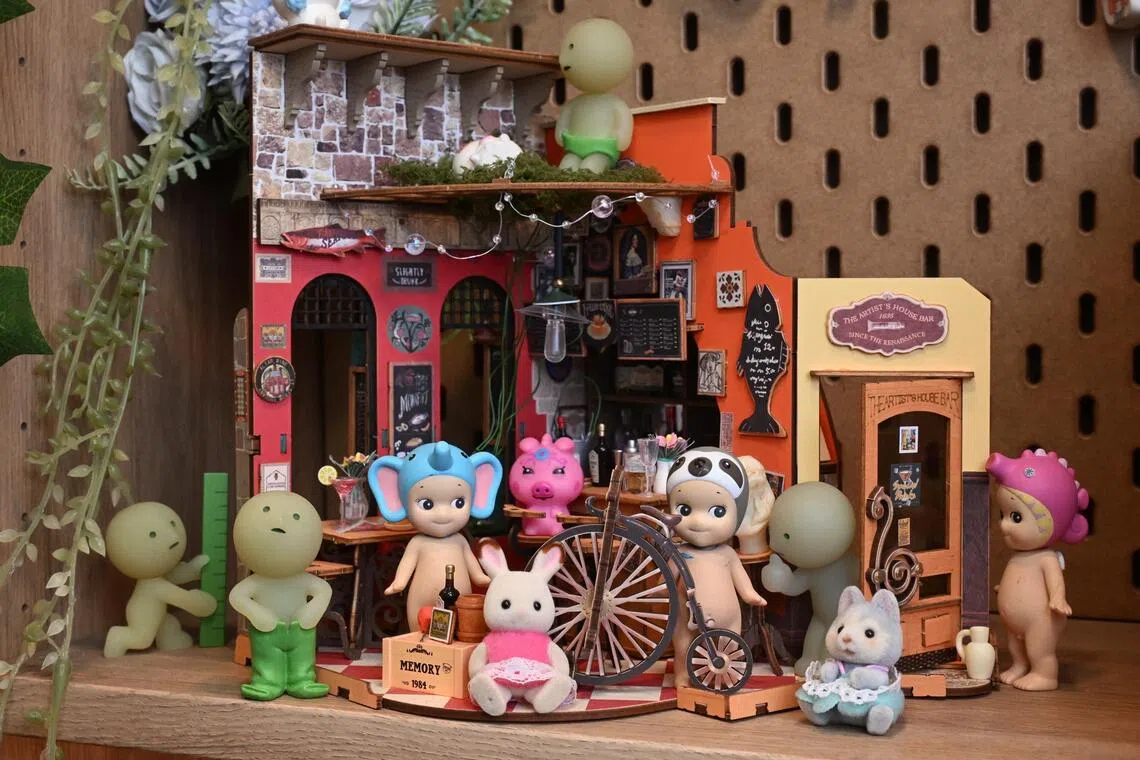
PHOTO: The Straits Times
“Many Singaporeans live with their parents well into adulthood, partly because of the structure of the housing market and high costs. They may therefore have relatively more disposable income while having less need — or less space — for large household purchases such as furniture,” Chang says.
She expects the broader trend to continue into 2027, although the specific objects trending at any given moment will likely keep changing.
“Blind boxes, charms, plushies, squishies and decorative objects may come and go, but the underlying consumer motivations are quite durable.”
“(Even in times of) higher living costs and economic uncertainty, the desire to consume does not disappear. People may postpone a large purchase but still allow themselves a small indulgence.”
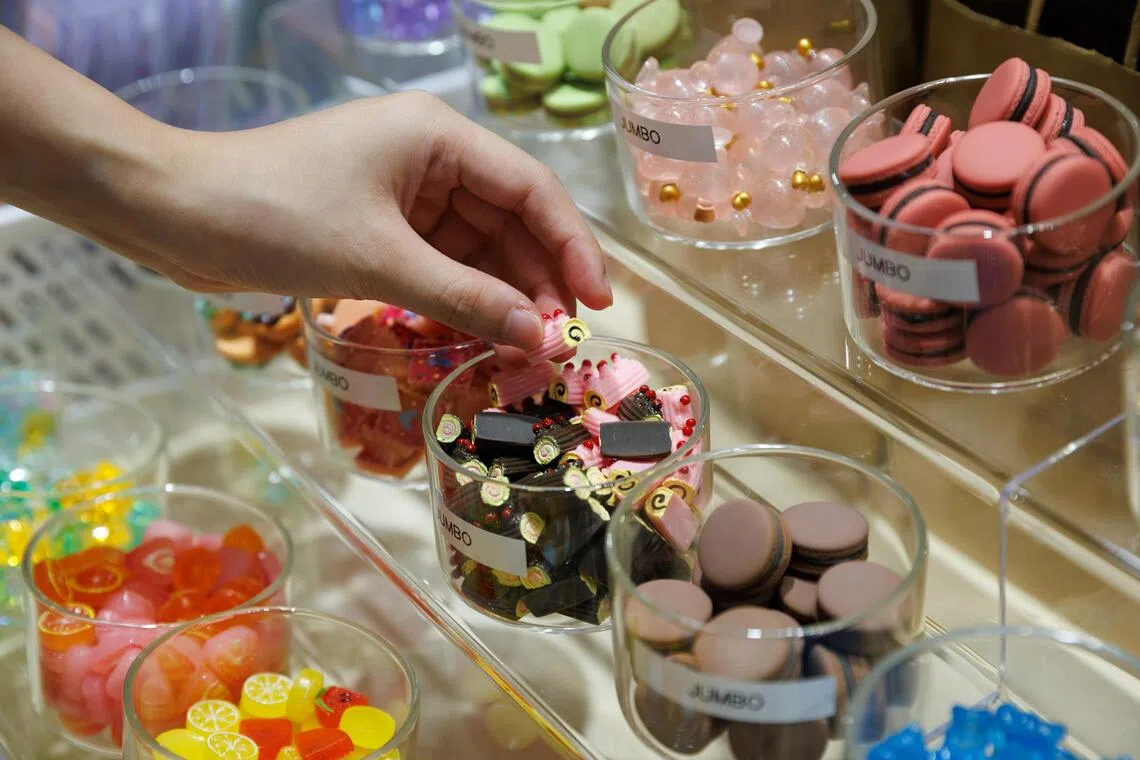
PHOTO: The Straits Times
Conversely, for retailers, small lifestyle products can also be a lower-stakes investment in terms of cost and inventory commitment.
Moreover, they might even be better than more expensive purchases in terms of generating browsing, impulse purchases and repeat visits among consumers.
“This strategy is actually used across many parts of retail, including luxury. Luxury brands often offer relatively accessible items such as small accessories, cosmetics or charms that provide an entry point into the brand,” Chang points out.
On the flip side, these products are easily imitated — which might explain why shoppers might see nearly identical steam bun-inspired squishies at many, if not all, of the aforementioned retail outlets.
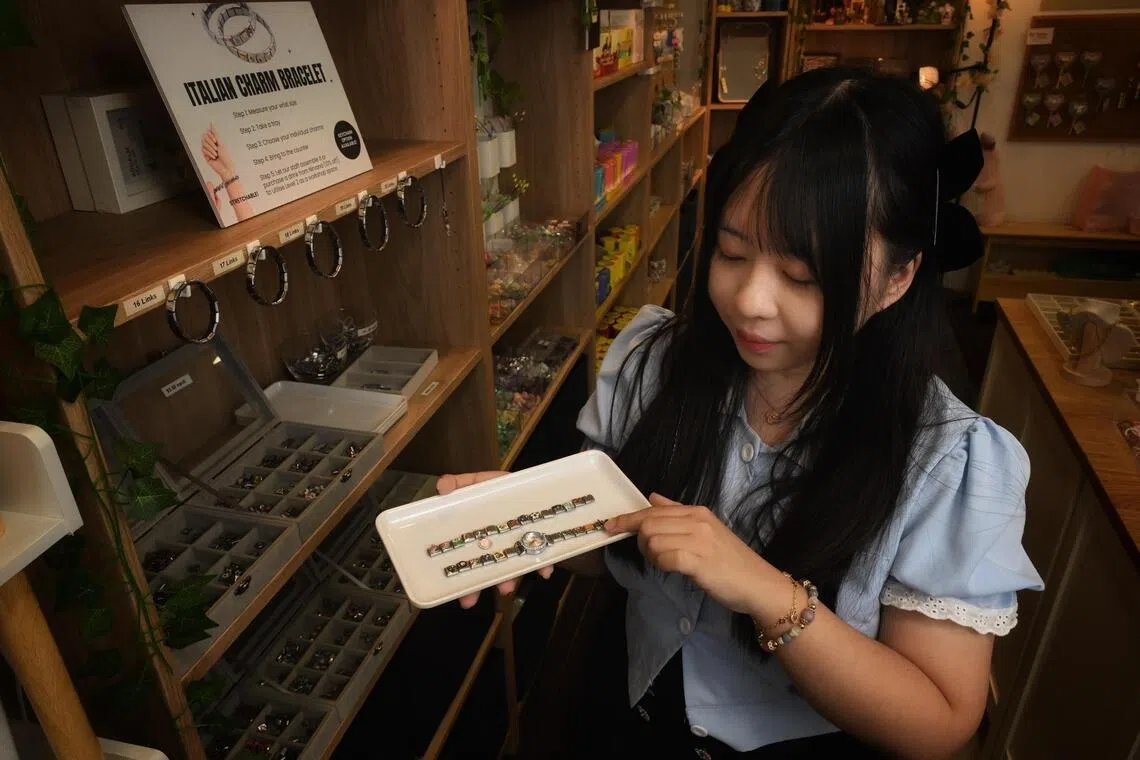
PHOTO: The Straits Times
As such, retailers have to be quick to spot trends.
“They need to experiment with many products, learn quickly from sales and social media response, and be prepared to change their assortment according to the changing winds,” Chang says.
“Competitive advantage comes from creating newness and turning the shopping experience into something consumers want to share and come back to,” she adds.
[[nid:751156]]
This article was first published in The Straits Times. Permission required for reproduction.
Top In Asia


